
Last updated November 18, 2026
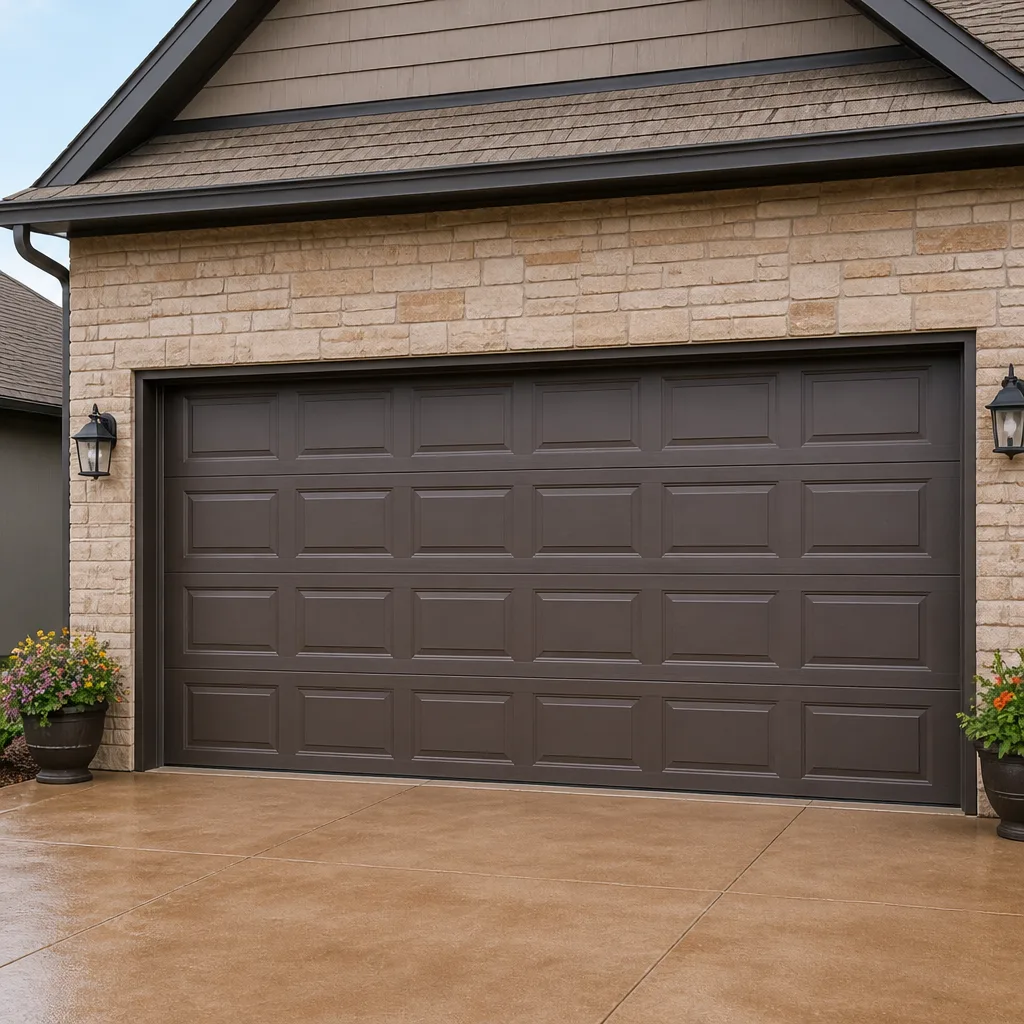 Raised-panel steel
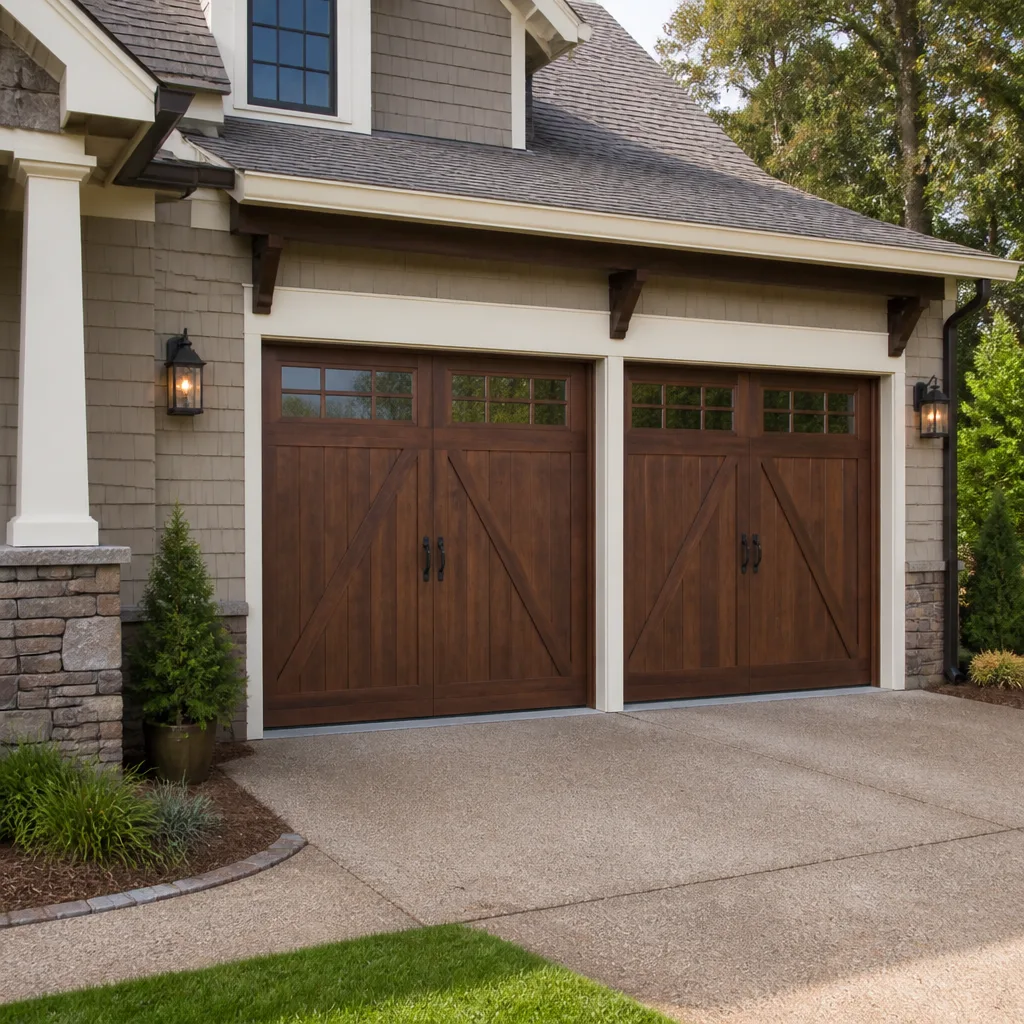 Carriage house
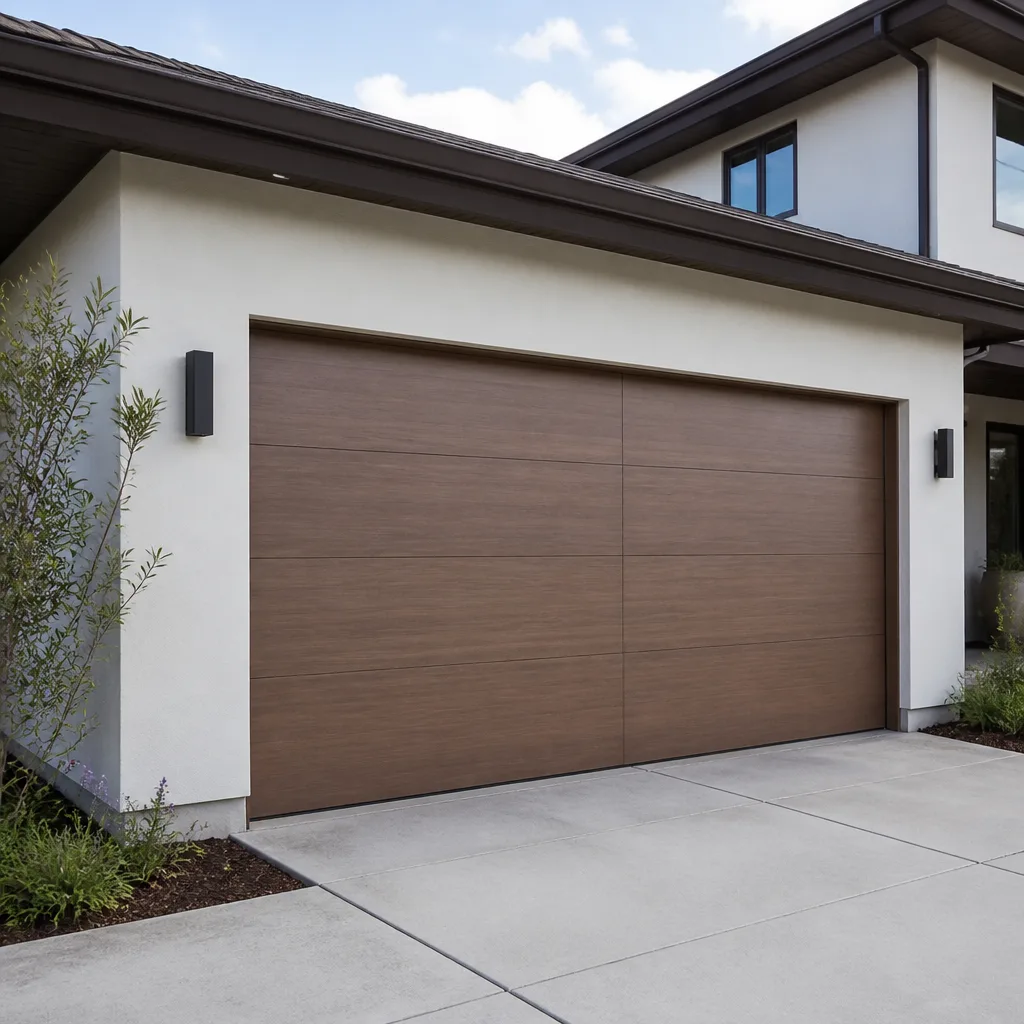 Modern flush
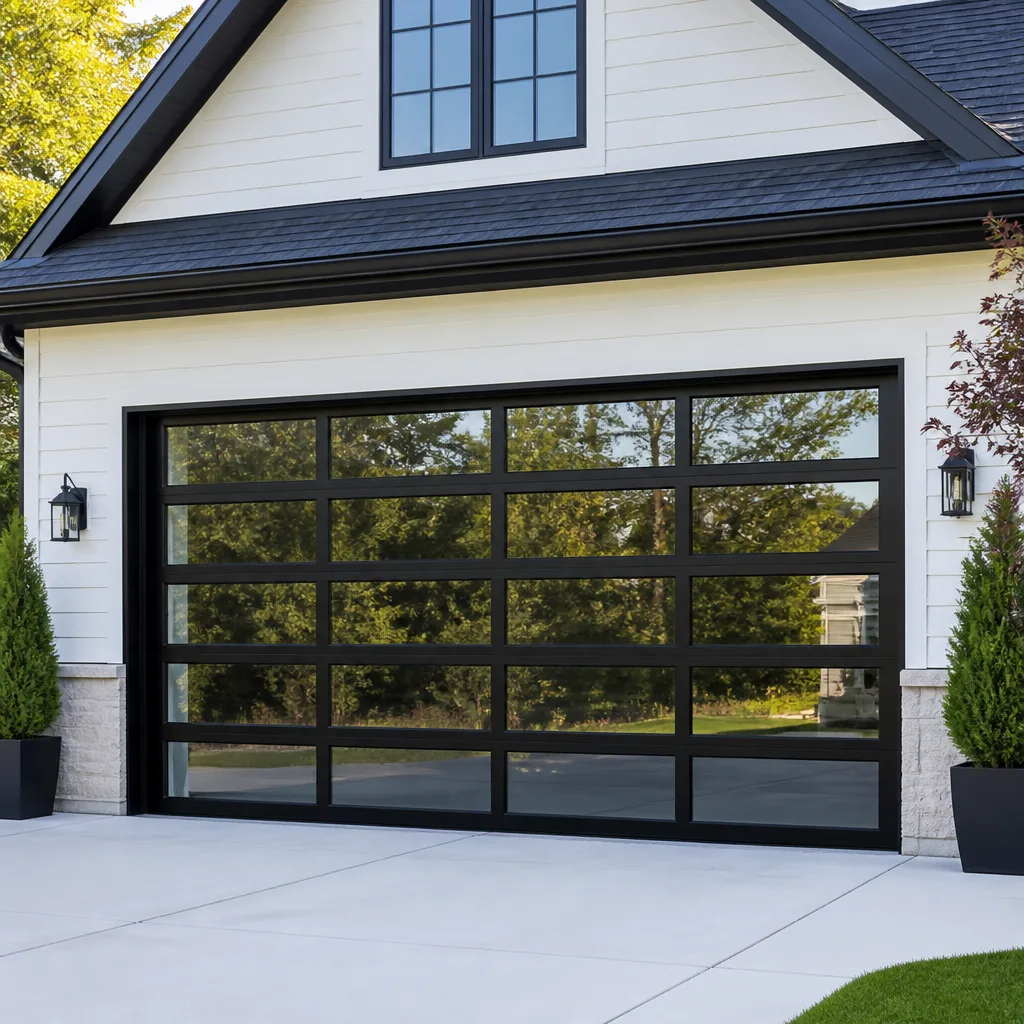 Full-view glass
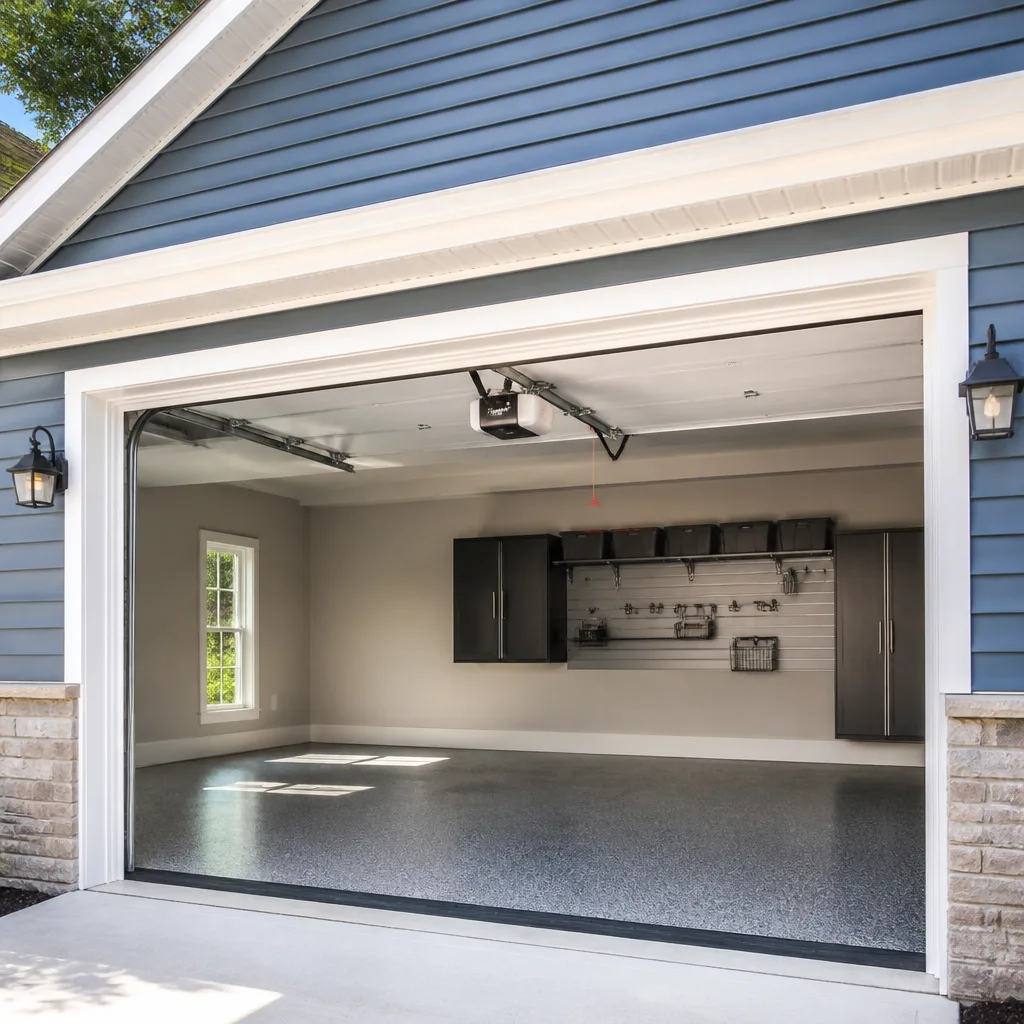 LiftMaster openers
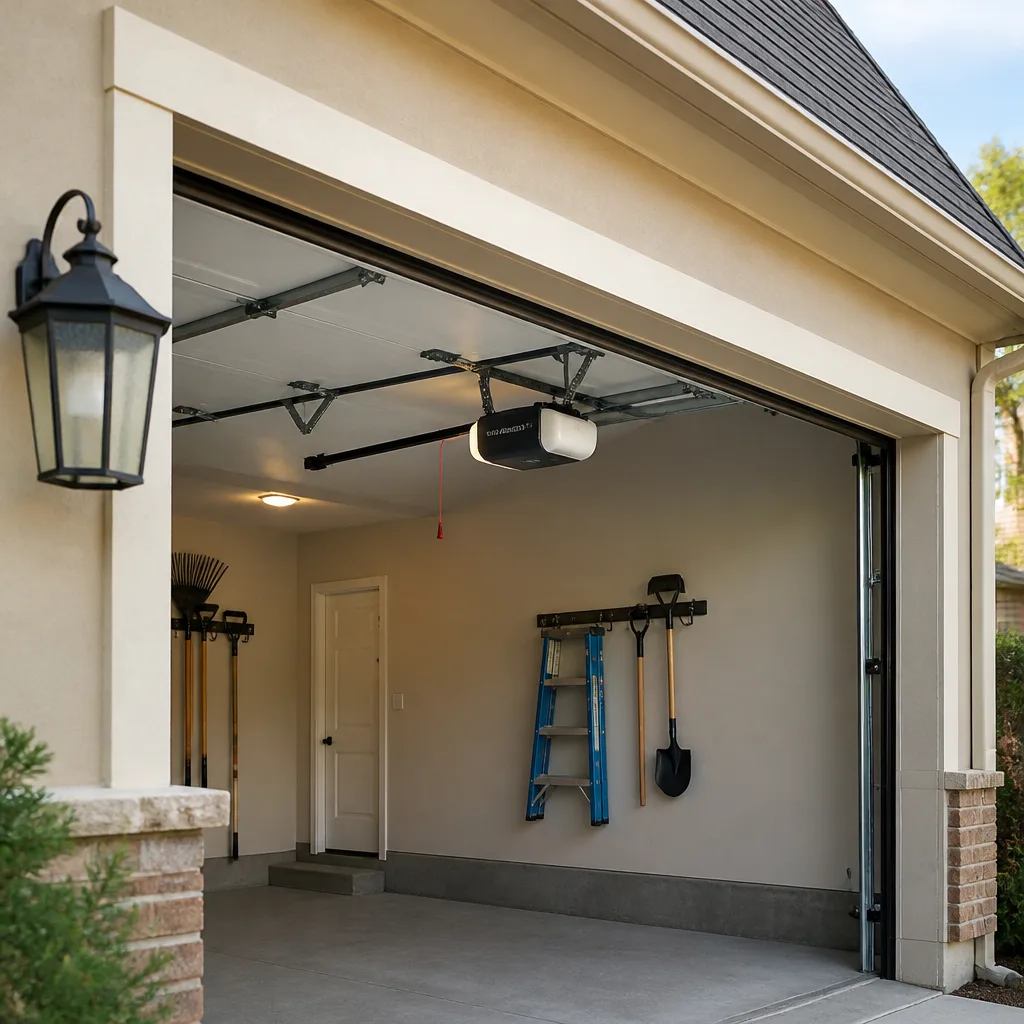 Chamberlain openers
Full 25-point door and opener safety check with every visit - springs, cables, rollers, tracks, and your LiftMaster or Chamberlain opener included
You get a price before we start. It does not change when the pro arrives.
Get your free estimateThe Complete Garage Door Parts Guide for Winchester Homeowners
Almost every homeowner can name two parts of their garage door: the door itself and the opener on the ceiling. But the door hangs on nine other components, and one of them, the torsion spring, carries the entire weight of the door and has a cycle life printed on the box at the factory that nobody ever mentions again after installation day. That spring is a wear item. It is counting down from the moment it’s wound, and most Winchester homeowners don’t find out until it snaps on a cold morning. This guide maps every part of the system, what its realistic lifespan looks like under Winchester’s high-desert sun and wind-blown dust, and which replacements you can handle yourself.
Quick Answer
A complete garage door system has eleven main parts: panels, tracks, rollers, hinges, torsion springs, cables, drums, the bottom bracket, weather seal, opener, and safety sensors. Springs and rollers wear fastest in Winchester because summer heat and ultraviolet exposure break down lubricants and plastic, while fine desert dust grinds down moving parts. Springs last roughly 7 to 12 years here depending on cycle rating and daily use; rollers last 3 to 5 years; weather seals often fail in 3 to 4 years.
Styles & brands we work with
- Raised-panel steel
- Carriage house
- Modern flush
- Full-view glass
- LiftMaster openers
- Chamberlain openers
Table of Contents
- A Labeled Anatomy of Your Garage Door System
- Realistic Part Lifespans in Winchester’s Climate
- The Spring Cycle Rating, Decoded
- Three Parts You Can Replace Yourself (and Four You Can’t)
- Brand-Specific vs. Universal Parts
- How to Tell a Part Is Failing Before It Breaks
- Common Mistakes to Avoid
- When to Call a Professional
A Labeled Anatomy of Your Garage Door System
Walk out to your garage and look up. What you see is a system of parts working together, and when one fails the others take the strain. Here’s what each one does.
Panels. The visible face of the door. Steel panels dominate in Winchester because they hold up to intense sun and dry air better than wood, which warps and cracks when humidity swings. A damaged panel can sometimes be replaced individually if the manufacturer still makes that profile.
Tracks. The vertical and horizontal rails that guide the door up and back. Tracks bend when something strikes them or when a roller seizes and drags. A bent track causes the door to bind and puts strain on the opener.
Rollers. The wheels that ride inside the track. Standard steel rollers are noisy; nylon rollers run quieter and are worth the small upgrade. In Winchester’s dusty air, rollers collect grit and wear faster than in wetter climates.
Hinges. The pivots between panels that let the door bend as it travels around the curve. Hinge number matters: hinges are stamped 1, 2, 3 to match their position on the door, and putting the wrong one in the wrong place causes binding.
Torsion springs. Mounted on a steel shaft above the door, these springs store the energy that lifts the door. They carry the door’s full weight, which is why a failed spring makes a door nearly impossible to lift by hand. Most modern doors use two springs so the door can still be operated carefully if one fails.
Cables. Steel aircraft-grade cables run from the bottom corners of the door up to drums on the spring shaft. A cable under tension can whip if it snaps, which is one reason this is never a do-it-yourself part.
Drums. The grooved spools on the spring shaft that the cables wind around. If a cable jumps its groove, the door lifts crooked and the drum needs resetting by someone who knows the tension.
Bottom bracket. The plate at each bottom corner where the cable attaches. It is under constant tension from the cable and is the single most dangerous part to touch without training.
Weather seal. The rubber strip along the bottom of the door that keeps out dust, wind, and insects. In Winchester, where wind carries fine dust and summer heat bakes rubber, seals harden and crack faster than the national average.
Opener and safety sensors. The motor and rail assembly overhead, plus the two photo-eye sensors near the floor that stop the door if something crosses the beam.
Realistic Part Lifespans in Winchester’s Climate
National averages for garage door part lifespans are written for a mild climate. Winchester isn’t mild. Summers push past 100 degrees, the sun is relentless, and wind-blown dust works its way into every moving joint. Here’s what we see in practice across Winchester neighborhoods from the west side to the older streets near downtown.
- Torsion springs: 7 to 12 years. Heat and daily cycles are the enemies. A west-facing door bakes in afternoon sun and tends to fail earlier than a shaded one.
- Rollers: 3 to 5 years. Dust and lack of lubrication shorten their life. Nylon rollers tend to outlast steel ones here.
- Weather seal: 3 to 4 years. UV exposure hardens the rubber until it cracks and stops sealing.
- Cables: 5 to 8 years. They fray where they pass over the drums. Dust accelerates the wear.
- Hinges: 5 to 10 years, depending on lubrication and use frequency.
- Opener: 10 to 15 years. Motor capacitors and gears are the usual failure points, not the electronics.
- Panels and tracks: 15 to 25 years for panels; tracks last decades unless struck or bent.
The pattern in Winchester is consistent: parts that rely on lubricant or rubber fail sooner than national charts suggest, while the steel structure outlasts them comfortably. If you’re tracking one number, track the springs. Everything else gives you warning signs first.
The Spring Cycle Rating, Decoded
A cycle is one complete open-and-close. Springs are rated for a set number of cycles, and that number is the honest measure of how long they’ll last. A household that uses the door four times a day runs about 1,460 cycles a year. Here’s how the common ratings translate:
- 10,000 cycles: About 6 to 7 years at four uses a day. This is the standard builder-grade spring.
- 15,000 cycles: About 10 years at the same pace. A modest upgrade that pays for itself in longevity.
- 20,000 cycles: About 13 to 14 years. Worth it for a busy household.
- 25,000 cycles or higher: 17 years or more. Usually oil-tempered or specialty springs.
When a spring is replaced, you choose the rating. Replacing a 10,000-cycle spring with another 10,000-cycle spring is the cheapest option but guarantees you’ll be doing the job again sooner. In Winchester’s heat, we generally steer homeowners toward a higher rating when the door geometry allows it. The cost difference is modest; the extra years are not.
The rating is stamped or tagged on the spring or its packaging at the factory. Once that packaging is gone, the number is lost, which is why so few homeowners know their door’s actual cycle life. If yours hasn’t been recorded, a technician can measure the wire gauge and inside diameter and tell you where you stand.
Three Parts You Can Replace Yourself (and Four You Can’t)
Some garage door maintenance is genuinely within reach with standard tools. Other parts can hurt you, and no amount of mechanical confidence changes that. Here’s the honest split.
Three you can handle
- Weather seal. The bottom rubber slides out of its aluminum retainer and a new one slides in. A screwdriver and a helper to hold the door steady is all it takes. Replace when the rubber is cracked or the door lets daylight under the edge.
- Light bulbs in the opener. Simple, but use the wattage on the opener’s label. Higher-wattage bulbs can overheat the housing.
- Lubrication of rollers, hinges, and springs with a proper garage door lubricant. Not WD-40. A silicone or lithium-based product applied to hinges and roller stems keeps things quiet and extends life. Wipe off excess so dust doesn’t collect.
Four that require a technician
- Torsion springs. These are wound to a precise tension and store enough force to cause serious injury. Never attempt to wind or unwind one.
- Cables and bottom brackets. The cable at the bottom bracket is under extreme tension and can release suddenly.
- Drums. Resetting a drum means releasing and rebalancing the cable system.
- The opener’s drive assembly or springs. Opener repairs involving the rail, chain, or internal torsion components need proper tools and knowledge of the safety reverse system.
If you’re ever unsure which side of that line a repair falls on, that’s the moment to ask. A quick call gives you an answer without a dispatch.
Brand-Specific vs. Universal Parts
Here’s the part of the guide that saves the most hassle: not all garage door parts fit across brands. Knowing the difference tells you whether a repair is a same-day part or a wait-for-shipping part.
Universal parts fit nearly any door. This includes standard rollers (the 2-inch wheel with a 7/16-inch stem is close to universal), most hinges on standard residential profiles, weather seal, and opener safety sensors. Any supply house or well-stocked truck carries these.
Brand-specific parts must match the original manufacturer. Panels top the list: a Clopay panel profile won’t fit a Raynor door and vice versa. Spring dimensions vary by door weight and brand, though a technician can compute a replacement from measurements. Openers are the most brand-locked: a Wayne Dalton opener uses its own rail and mount, a Craftsman opener’s logic board is specific to that model, and Genie and LiftMaster each have proprietary parts. Garage door opener service in Winchester almost always starts with identifying the exact make and model before any part is ordered.
This matters for one practical reason. If the repair touches a panel, an opener logic board, or a nonstandard hinge, expect a manufacturer order and a short wait. If it touches rollers, cables, springs, or seals, the part can usually be on the van already. We keep springs, cables, and common opener parts on the truck for this reason, and most jobs finish in a single visit. For the full repair picture, see our page on Garage Door Repair in Winchester.
How to Tell a Part Is Failing Before It Breaks
Most parts announce themselves before they fail. Learning the signals is the single best way to avoid an after-hours emergency in Winchester.
- The door feels heavier than it should. If you have to lift with effort after disconnecting the opener, a spring is losing tension.
- A loud bang from the garage. That’s usually a spring breaking. Stop using the door and call.
- The door lifts crooked. A cable has jumped a drum or one spring has failed. Stop using it.
- Grinding or squealing. Worn rollers or dry hinges. Lubrication first; if it persists, rollers are due.
- The door reverses on its own. Safety sensors or the opener’s force setting. A technician can diagnose in minutes.
- Daylight under the door. The weather seal is shot.
If you notice any of these, write down what you see and hear. The more specific the description, the faster we can quote the fix. Our Mainspring Garage Door Co. Winchester home page has the phone line and the standing offers for anyone who wants a second look.
Common Mistakes to Avoid
- Ignoring the cycle rating when replacing a spring. Matching the original 10,000-cycle spring is cheap now and expensive later. In Winchester’s heat, an upgrade pays for itself.
- Using WD-40 on hinges and rollers. It attracts dust and dries out. Use a garage-door-specific lubricant.
- Replacing one spring when the other is the same age. The second spring usually fails within months. Replace as a pair.
- Winding a torsion spring yourself. This is the one mistake that can cause serious injury. Don’t.
- Skipping the seal because it “looks fine.” In Winchester, a cracked seal lets in dust and heat and lets out cool air. Check it every spring.
- Ignoring a crooked door. A crooked door is a warning, not a quirk. It usually means a cable or drum issue that gets worse.
- Buying a panel by sight alone. Panel profiles are brand-specific. Measure or photograph the label before ordering any panel.
When to Call a Professional
For springs, cables, drums, bottom brackets, opener drive repairs, and panel replacement on a brand-specific door, the answer is always a professional. On standard maintenance, you can wait for a seasonal tune-up. Any time the door is stuck open, hanging crooked, or making a loud bang, stop using it and call. Our technicians are background-checked and trained as journeymen under the K.E.Y.S. values code, and they arrive with springs, cables, and common opener parts already on the truck. Most jobs finish in one visit. You get the flat price in writing before any work starts, and the job is backed by our 90-Day Done Right Promise. If you’d rather consider a whole new door rather than keep patching an old one, our Garage Door Installation in Winchester page covers that path. Either way, we’ll tell you the honest option.
See the difference
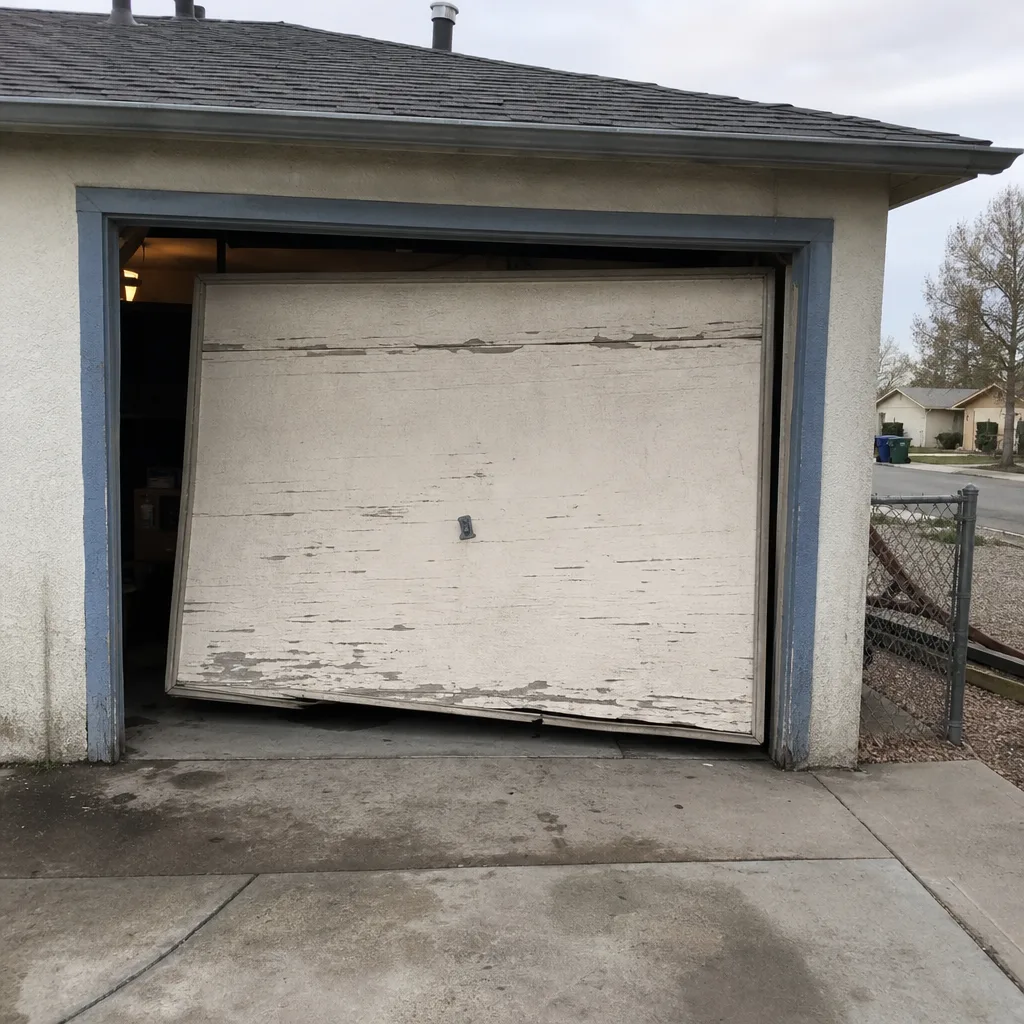 Before
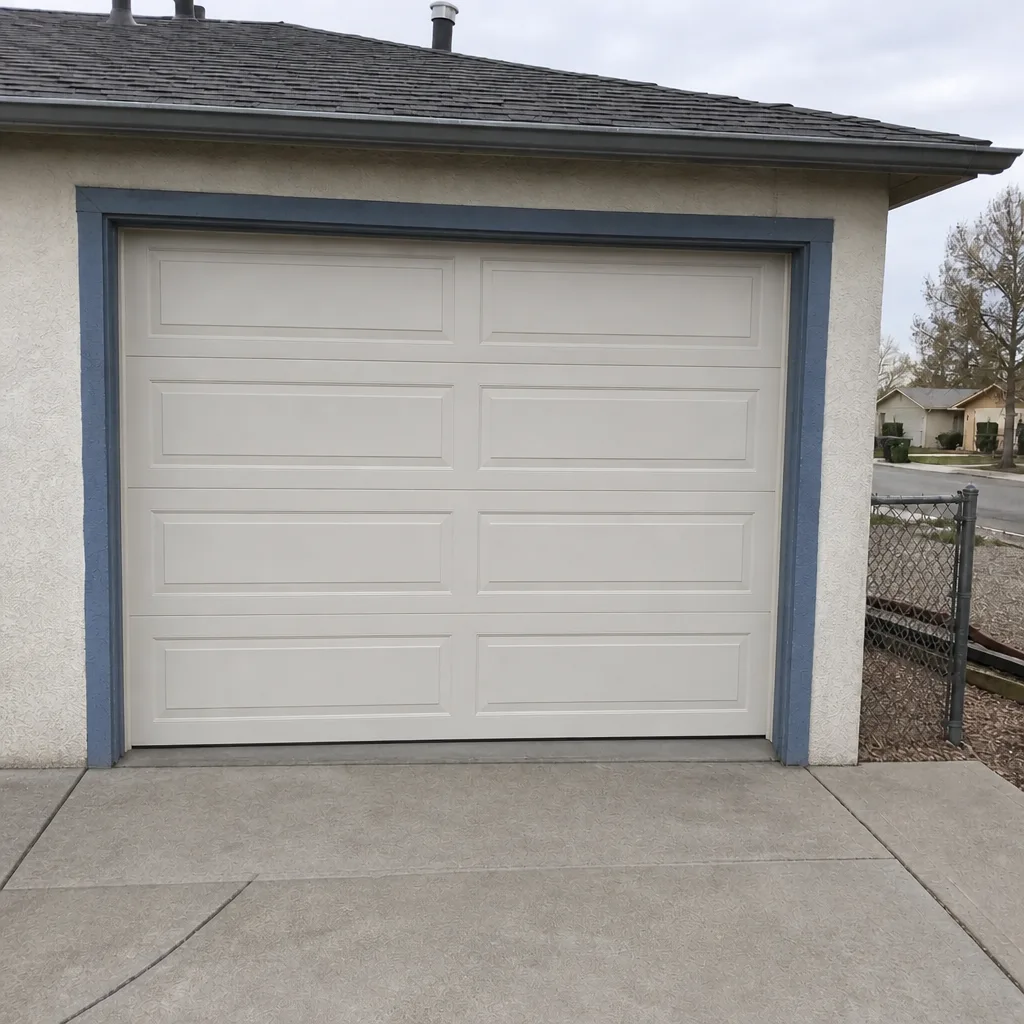 After
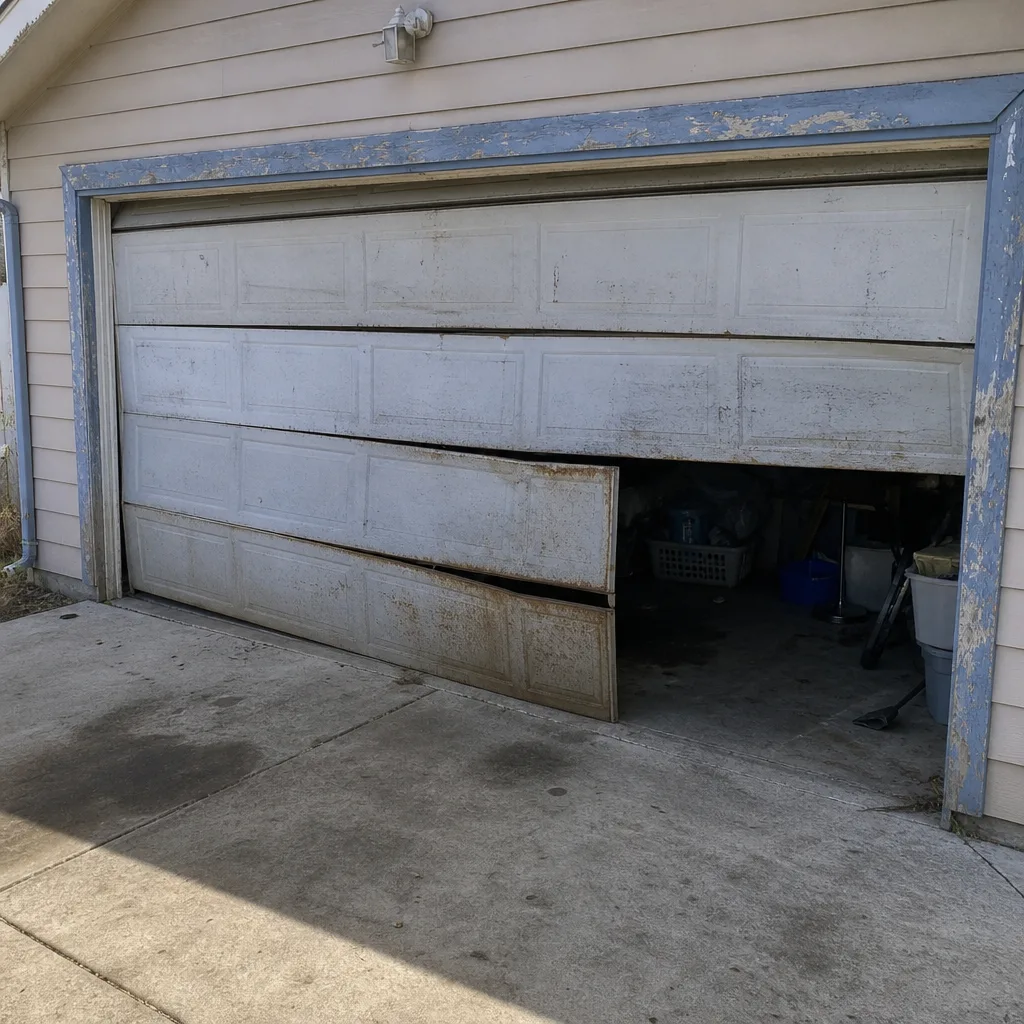 Before
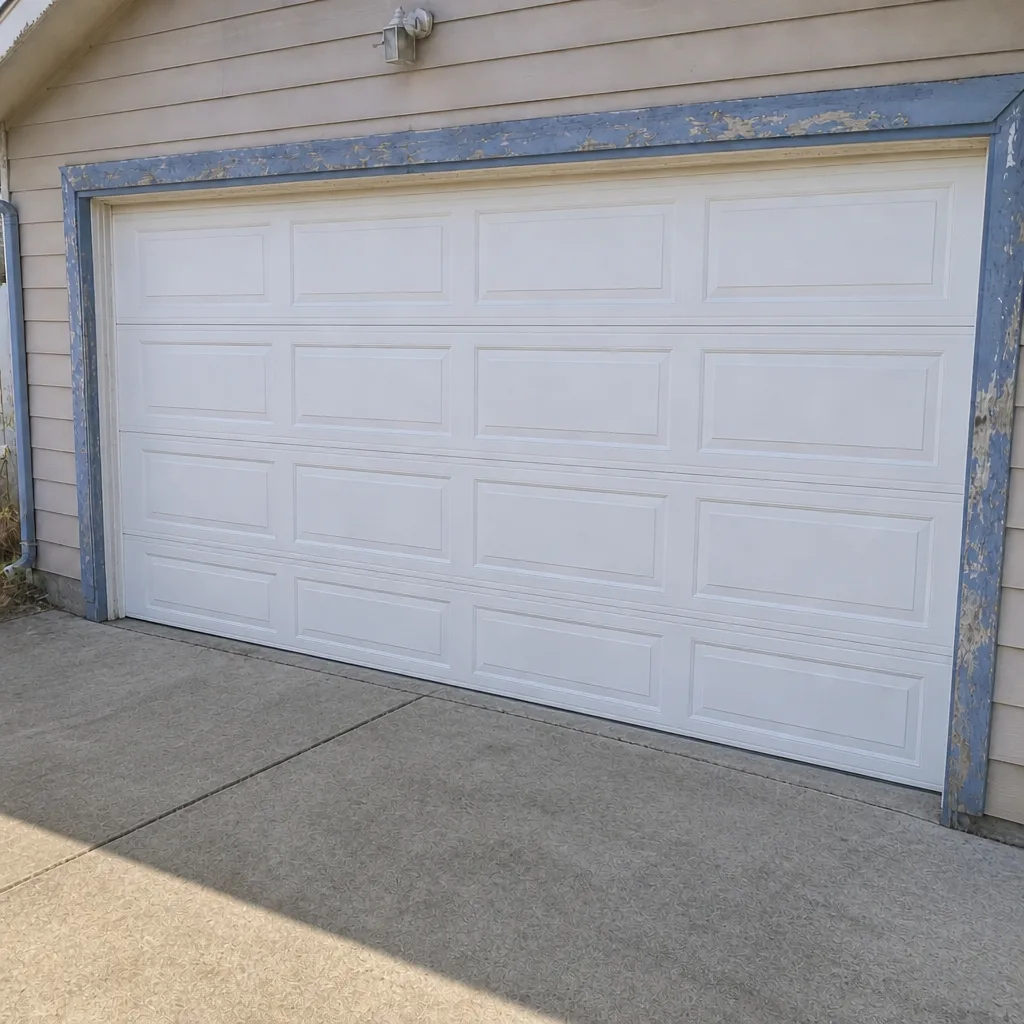 After
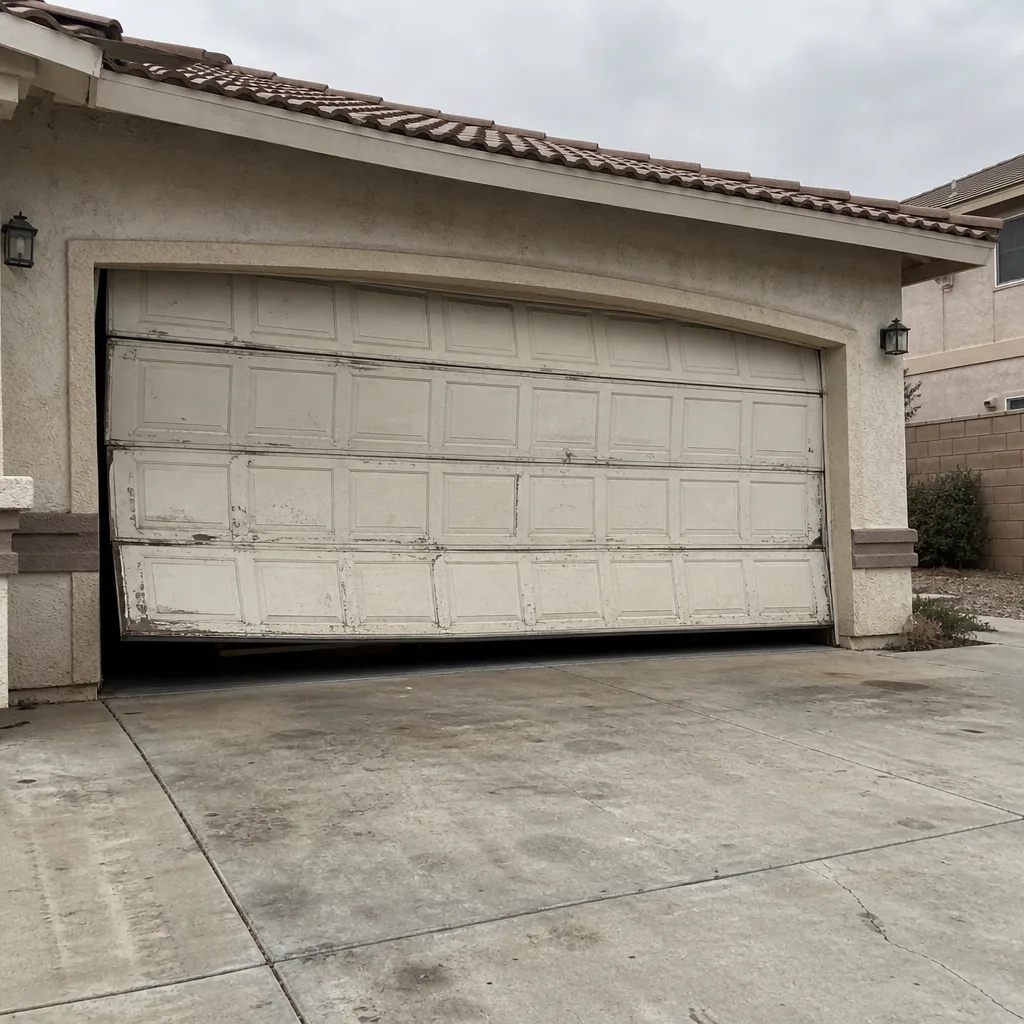 Before
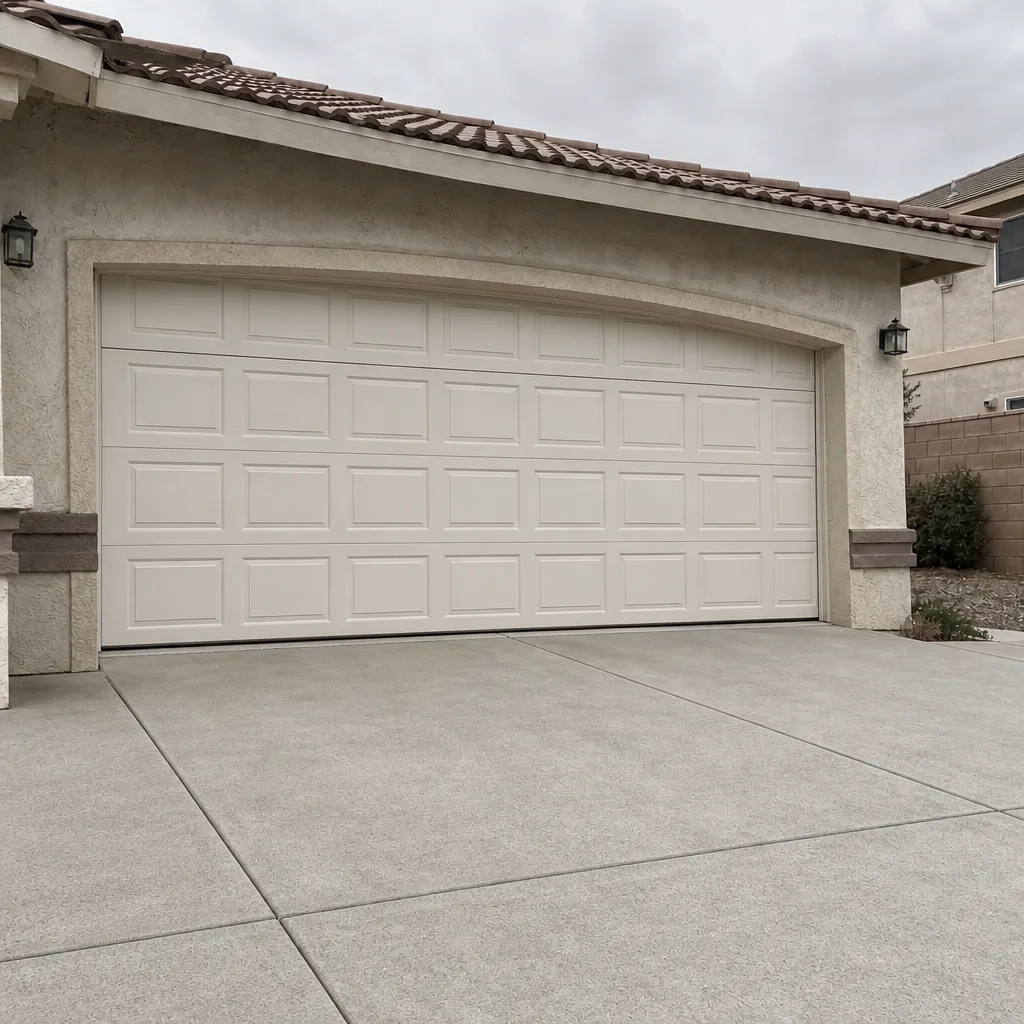 After
Frequently Asked Questions
A standard 10,000-cycle torsion spring lasts about 6 to 7 years for a household using the door four times a day. In Winchester’s heat, springs often fail toward the shorter end of that range. Higher-cycle springs last proportionally longer, and replacement takes under two hours. Call Mainspring Garage Door Co. at (888) 326-0817 if you’d like us to check yours.
No. Torsion and extension springs store enough energy to cause severe injury, and the tensioning process requires specialty tools and training. Replace the weather seal, lubricate hinges, and change opener bulbs; leave springs, cables, drums, and bottom brackets to a technician. Call (888) 326-0817 for a free estimate before you consider it.
Look at the label on the back or side of the motor housing, or on the wall button. The label lists the make and model. If the label is gone, the wall button or the remote can identify the series. Knowing the brand matters because opener parts are brand-specific. Call (888) 326-0817 for a free second opinion on any opener work.
A cycle is one open-and-close. A 10,000-cycle spring is rated for 10,000 operations, which is about 6 to 7 years for a household using the door four times a day. Ratings run from 10,000 up to 25,000 and higher. A higher rating buys years of use for a modest upcharge. Call (888) 326-0817 to ask about upgrading.
No. The price we quote before any work begins is the price you pay, and we’ll confirm it in writing. If a second issue turns up during the job, we’ll stop and tell you before doing anything that wasn’t agreed. Call (888) 326-0817 for a free estimate.
Yes. Our phones are answered by a live person around the clock, and we provide 24/7 emergency garage door response in Winchester. A door stuck open exposes your home and strains the tracks. We’ll walk you through keeping safe until a technician arrives. Call (888) 326-0817.
The Bottom Line
Your garage door has eleven working parts, and the one carrying the most weight also has the shortest documented lifespan. Track your springs by cycle rating, watch your rollers and weather seal in Winchester’s heat and dust, and know which four repairs you should never attempt yourself. The rest is routine: lubricate, inspect every season, and address a crooked or heavy door before it turns into a bigger repair. We’ve found that homeowners who understand their parts call at the right time, before the emergency, and get a square deal for a smaller repair. For a free written estimate, call Mainspring Garage Door Co. at (888) 326-0817. We’ll tell you the price before any work starts, and we stand behind it in writing with our 90-Day Done Right Promise. Senior and veteran discount available.
Written by the team at Mainspring Garage Door Co. Winchester.