
Last updated November 18, 2026
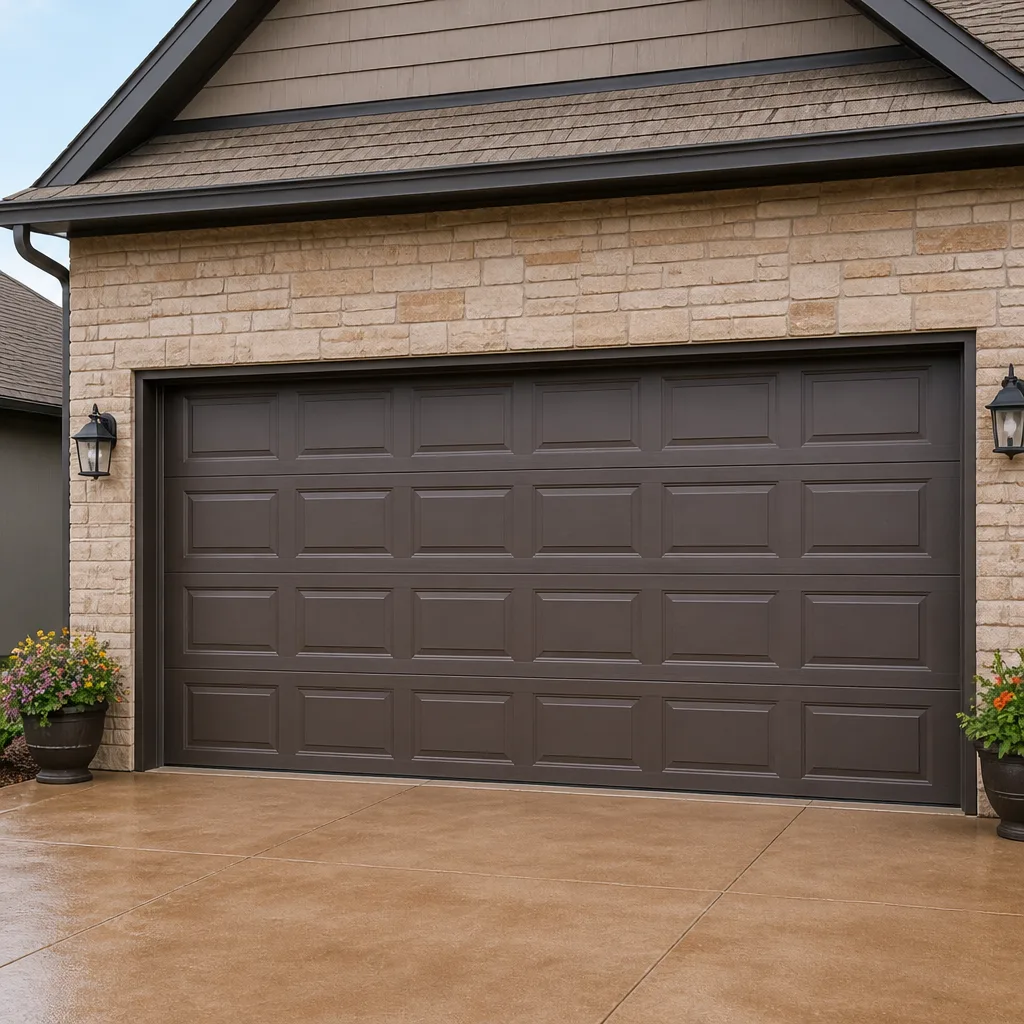 Raised-panel steel
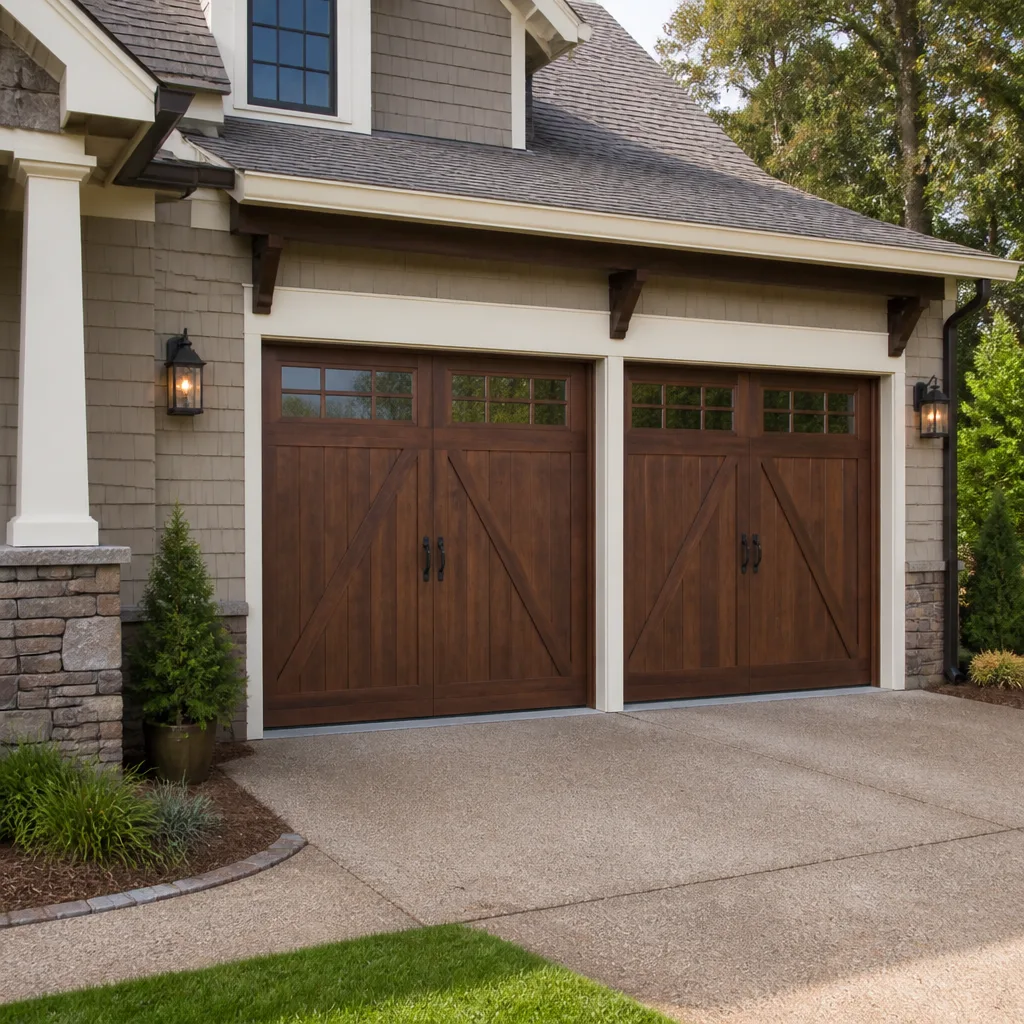 Carriage house
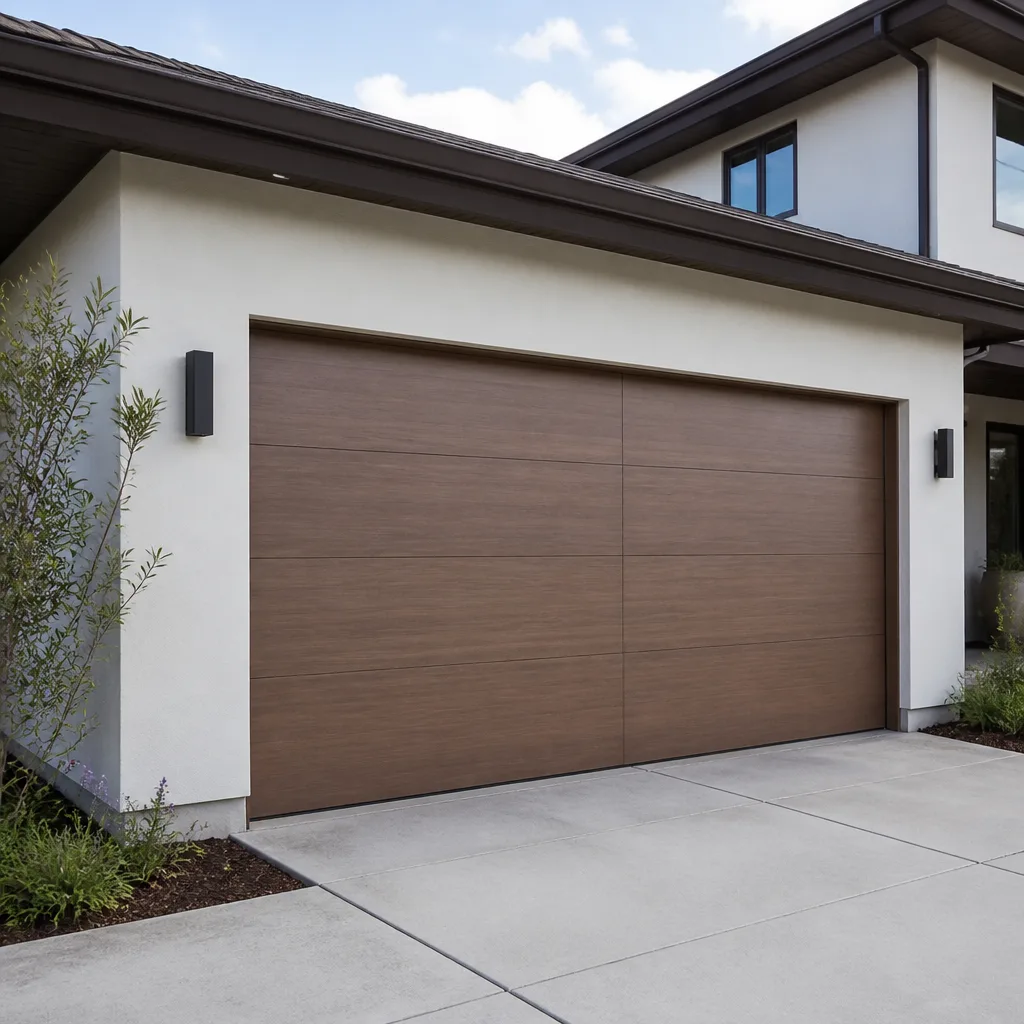 Modern flush
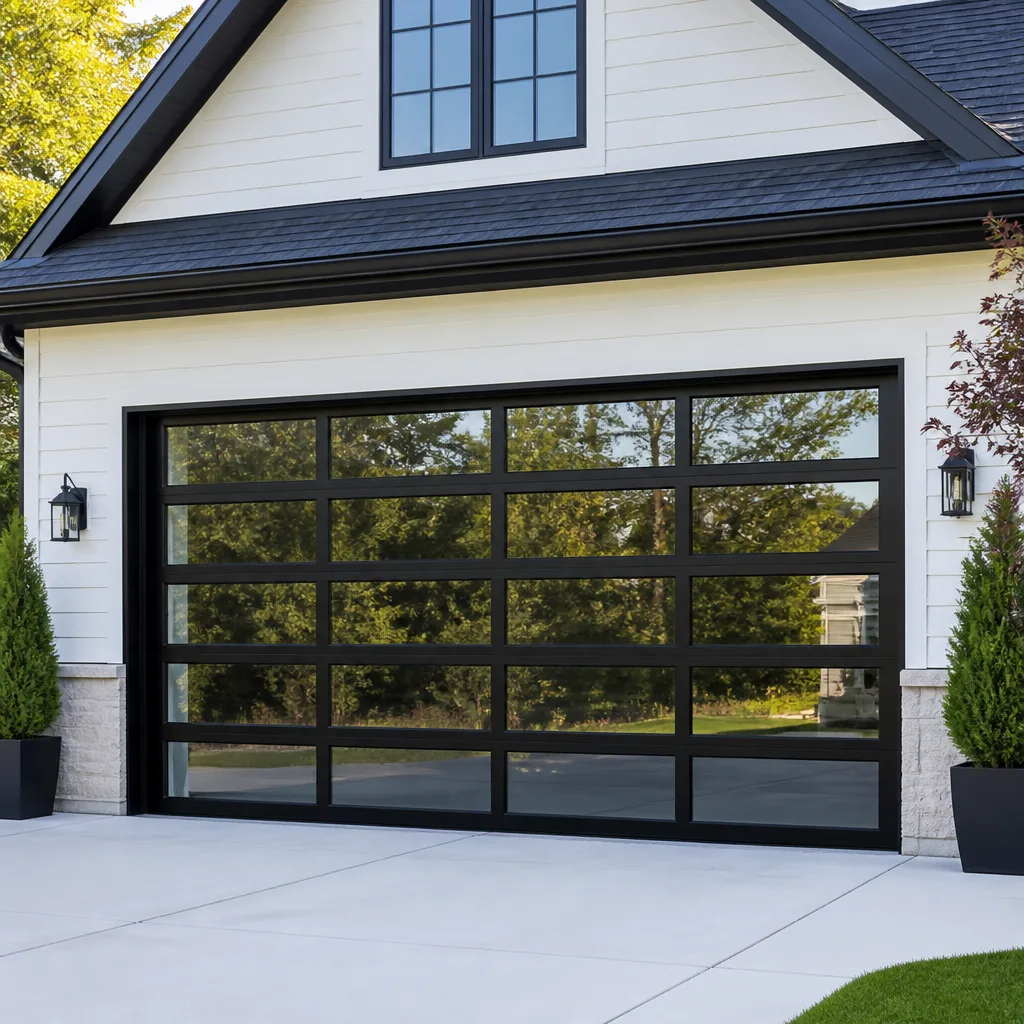 Full-view glass
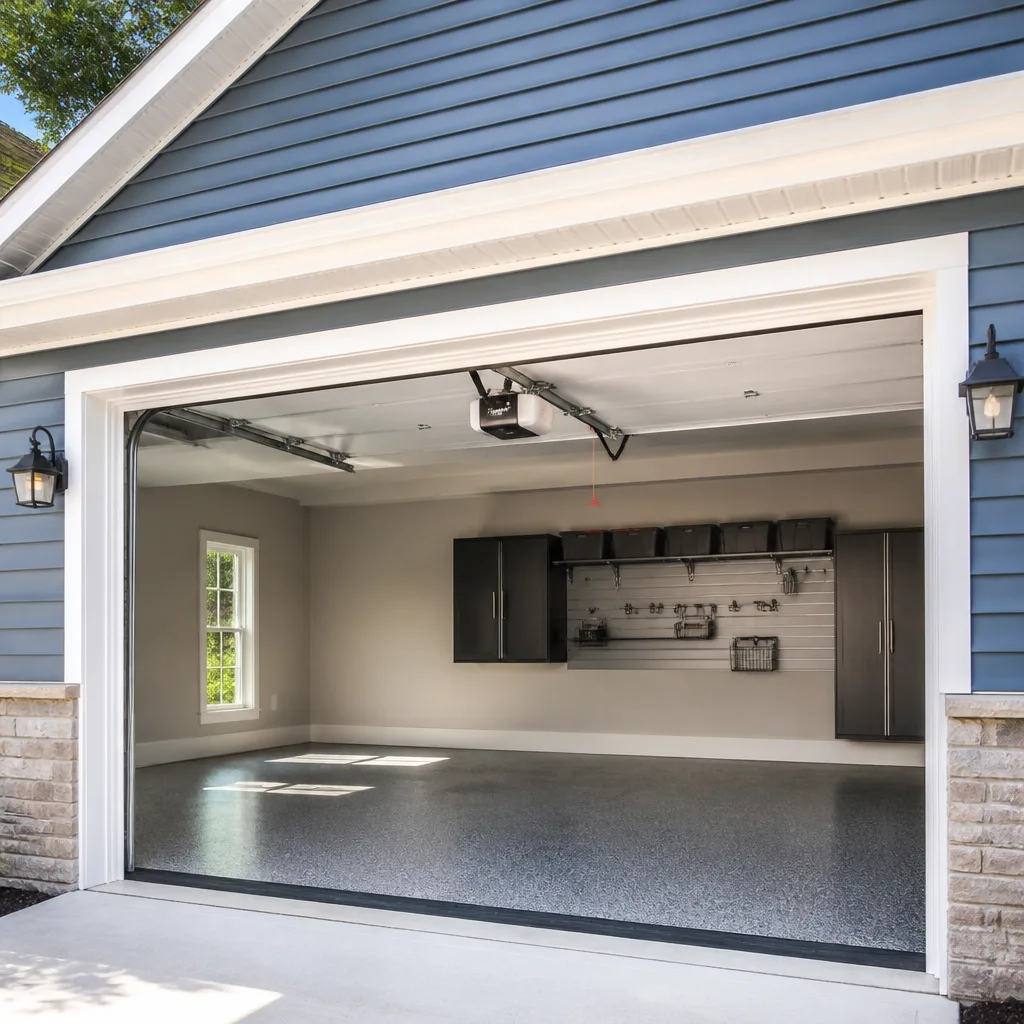 LiftMaster openers
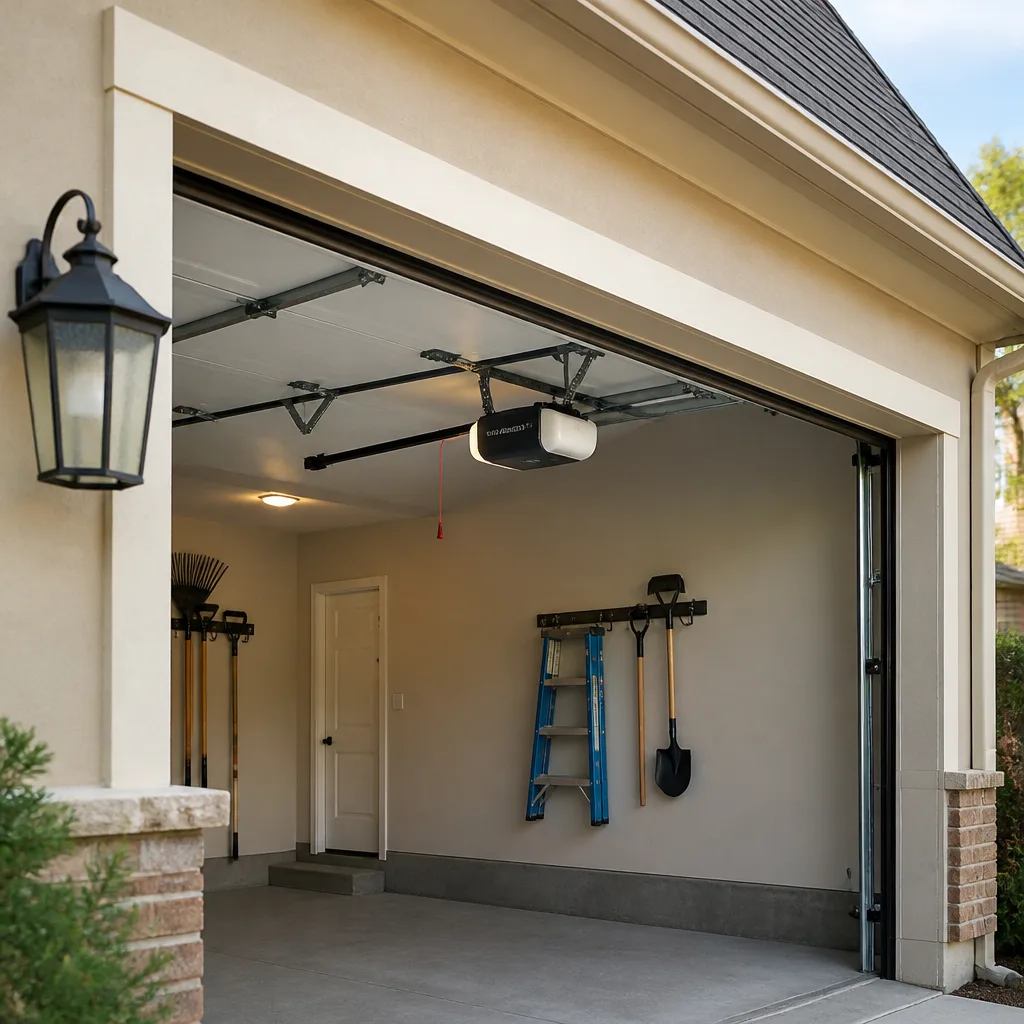 Chamberlain openers
Full 25-point door and opener safety check with every visit - springs, cables, rollers, tracks, and your LiftMaster or Chamberlain opener included
You get a price before we start. It does not change when the pro arrives.
Get your free estimateGarage Door Opener Warning Signs Every Homeowner Should Know
A garage door opener that hesitates for one second before it moves is not warming up. That pause is usually early motor capacitor fatigue, and in our experience it turns into a no-start within two to three months. Openers rarely fail without announcing it first. They grind, click, strain, stall, and reverse for weeks before the door finally quits. The homeowners who catch those signals early turn a Saturday emergency into a scheduled service call. This guide catalogs the eight warning behaviors worth knowing, explains what each sound points to, and shows you which warnings let you keep using the door versus the ones that mean stop now. It’s written from Winchester, where dry desert air and temperature swings give our openers a particular set of habits.
Quick Answer
The most reliable garage door opener warning signs are a hesitation before movement, grinding or straining noises, a door that reverses without hitting anything, intermittent failures that come and go, and a remote that only works up close. Any two of these symptoms on an opener seven years old or older is a replacement conversation, not a repair conversation. A door that closes on its own, a broken spring sound, or a sagging door with a running motor means stop using it and call for service.
Styles & brands we work with
- Raised-panel steel
- Carriage house
- Modern flush
- Full-view glass
- LiftMaster openers
- Chamberlain openers
Table of Contents
- The Eight Warning Signs to Watch For
- Grinding vs. Clicking vs. Straining: What Each Sound Means
- Why Intermittent Failures Are the Most Telling Sign
- The Age-Plus-Symptom Calculation
- Safety-Critical Warnings: When to Stop Using the Door
- What You Can Safely Check Yourself
- How Winchester Heat and Dust Affect Your Opener
- Common Mistakes to Avoid
The Eight Warning Signs to Watch For
An opener gives you plenty of notice. Here are the eight behaviors we hear about most from Winchester homeowners, what each one points to mechanically, and how urgently it should be addressed.
- A pause before the door moves. A one-second hesitation points to a failing start capacitor. It will likely become a no-start in two to three months. Schedule service; don’t wait for the failure.
- Grinding noise while the door travels. Worn gears inside the opener, or dry, worn rollers and hinges. Grinding that gets louder over the week is the tell. Address it on a scheduled visit before the gear strips entirely.
- Clicking without movement. A click and nothing else usually means the logic board or a failed capacitor. If the door is stuck, stop pressing the button repeatedly and arrange a repair.
- Straining or humming. The motor is working hard but the door is barely moving. This often points to a spring that has lost tension, a binding track, or a door that’s out of balance. Don’t force it.
- Reversing without an obstacle. If the door goes down and back up with nothing in the way, the safety sensors are misaligned or the travel limits have drifted. Mechanical misalignment becomes a real safety issue quickly.
- Intermittent operation. The door works fine for a week, then won’t open on a Sunday morning. This points to loose wiring, a warped logic board, or a failing limit switch. It’s the most dismissed warning and often the most telling.
- Remote or keypad range shrinking. A remote that used to open the door from the driveway now only works from up close. It’s often a dying remote battery, but a weakening opener receiver or interference from WiFi devices in the garage note the same symptom.
- The motor runs but the door doesn’t move. The opener is trying, but the door isn’t. This usually means a broken spring, a snapped cable, or a stripped drive gear. This one is safety-critical – stop using the door immediately.
If you notice two or more of these on the same opener, don’t wait for the failure to pick a repair day. Our garage door opener service in Winchester covers the diagnosis and the parts, most often in a single visit.
Grinding vs. Clicking vs. Straining: What Each Sound Means
The sound your opener makes is the fastest diagnostic clue you have. Different noises map to different components and different urgency levels.
Grinding is heavy and continuous, and it usually gets worse over days. It points to worn gears inside the motor housing, dry rollers, or hinges that have lost their lubrication. Grinding is rarely an emergency, but it tells you the component is wearing – schedule it. A stripped gear means the opener runs but the door doesn’t move.
Clicking is short and repetitive. A single click and no movement points to the logic board or the start capacitor. Repeated clicking points to a limit switch that isn’t registering the travel distance. If the door has stopped moving entirely and you’re hearing clicking, you’re past the “keep watching it” stage.
Straining or humming is the quietest of the three, and the easiest to ignore. The motor is audibly working but the door isn’t moving normally. It points to a spring that’s lost tension, a track that’s binding, or a door that’s badly out of balance. Straining is the sound that most often leads to a snapped spring or a burned-out motor if ignored. Stop using the door and arrange service.
A fourth sound worth naming: a bang from the ceiling after the door stops. It usually means a torsion spring has snapped. That’s a safety-stop moment, not a continuing-to-use moment.
Brands matter a little here. A LiftMaster or Chamberlain belt-drive opener is built to run quiet, so any new grinding on one of those is a genuine change worth attention. Chain-drive units from Wayne Dalton or Craftsman make a steady mechanical hum as a matter of course – that’s normal, not a warning. What isn’t normal is any change in the rhythm of that hum.
Why Intermittent Failures Are the Most Telling Sign
The homeowner who says “well, it worked this morning” is describing the single most important category of warning. Intermittent failures get dismissed because the door works again, and if it works again, the reasoning goes, nothing can be wrong. That reasoning fails because openers don’t fail intermittently by design. They fail that way because a component is at the edge.
Four things cause intermittent operation, and each one behaves in a specific way:
- A warped or failing logic board. Works cold, fails after ten minutes of heat. Winchester summers make this one worse because the garage gets hot enough to shift a failing board’s behavior.
- Loose wiring at the safety sensors or the wall control. Works in dry weather, fails after a windy night or a big temperature swing.
- A sluggish limit switch. Usually presents as the door stopping a few inches short one day, then working fine the next.
- A receiver fighting interference. The remote works sometimes and not others, especially if a newer WiFi router or smart device lives near the opener.
Intermittent failures are also where the age calculation matters most. A three-year-old opener with an intermittent failure is usually a repair. A seven-year-old opener with the same intermittent failure and two other nagging symptoms is usually a replacement – and a much more predictable one if you schedule it instead of waiting for the failure that leaves the car outside.
The Age-Plus-Symptom Calculation
Age alone isn’t a reason to replace an opener. An opener at fifteen years with none of the eight symptoms is a working machine. But age plus symptoms changes the math, and this is the calculation we walk Winchester homeowners through.
Openers are built to a cycle count, not a calendar. A garage door used twice a day averages about 750 cycles per year. A household that comes and goes five times a day is running closer to 3,600. Chain-drive units from Craftsman and chain-drive LiftMaster models typically last ten to fifteen years on a moderate schedule. Belt-drive openers run quieter but often have similar life spans. Raynor and Wayne Dalton units are no exception to that pattern.
Here’s the rule we use:
- Under seven years old, one symptom: repair conversation. Address the specific component.
- Under seven years old, two symptoms: repair conversation, but expect a closer look at the logic board.
- Seven years old, two symptoms: replacement conversation. The cost of stacking repairs begins to exceed the cost of a well-chosen replacement.
- Fifteen years old, any symptom: replacement conversation, even if the symptom seems minor. The next symptom is usually a no-start.
- Any age, two or more symptoms plus a safety-critical one: stop using the door and call for service.
Replacements aren’t a same-day event. That’s a measure, a written price, and a scheduled install – and that’s a feature, not a limitation, because it means you pick the day. You can read more about what that process looks like on our garage door installation page.
Safety-Critical Warnings: When to Stop Using the Door
A few warnings are not “schedule service soon” warnings. They’re “stop using the door” warnings, and they exist because a garage door is the largest moving object in the average house – roughly 200 to 400 pounds suspended overhead on springs and cables under real tension.
Stop using the door and call for service immediately if you notice any of these:
- A loud bang from the ceiling followed by the door refusing to lift. That’s a broken torsion spring. The door is dead weight on a running motor.
- A visible kink or gap in a torsion spring on the horizontal shaft above the door.
- A door that hangs unevenly, drops fast, or slams shut.
- The motor runs but the door doesn’t move at all.
- Cables that have come off the drum, are frayed, or are hanging slack.
- A door that closes on an object and doesn’t reverse. Test this monthly with a roll of paper towels – if the door doesn’t reverse, stop using it.
These are the situations where a repair becomes an emergency, and we recommend against any homeowner attempt to fix a spring or cable themselves. The energy stored in a wound torsion spring can cause serious injury, and there’s no safe shortcut. Keep the door down, don’t force it up, and call for help.
The rest of the eight warning signs are the “keep using it, schedule a service date” kind. Grinding, clicking, intermittent failures, shrinking remote range – these allow you to pick the day. If you’re in Winchester and not sure which category you’re in, our garage door repair in Winchester team can help you sort it out over the phone before you commit to a visit.
What You Can Safely Check Yourself
There are a handful of checks that don’t require touching any component under tension. These five are safe for anyone to do and will tell you a lot about which symptom you’re dealing with:
- Test the safety reversal. Place a roll of paper towels on the ground in the door’s path and close the door. It should reverse on contact. If it doesn’t, stop using the door.
- Check the sensor lights. Both sensors at the bottom of the track should glow steadily. A blinking light points to misalignment or an obstruction.
- Clean the sensor lenses. A soft cloth. Winchester dust collects on those lenses faster than most people expect.
- Replace the remote battery. A surprising number of “short-range” complaints are a battery on its way out.
- Listen on a quiet street. Stand in the driveway and listen through one full open and close cycle. You’ll hear changes in tone, rhythm, or volume you wouldn’t notice from inside the car.
What stays off the safe list: lubricating the torsion spring, adjusting travel limits on a door that’s already misbehaving, and anything involving the springs or cables. Those belong to a trained technician.
How Winchester Heat and Dust Affect Your Opener
Openers here work a harder schedule than the manufacturer’s test bench. Summer garage temperatures in Winchester push past 110 degrees, and the door itself soaks up heat from a west-facing driveway all afternoon. That heat accelerates two things: capacitor fatigue inside the motor, and logic board warpage. The one-second startup pause we mentioned at the top is the first symptom of both.
Dust is the second factor. Winchester’s dry air and frequent wind events work fine grit into the tracks, into the rollers, and into the sensor lenses. The grinding noise homeowners describe as “getting worse” often starts here rather than in the gears. A seasonal clean and lube schedule – we offer an $89 seasonal tune-up that covers exactly this – clears the grit before it becomes wear.
Winter nights are the other swing. Openers respond to temperature change, and a unit already at the edge tends to fail on the coldest morning of the year. In our experience, the calls that come in during a Winchester cold snap are rarely a fresh failure – they’re the second symptom of something that started in August.
You can learn more about how we handle opener service at our garage door opener page and about our full service list at the Mainspring Garage Door Co. Winchester home page.
Common Mistakes to Avoid
- Pressing the button repeatedly when the door is stuck. If the motor runs but the door doesn’t move, the problem is likely a spring or cable. Pressing the button repeatedly adds wear to the motor without fixing anything. Stop and call.
- Treating a startup pause as normal. A one-second pause turning into a two-second pause turning into a no-start is a predictable progression. If you know the capacitor is the likely cause, schedule it before the failure.
- Ignoring the intermittent failures because the door worked this morning. This is the single most expensive mistake we see. The repair cost for an intermittent logic board today is far lower than a spring, motor, and door response after the failure.
- Attempting to adjust the springs yourself. Torsion springs store enough energy to cause serious injury. There is no safe homeowner version of that adjustment.
- Replacing the opener because the remote stopped working. Check the battery and the sensor alignment first. A “dead” opener is more often a dead battery or a dusty sensor lens.
- Choosing the cheapest bid on a replacement without asking about the warranty in writing. A replacement is a 15-to-20-year purchase. Make sure the paperwork says what happens if it isn’t right.
- Waiting until the car is trapped inside the garage to schedule the visit. The one-second pause doesn’t announce the day it fails. But the calendar it runs on is fairly predictable.
When to Call a Professional
Call a professional anytime you notice a warning sign and aren’t sure which category it falls in, or when the door has stopped completely. Call immediately if you see a broken spring, a frayed or slack cable, a door that hangs unevenly, or a door that doesn’t reverse on contact with an object – those are stop-now warnings, and a trained technician is the right person for them. The rest can wait for a scheduled visit, and a scheduled visit is nearly always cheaper than an emergency response. Our technicians have up to 10 years of experience, arrived background-checked and in uniform, and carry the parts to finish most jobs in a single trip. Mainspring Garage Door Co. Winchester offers free estimates in Winchester – call (888) 326-0817. We answer live, 24 hours.
See the difference
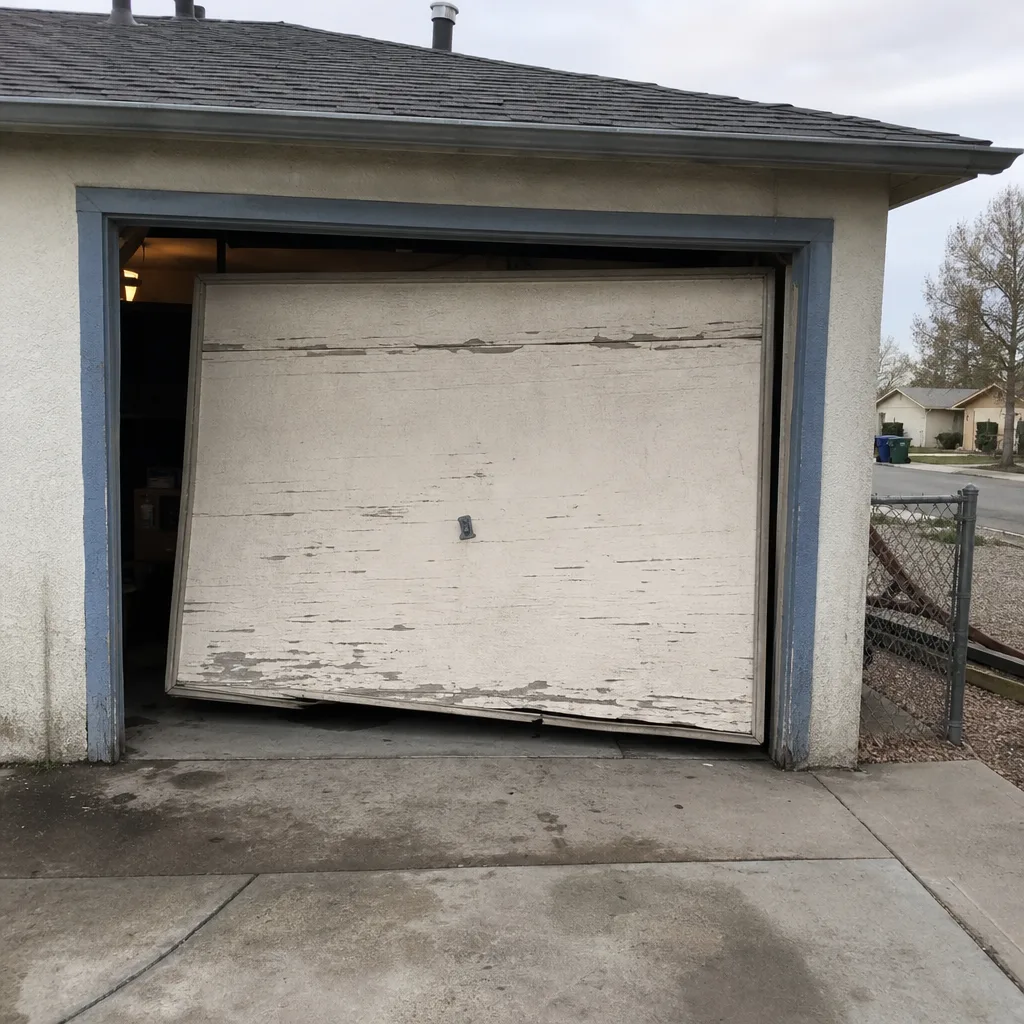 Before
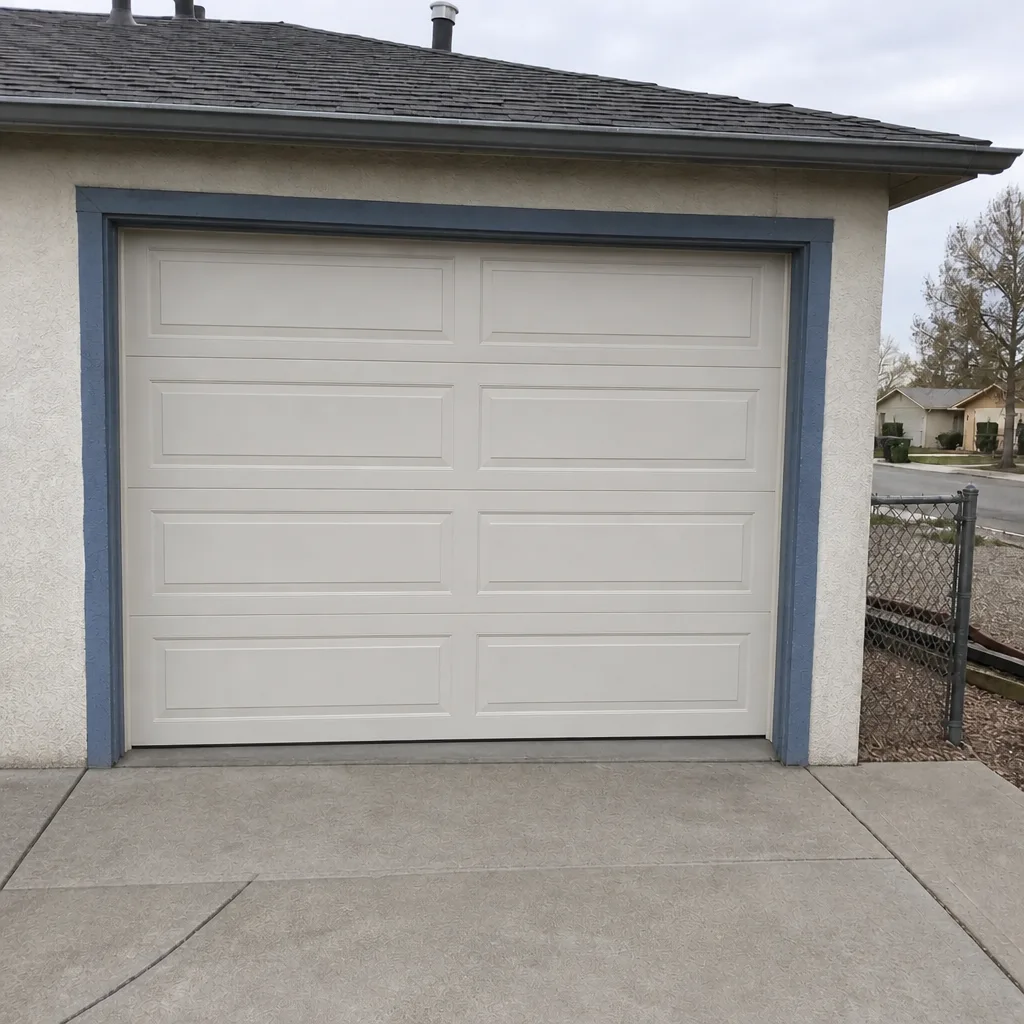 After
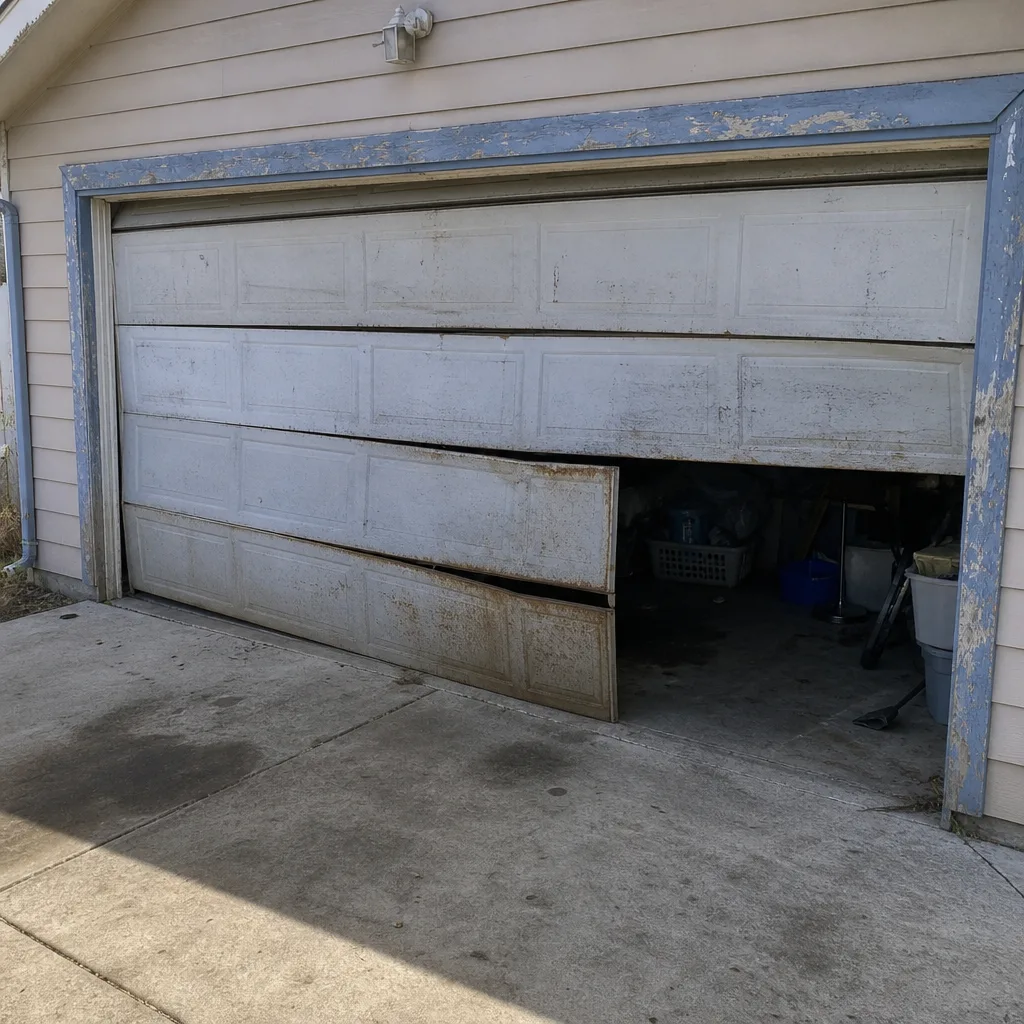 Before
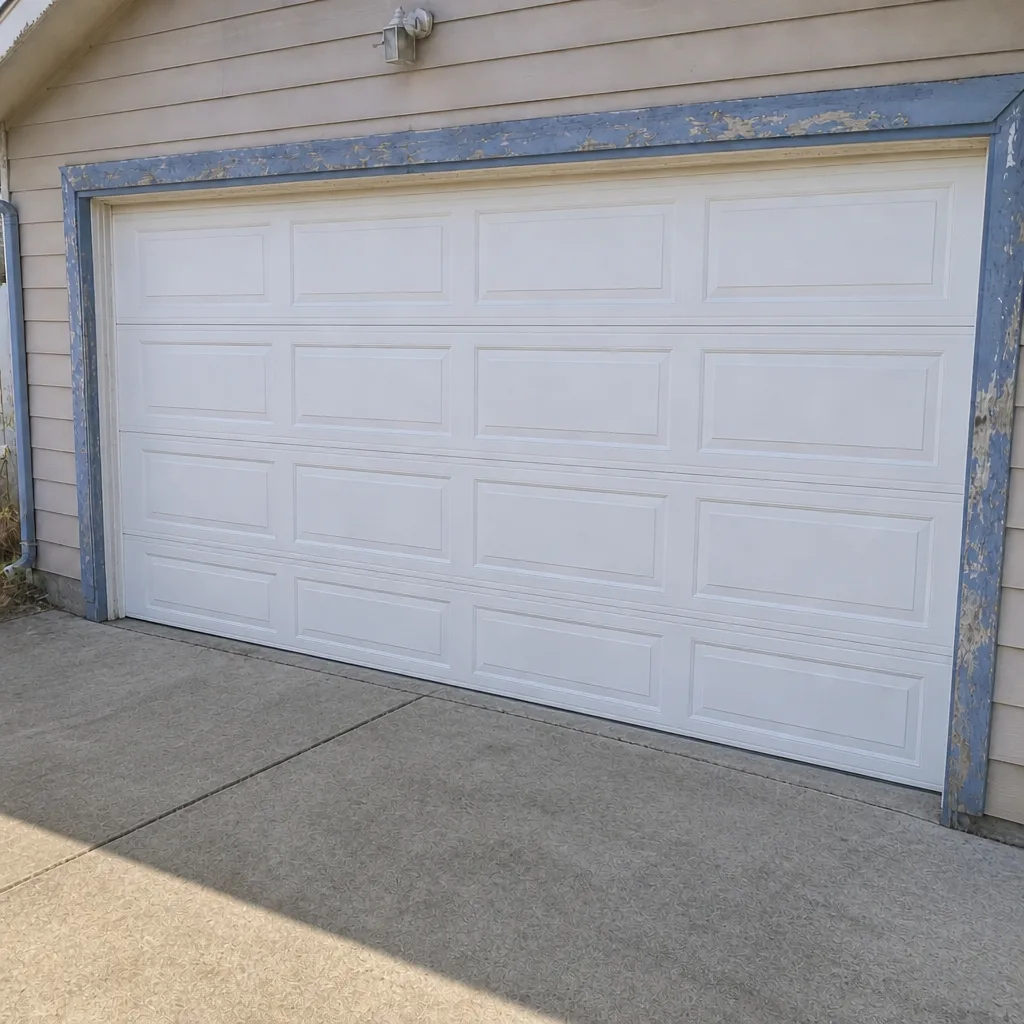 After
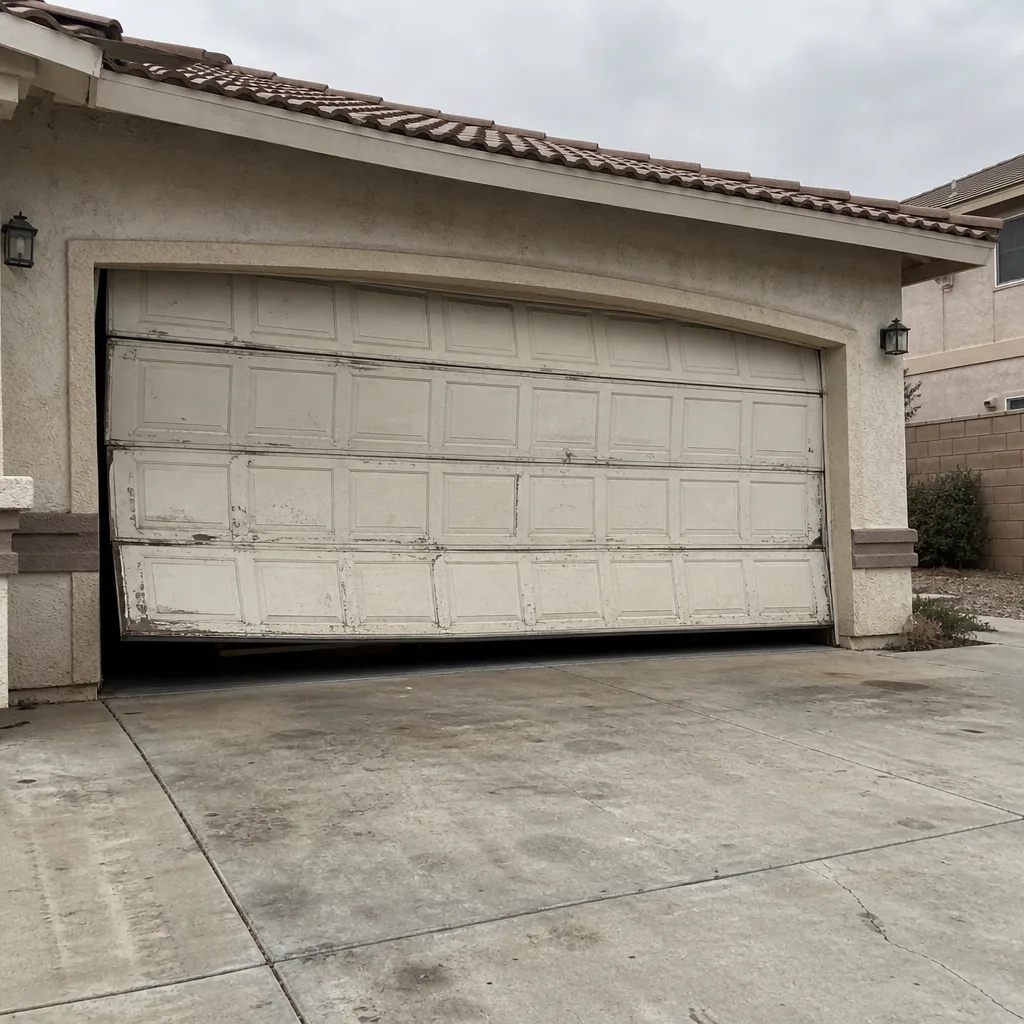 Before
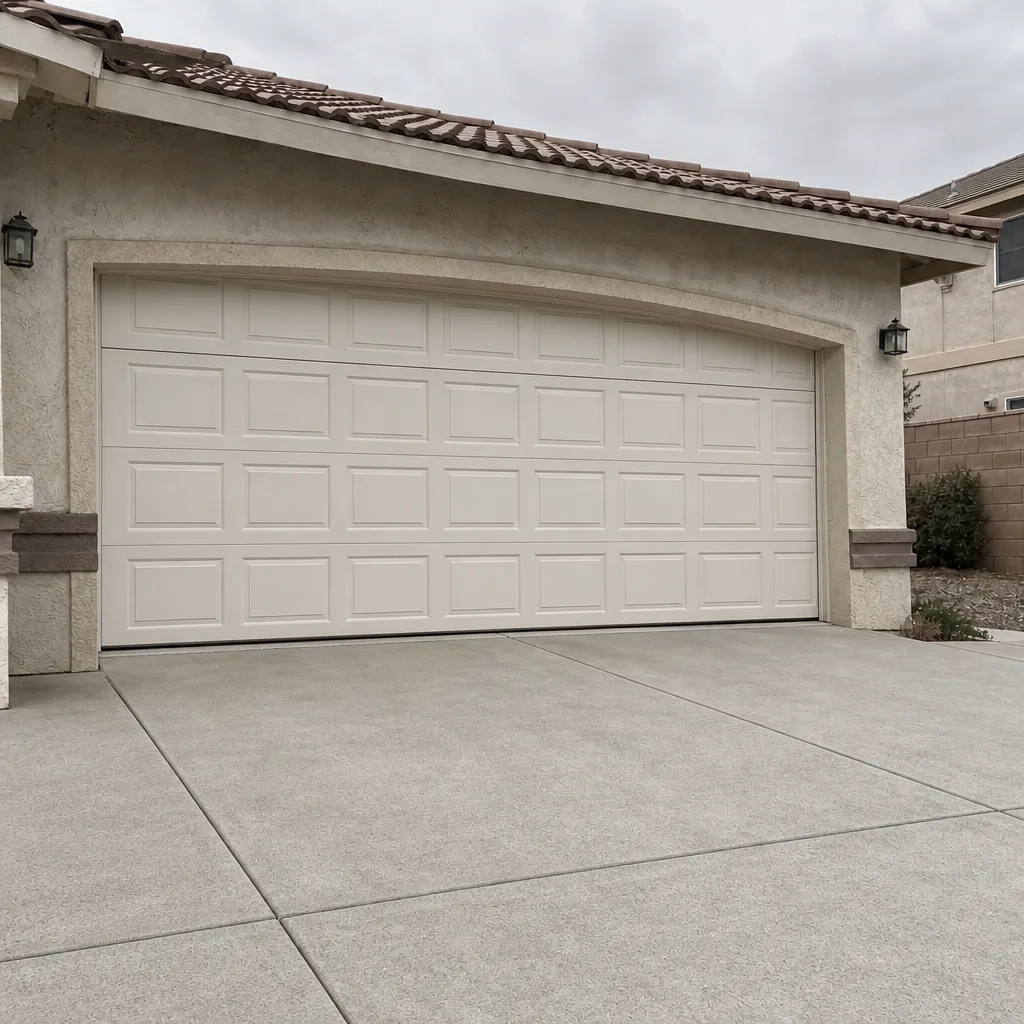 After
Frequently Asked Questions
A short hesitation before the door begins to move is usually the first warning sign, and it typically indicates a failing motor capacitor. That pause tends to lengthen over two to three months before the opener stops starting altogether. If you notice it, schedule service rather than waiting for the no-start. Call (888) 326-0817 for a free estimate.
Most garage door openers last ten to fifteen years on a moderate-use schedule, and Winchester heat and dust tend to push that toward the lower end of the range. A household that comes and goes five times a day may see closer to ten years. Cycle count matters more than the calendar. Call us with the age and the symptom, and we’ll help you decide whether it’s a repair or a replacement. Estimates are free.
Intermittent operation is worth fixing almost every time, and it’s one of the more diagnosable problems an opener has. It usually points to a logic board, loose wiring, or a failing limit switch rather than something structural. A repair visit is nearly always cheaper than waiting for the failure that traps the car. Call (888) 326-0817 and we’ll sort it out.
Yes, but the diagnosis comes first. A motor that runs while the door doesn’t move usually means the problem is in the door hardware, not the opener itself – a broken spring, a snapped cable, or a stripped drive gear. Replacing the opener without fixing the underlying problem wastes money. Stop using the door and arrange a service call so the right part gets replaced.
We don’t quote a price that changes after we see it. The flat price is quoted and agreed before any work starts, and emergency response is included in that conversation. We answer live 24 hours a day, and we’ll always tell you the price before we schedule the visit. Call (888) 326-0817 for an exact quote.
Age plus symptom count drives the decision, not symptom count alone. An opener seven years old with two symptoms is usually a replacement conversation. An opener three years old with two symptoms is usually a repair conversation. Our technicians will walk you through both options at the same visit. Estimates are free either way.
The Bottom Line
Garage door openers fail on a calendar, and they usually announce it weeks ahead of time. A startup pause, a new grinding noise, an intermittent no-start, or a shrinking remote range are all early signals pointing to specific components. Two symptoms on a seven-year-old opener is a replacement conversation. A broken spring, a slack cable, a sagging door, or a door that doesn’t reverse is a stop-using-the-door conversation. The one thing that doesn’t change is the timing window: catch the warning early, and you turn an emergency into a scheduled appointment with a written price in hand. That’s the whole point of paying attention to the small things.
Contact Us
If you’ve read this guide and recognized your own door in two or three of these signs, we’d like to help. Our technicians are factory-familiar with LiftMaster, Chamberlain, Genie, Clopay, Amarr, Wayne Dalton, Craftsman, and Raynor equipment, and we back every completed job with our 90-Day Done Right Promise in writing. Call Mainspring Garage Door Co. Winchester at (888) 326-0817 for a free estimate. We answer live, 24 hours a day, and the price we quote before we start is the price on the bill.
Written by the team at Mainspring Garage Door Co. Winchester.