
Last updated November 18, 2026
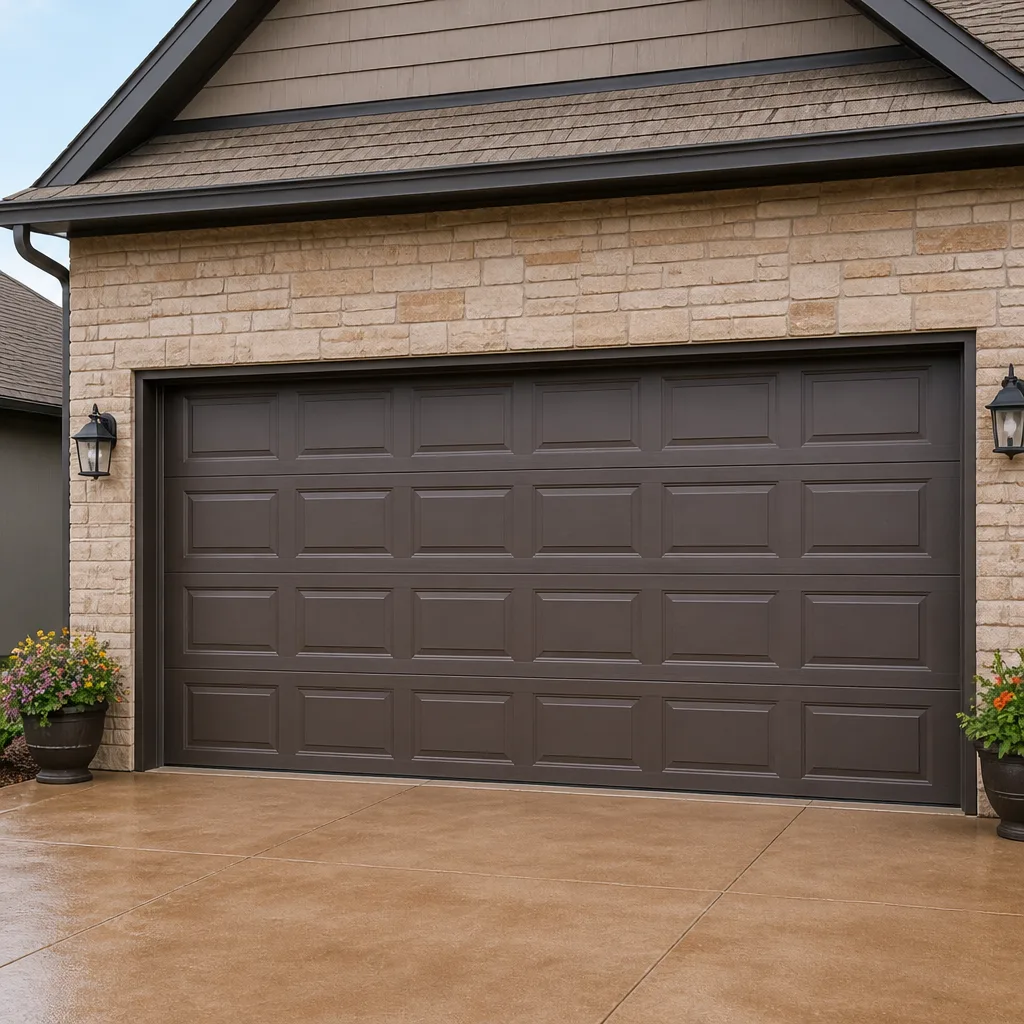 Raised-panel steel
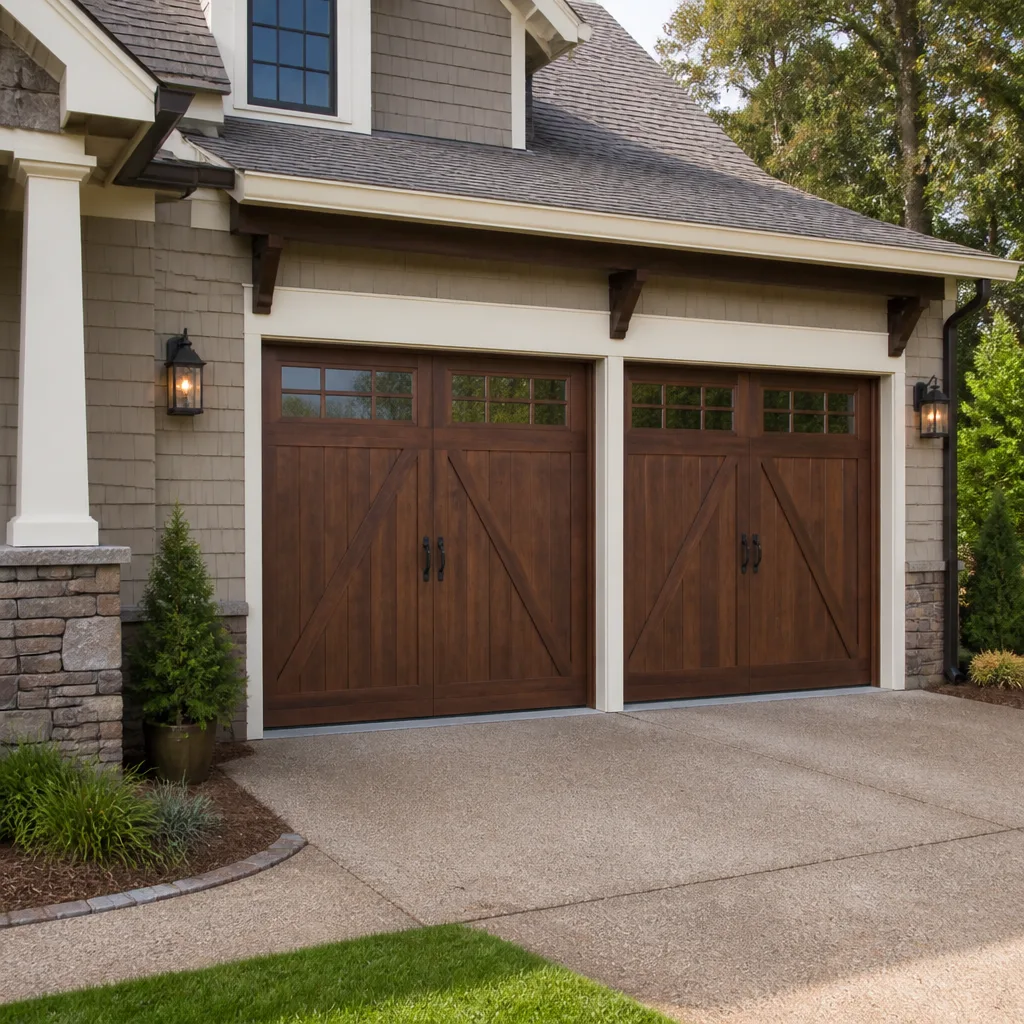 Carriage house
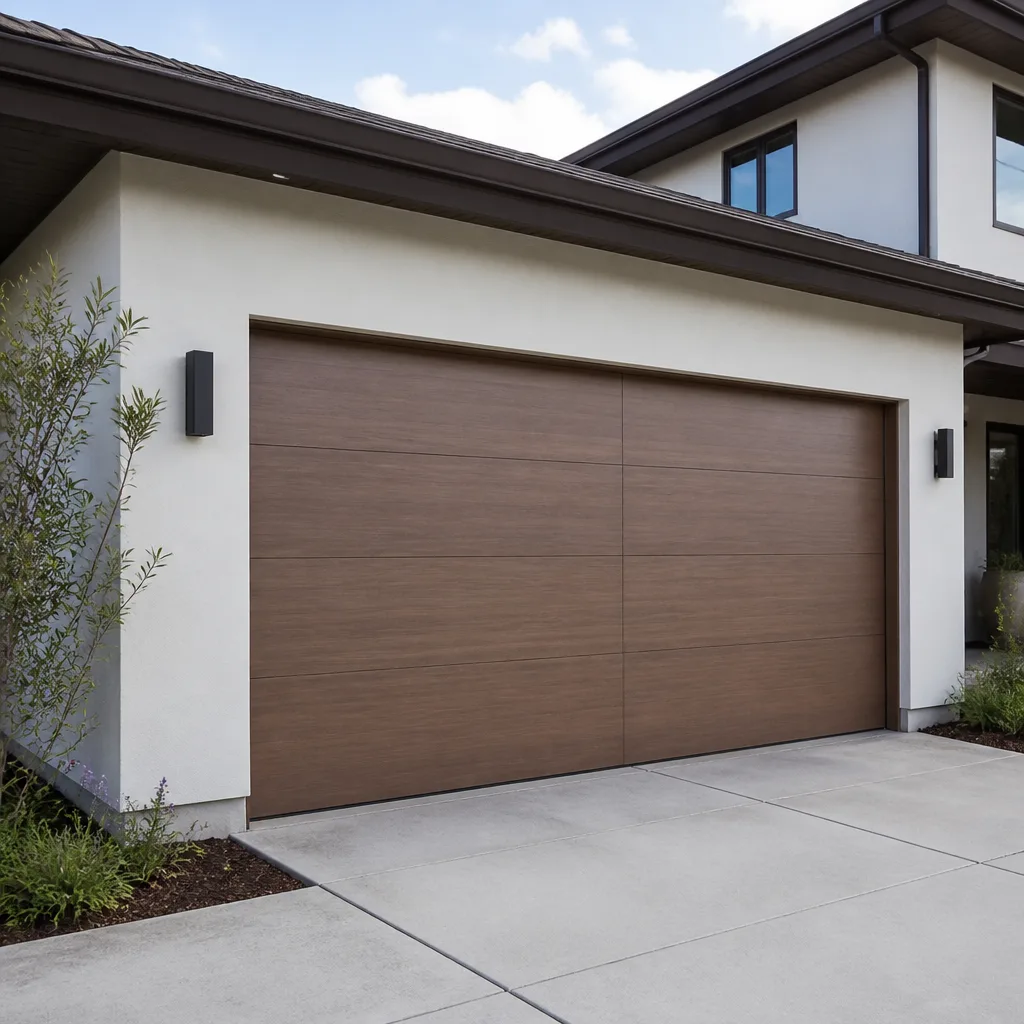 Modern flush
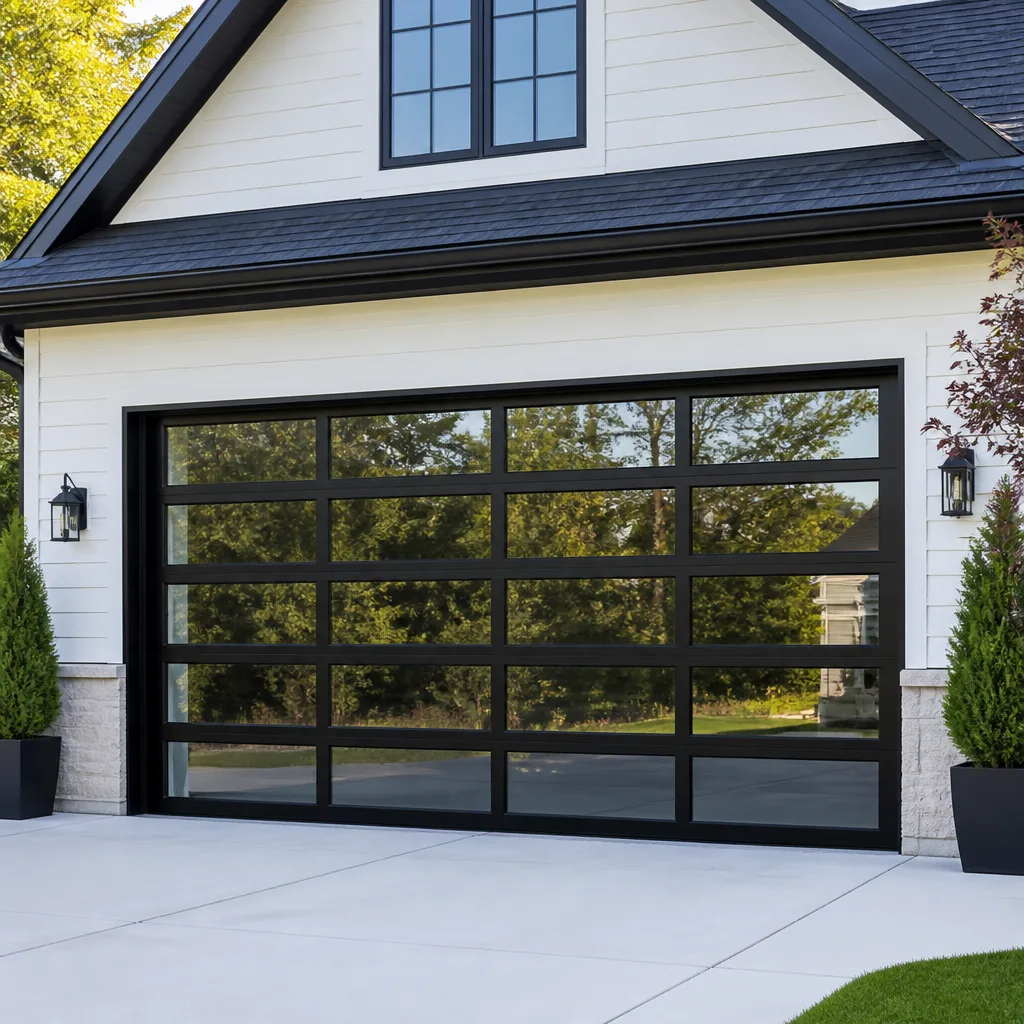 Full-view glass
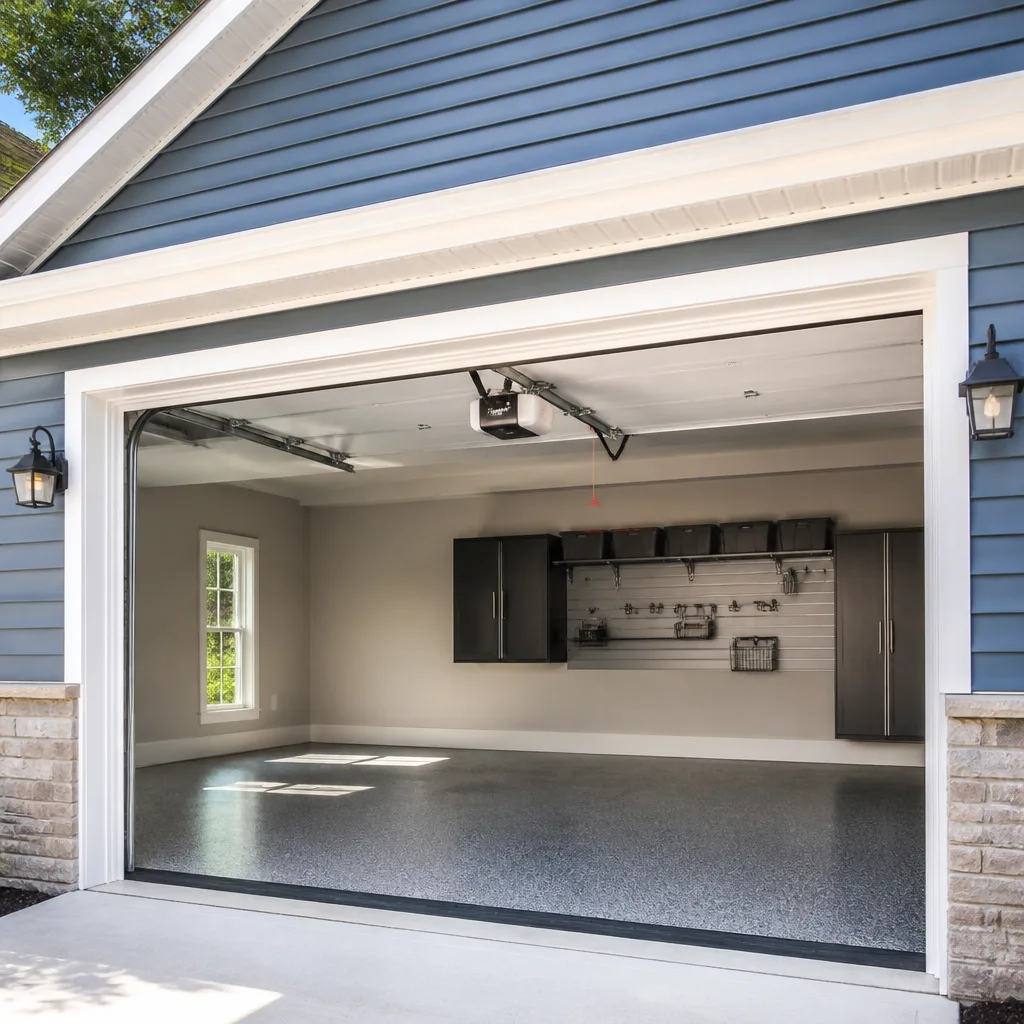 LiftMaster openers
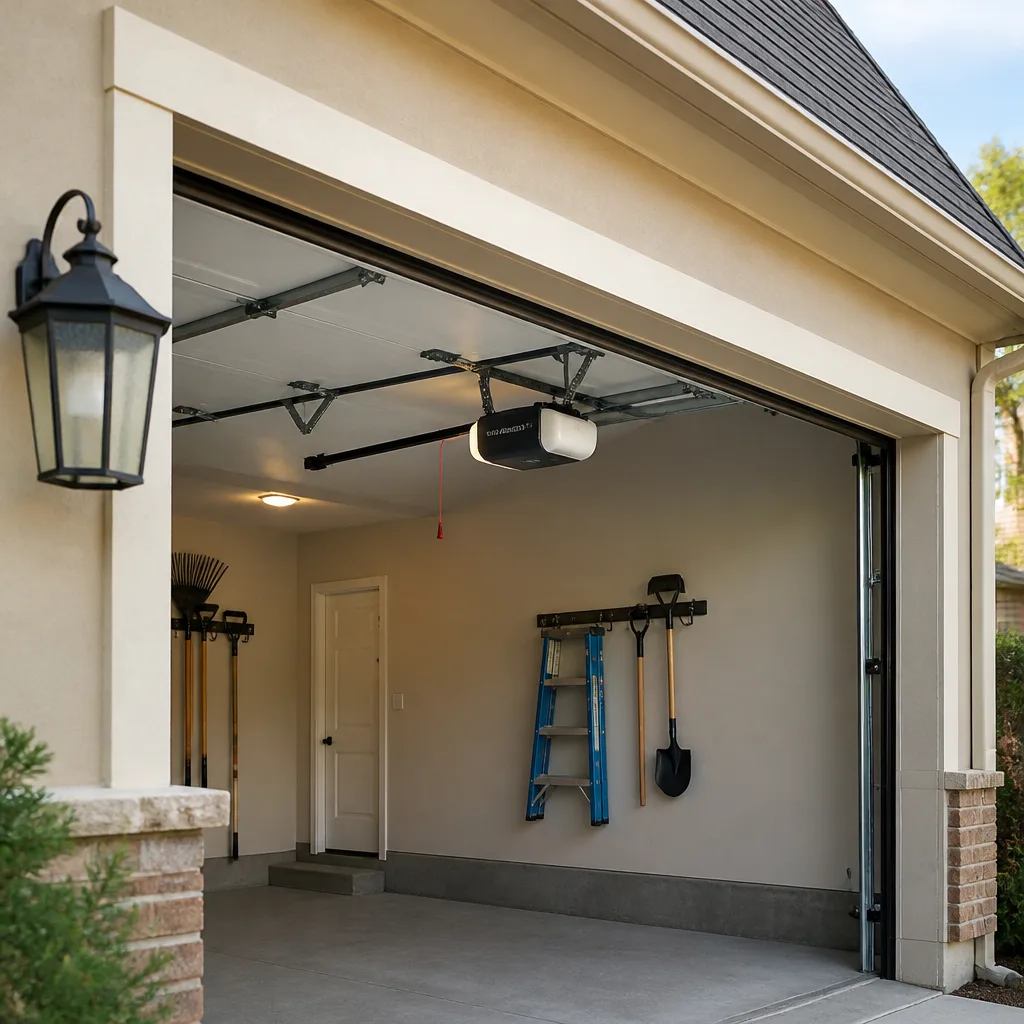 Chamberlain openers
Full 25-point door and opener safety check with every visit - springs, cables, rollers, tracks, and your LiftMaster or Chamberlain opener included
You get a price before we start. It does not change when the pro arrives.
Get your free estimateHow Long Does Emergency Garage Door Take? Timelines and What to Expect
A spring replacement takes 45 minutes. But if the technician arrives without the correct spring for your door’s weight and configuration, you’re still waiting – just waiting with a professional present instead of alone. That gap between what a repair costs in time and what an emergency costs in time is where most homeowners get blindsided. The real number they need isn’t the repair duration. It’s the wait plus the repair, and it depends heavily on what you tell the dispatcher in the first five minutes. In this guide we’ll break down the two finish lines every emergency call has, realistic arrival windows in Winchester, repair times by failure type, and how to spend the wait without losing your evening.
Quick Answer
Emergency garage door calls in Winchester usually reach a technician in 1 to 3 hours, and the repair itself runs 45 minutes to 2 hours for most spring, cable, and opener failures. The bigger variable is whether the truck carries the right part. If your door’s weight and spring setup aren’t matched on the call, expect a second visit the next day and a total emergency window of 24 to 48 hours.
Styles & brands we work with
- Raised-panel steel
- Carriage house
- Modern flush
- Full-view glass
- LiftMaster openers
- Chamberlain openers
Table of Contents
- The Two Timelines: Secure vs. Fully Operational
- What Does Dispatch and Arrival Actually Look Like?
- What to Have Ready When You Call
- Repair Times by Emergency Type
- What to Do While You Wait
- What Does Emergency Pricing Actually Cover?
- How to Avoid the Next Emergency
The Two Timelines: Secure vs. Fully Operational
Every emergency garage door call has two finish lines, and they are not the same time. The first is time-to-secure – the point where the door is no longer a hazard, no longer hanging half-open, and no longer leaving your house exposed to the street. The second is time-to-fully-operational – the point where the door opens and closes on the opener like nothing ever happened. Confusing the two is what leads to angry phone calls at 11 p.m.
Time-to-secure is usually fast. In most Winchester emergencies, a technician can get a broken door into a safe, closed, or manually latched position in 20 to 40 minutes on arrival. That might mean disconnecting the opener, manually lowering the door with the release cord, and securing it with a pair of locking pliers on the track, or in a spring-break case, safely containing the tension and locking the door down.
Time-to-fully-operational is the real repair. Replacing the spring, re-spooling the cable, or re-aligning the door off the tracks takes longer and requires the correct parts. Here’s how the two timelines compare for a typical Winchester call:
- Time-to-secure: 20 to 40 minutes after arrival. Door is safe and the household is no longer exposed.
- Time-to-fully-operational (correct part on truck): 45 minutes to 2 hours after arrival.
- Time-to-fully-operational (wrong part, second trip): 24 to 48 hours, plus a second dispatch and another arrival window.
That is why the phone call matters. Our team at Mainspring Garage Door Co. Winchester home asks about door weight, spring count, and opener model precisely because a return trip converts a two-hour evening call into a two-day problem. The 90-Day Done Right Promise backs the work, but nothing gets a door back online faster than a truck arriving with the right part already loaded.
What Does Dispatch and Arrival Actually Look Like?
Emergency garage door dispatch in Winchester follows the same pattern across most of the trade. A live person takes the call (there’s no phone tree on a real 24/7 line), captures the address, door type, and failure symptom, and routes the nearest available technician with truck stock. After-hours and weekend calls carry a higher dispatch priority because a door that’s stuck open at 10 p.m. is a security problem, not an inconvenience.
Realistic arrival windows, based on typical Winchester conditions:
- Weekday business hours (7 a.m. to 5 p.m.): 45 minutes to 2 hours.
- Evening (5 p.m. to 10 p.m.): 1 to 2.5 hours. Peak after-work window.
- Overnight (10 p.m. to 7 a.m.): 1 to 3 hours. Fewer technicians on the road.
- Weekends and holidays: 1.5 to 3 hours on average.
- Extreme heat or high-wind days: add 30 to 60 minutes. Spring and cable calls spike in Winchester after a run of 100-degree days, and the dispatch queue reflects it.
Winchester’s climate matters here. Summer heat cycling is hard on torsion springs, and monsoon-season wind gusts that hit the west side of the valley push doors off track. We see more emergency calls in the first two weeks of a heat wave than in a normal month. That’s not a sales line – it’s the reason a spring that’s been carrying the door for eight years tends to let go in late June or early July rather than in March. If your neighbor two streets over just lost a spring, yours is likely running on similar hours and temperature cycles.
What to Have Ready When You Call
The single biggest lever you control on emergency timing is the information you give on the phone. A dispatcher who knows your door’s weight class, spring count, and opener model can pre-load the correct part and skip the second visit. Here’s what to gather before you dial, in order of impact:
- Door dimensions. Measure height and width in inches, not feet. A 7-foot door and a 7-foot-6 door use different springs, and guessing gets you a return trip.
- Spring count and type. Look at the shaft above the door. One spring means torsion; two springs on one shaft means a paired system. Extension springs are on either side of the tracks. Count them and note the color band if there is one.
- Opener make and model. Check the label on the back or side of the motor housing. Genie, Clopay, Amarr, Wayne Dalton, LiftMaster, Chamberlain, Craftsman, and Raynor all show up in Winchester homes, and each has different logic board and remote-matching requirements.
- The exact symptom. “It won’t open” is not the same as “the opener hums but the door doesn’t move.” Say which one it is.
- Door material. Steel, aluminum, or wood. Weight class follows material.
- Whether the door is currently open, closed, or stuck partway. This determines whether the call is a safety priority or a repair priority.
- Your address and gate or HOA access code. Winchester neighborhoods with gated access often require code authorization at dispatch.
Two minutes of prep on your end saves a day of waiting on ours. If you can’t find the opener model, that’s fine – a technician can ID it on arrival, and it’s one of the few delays we can absorb without a second trip as long as the spring and cable data is right.
Repair Times by Emergency Type
Not every emergency takes the same amount of wrench time. Here’s how long the repair phase runs once a technician is on-site, plus the realistic total from your call to a fully working door.
Torsion Spring Break
Repair time: 45 to 75 minutes. Total from call: 2 to 4 hours (weekday), 3 to 5 hours (overnight). This is the most common emergency in Winchester. A torsion spring carries the entire weight of the door – that’s what the Mainspring name refers to – and it fails loudly. If the technician has the correct weight-matched spring on the truck, it’s a single visit. If not, expect a second dispatch the next day.
Cable Snap
Repair time: 60 to 90 minutes. Total from call: 2.5 to 4.5 hours. Cable failures usually happen with the door halfway up and are more dangerous than spring breaks because the door can drop. The technician secures the door first, then re-spools the cable on both sides. Both cables get replaced even if only one snapped, because a matched pair fails on the same schedule.
Door Off-Track
Repair time: 30 to 120 minutes. Total from call: 2 to 5 hours. Off-track calls are the most variable. A door that slipped a roller back onto the track is a 30-minute fix. A door that bent a section, warped a track, and pulled the hinge out of the panel is a longer repair and might require replacement panels, which means a second visit.
Opener Failure
Repair time: 30 to 60 minutes for a motor or logic board; 60 to 90 minutes for a full opener swap. Total from call: 2 to 3.5 hours. Opener emergencies often aren’t true emergencies once the door can be manually operated. We tell people: if you can raise and lower it by hand and lock it for the night, the opener swap can wait until morning without any urgency.
Door Won’t Close (Safety Sensor)
Repair time: 15 to 30 minutes. Total from call: 1 to 2 hours. This is usually a misaligned photo-eye or a sun-glare issue. Fast fix, but never ignore it. A door that won’t close is a security problem overnight, and it’s the most common reason Winchester homeowners call between 9 and 11 p.m.
What to Do While You Wait
Standing in the garage watching a half-open door for two hours is a bad use of the evening. Here’s a practical holding pattern most people miss:
- Secure the vehicles first. Move both cars to the driveway or the street, not just one. If the door comes down further while you’re repositioning, you don’t want to find out with the second car still underneath.
- Lock the house side door. If the door is stuck open, close and lock the door that leads from the garage into the house. That’s your security line for the night.
- Disconnect the opener manually. Every opener has a release cord hanging from the carriage. Pull it once and the door is on manual. Do not do this if the door is off-track or a spring is broken – the door will drop. Leave that to the technician.
- If the door is closed and won’t open, don’t force the manual release. A door with a broken spring is being held up by the opener rail and alignment; releasing it manually can drop a 200-pound panel on you.
- Get the mail, walk the dog, do the inside chores that don’t need the garage. The technician will call ahead with an ETA. Being in the driveway staring doesn’t move the truck faster.
- Text yourself a photo of the broken spring or the off-track panel. It’s useful for the second call if a dispatch problem arises, and it’s useful for an insurance claim if a vehicle got clipped on the way out.
One more practical note for Winchester: on a hot evening, don’t run the car with the garage door stuck open and the engine idling. Carbon monoxide buildup happens faster than people assume. Pull the car out, close the door as far as it will go manually if the tech has cleared it, and idle outside.
What Does Emergency Pricing Actually Cover?
Emergency pricing on a garage door call isn’t a mystery once you break it into pieces. The dispatch fee covers the after-hours or weekend response. The repair itself is quoted as a flat rate for the specific job. If the technician has to return the next day for a part, most reputable shops waive the second dispatch fee because the return is on them, not you.
- Standard business-hours dispatch: typically included in the flat repair price.
- After-hours (evenings, weekends, holidays) dispatch: a separate fee, usually disclosed on the call before you commit.
- Torsion spring replacement (one spring): flat-rate, quoted before work begins.
- Paired spring replacement: quoted as a set; replacing both is standard because they fail on the same cycle.
- Cable replacement (both sides): flat-rate, quoted before work begins.
- Opener repair or replacement: quoted on the make and model.
- Second-visit return for a part: should be at no charge when the original call lacked the part.
The number that matters is not the emergency fee. It’s whether the price you were quoted on the phone is the price on the invoice. Ask for the flat price before the technician starts, and ask whether the return visit is covered. A square deal states both numbers upfront and stands behind them in writing. Our 90-Day Done Right Promise exists because we should not have to argue about a return visit – if the work isn’t right, we come back. That includes the case where the wrong part got dispatched.
How to Avoid the Next Emergency
Most emergency calls in Winchester follow a predictable pattern. Torsion springs have a service life measured in cycles, not years, and a door used four times a day crosses 10,000 cycles around the eight-year mark. That’s when the spring lets go, and it’s usually on the coldest morning or the hottest afternoon, never at a convenient moment.
The highest-value prevention is a seasonal tune-up, which catches a fatigued spring, a stretched cable, or a misaligned sensor before it becomes a midnight call. Our technicians inspect the full system – springs, cables, rollers, hinges, opener force settings, and safety sensors – and replace the parts that are on the edge. If a spring is showing 30 percent of its original tension, that’s a before-hours repair instead of an emergency. If you’d like a baseline on your current door before the next heat wave, our Garage Door Repair in Winchester service covers the full inspection, and our Garage Door Opener in Winchester page covers force-setting issues that quietly stress springs and openers.
Second, know your door’s age and configuration. If you moved into a Winchester home built in the 1990s, the springs and opener are likely on borrowed time, and knowing the model and door weight means a faster emergency dispatch if one is ever needed. If you’re considering replacing a door at end of life rather than repairing it, our Garage Door Installation in Winchester page covers what a scheduled replacement looks like – the timeline is completely different from an emergency, measured in days, not hours, and it’s scheduled, not dispatched.
Common Mistakes to Avoid
- Calling without the door measurements and spring count. Without height, width, and spring configuration, the dispatcher can’t pre-load the correct part, and you wait a day for the return trip. Two minutes on the phone with the label in hand is the difference between a 2-hour repair and a 2-day one.
- Manually releasing a door that’s off-track or has a broken spring. That release cord is only safe when the door is otherwise functional. On a broken torsion spring, pulling the release drops the full weight of the door. That’s a hospital visit, not a repair.
- Waiting until the morning because “it’s just stuck.” A door stuck open overnight in Winchester is a security exposure. It’s also a weak point for wind damage on a monsoon evening. Call, get it secured, and decide on the repair afterward.
- Accepting the cheapest quote without a written flat price. On a garage door emergency, the quote that’s not in writing is the one with an extra line on the invoice. Ask for the number in writing before work starts.
- Running the opener after a cable snap. Running the motor against a slack cable grinds the drum and can pull the door off the track. Disconnect, lock the door down, call for a technician.
- Ignoring a slow-reversing or skipping door. A door that reverses early, bounces at the bottom, or skips on the opener is signaling a fatigued spring or a misaligned sensor. That’s a scheduled repair while it’s cheap. Waiting converts it into an emergency at midnight.
- Forgetting the HOA gate code on a gated Winchester community. If a technician can’t reach the door, the clock keeps running and the emergency window extends by the delay. Have the code ready when you call.
See the difference
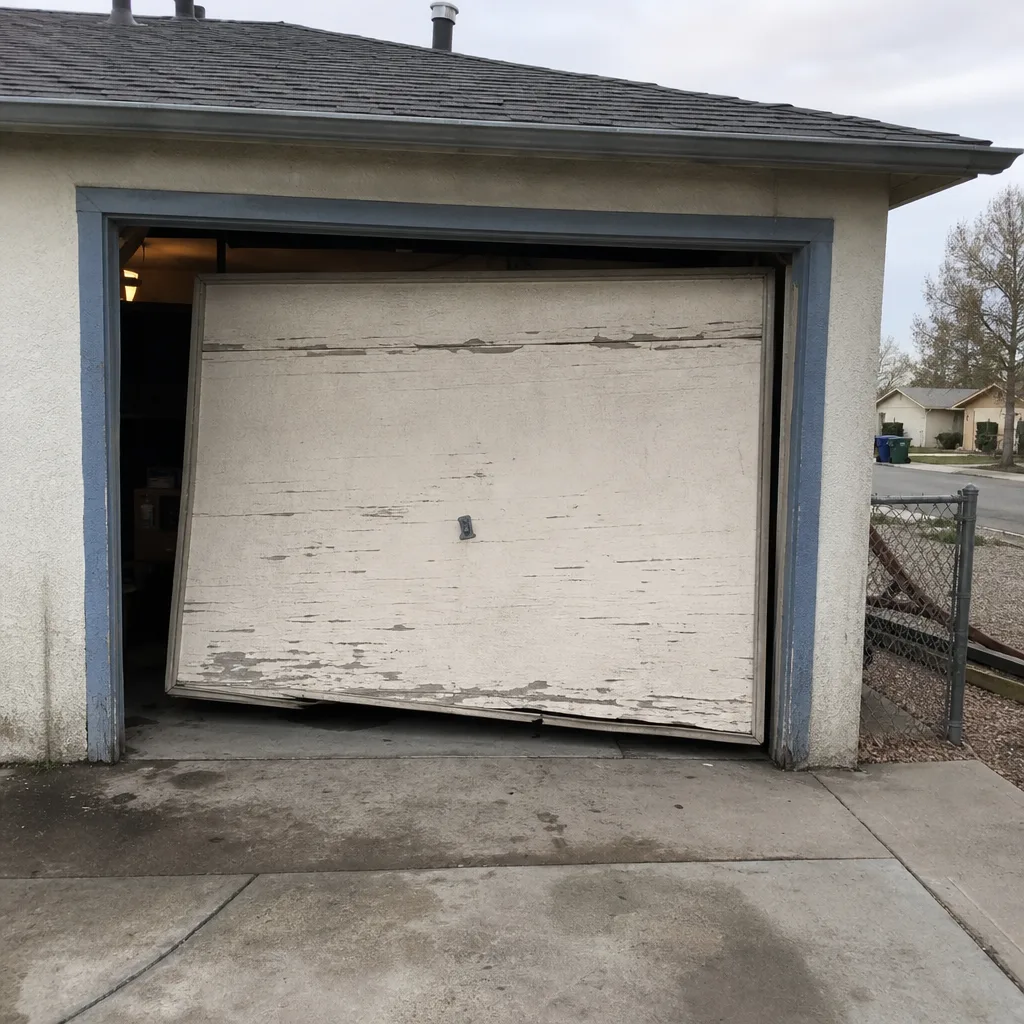 Before
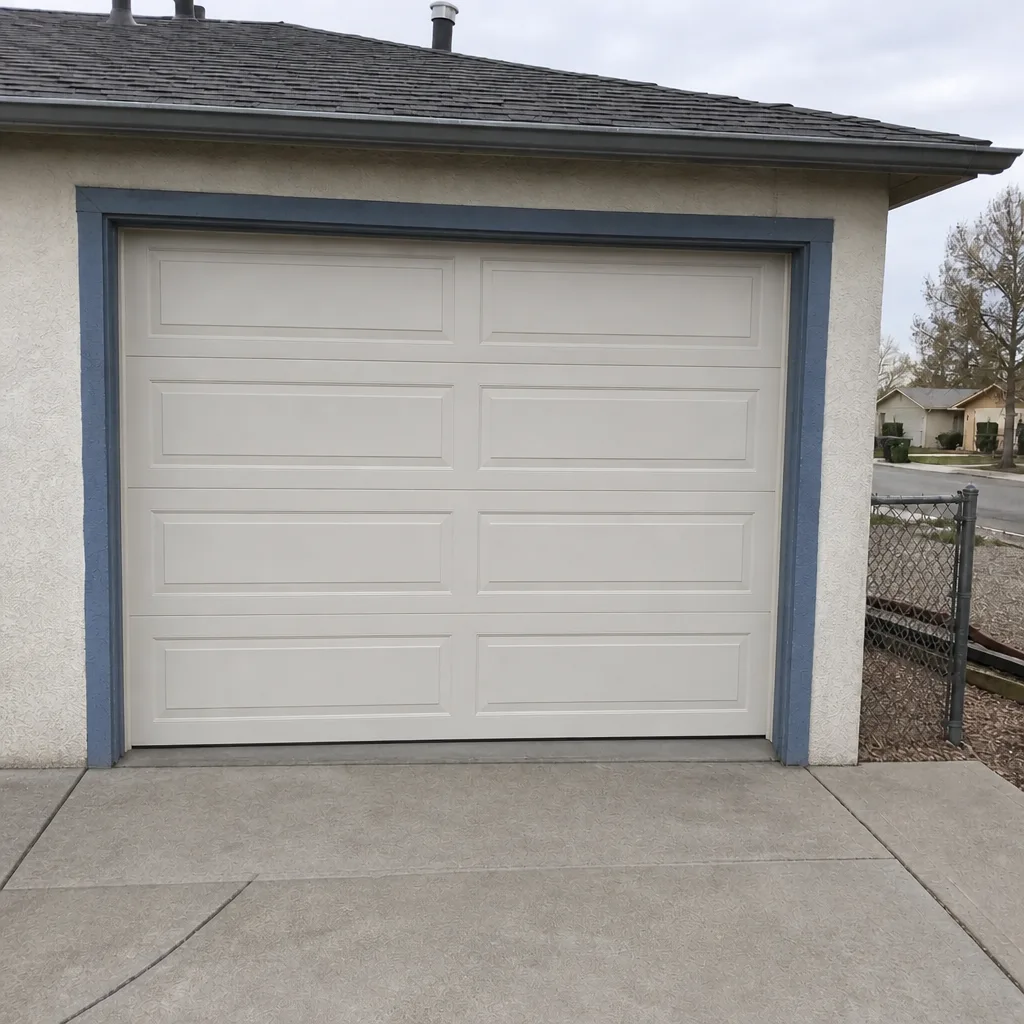 After
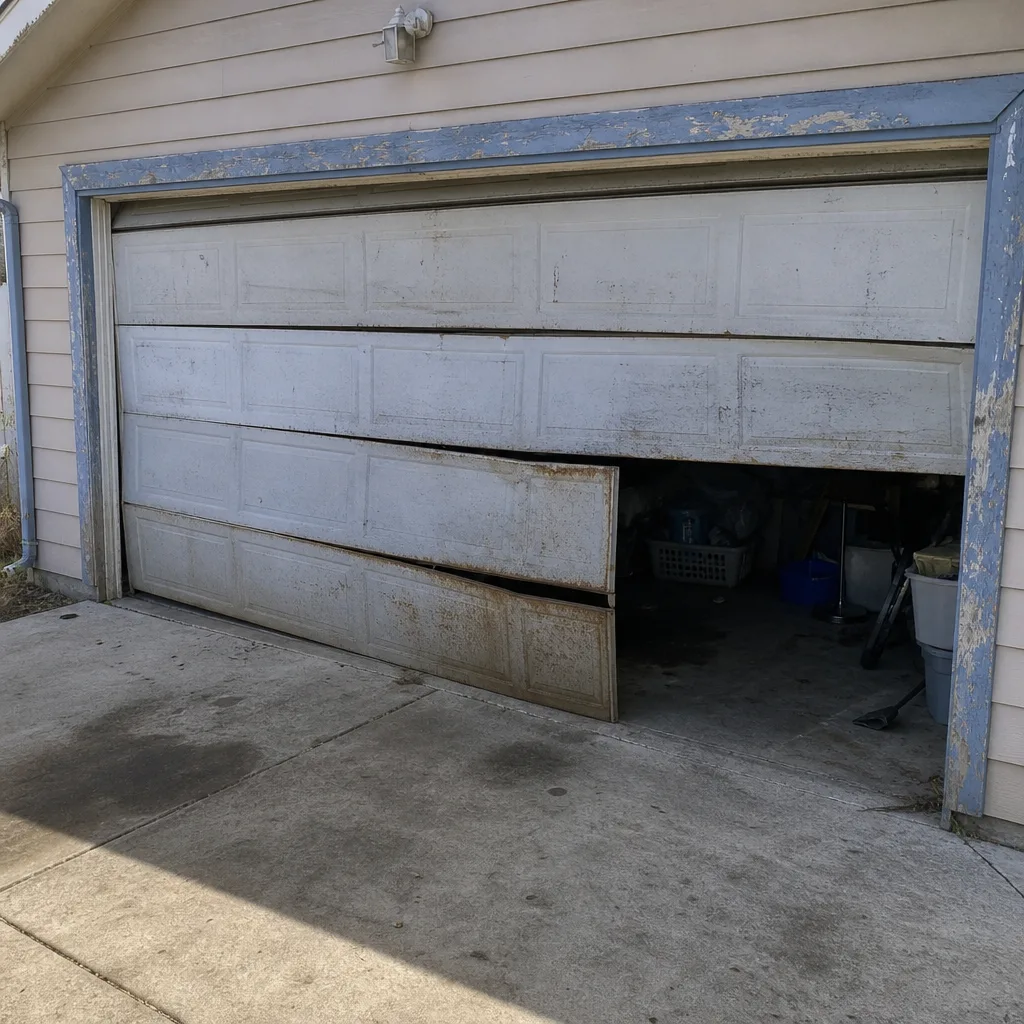 Before
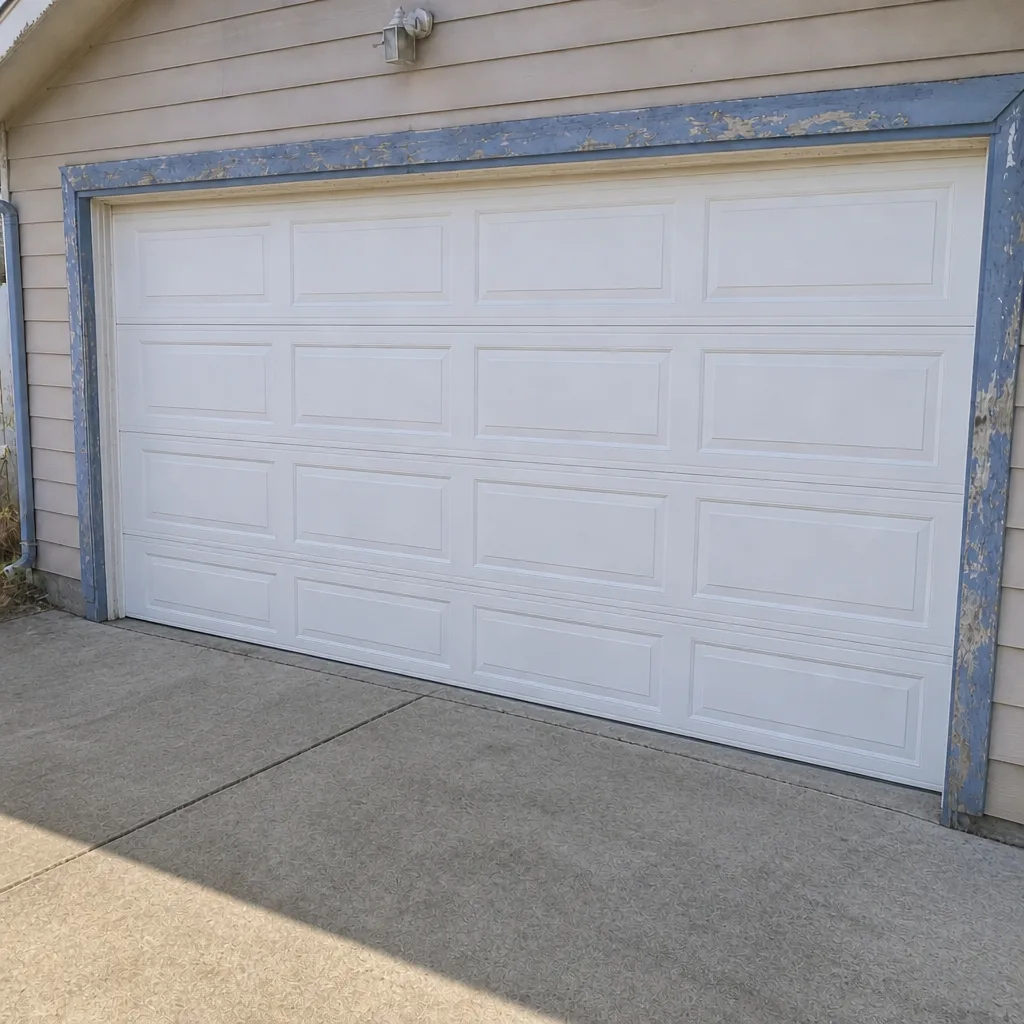 After
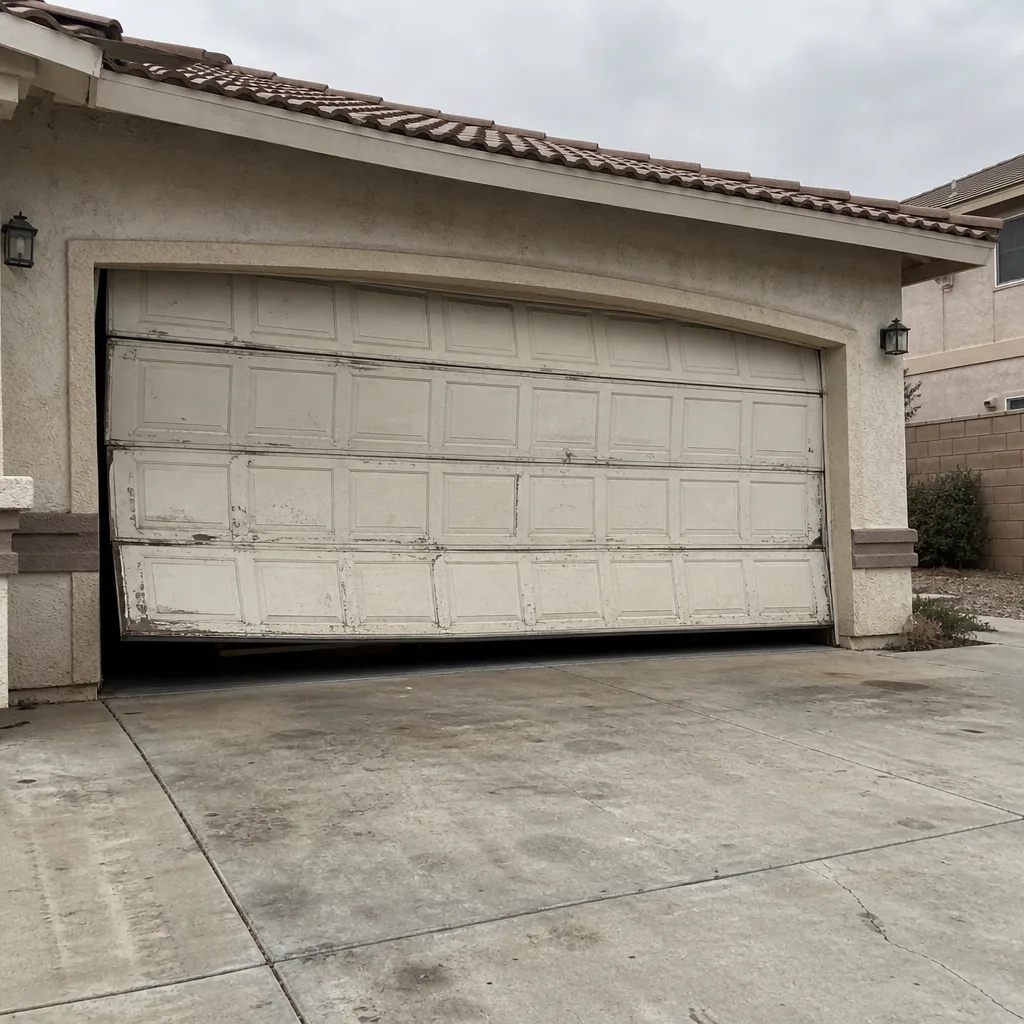 Before
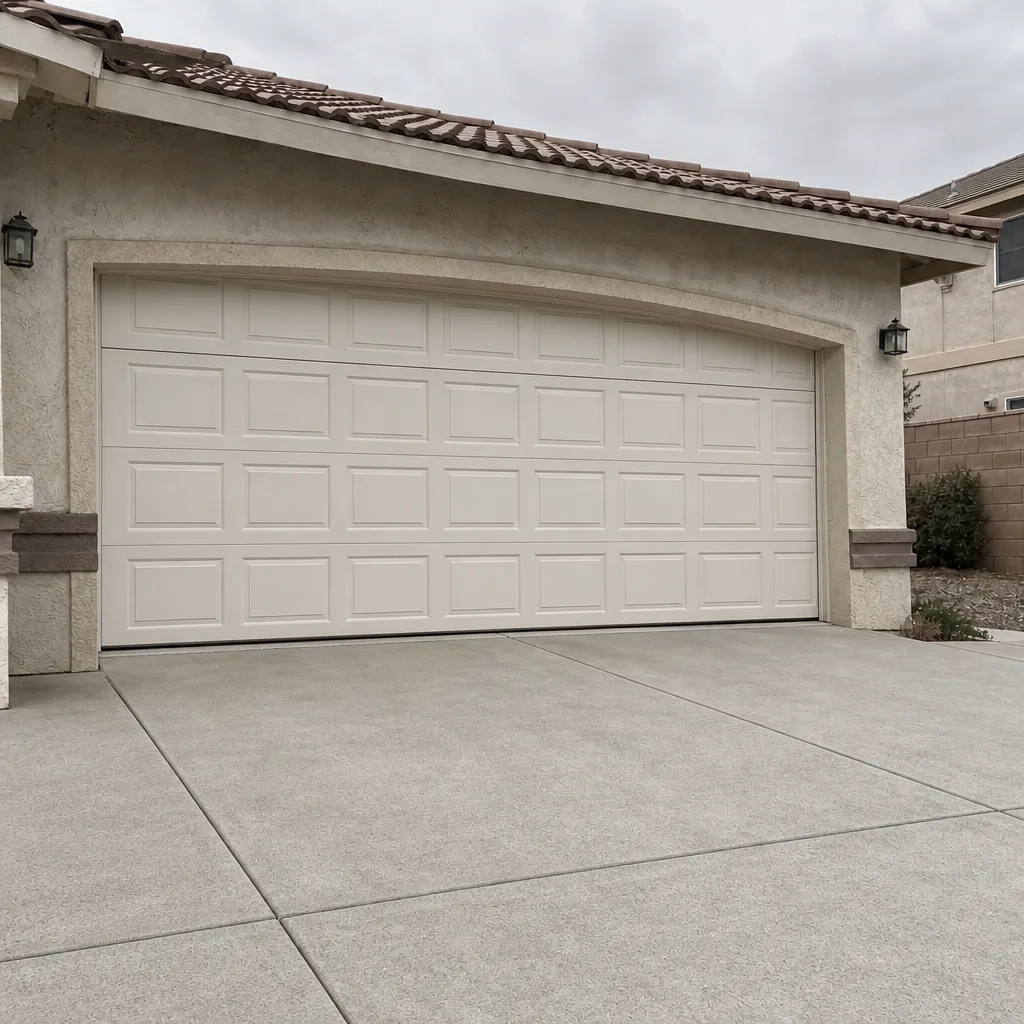 After
When to Call a Professional
Call a professional for any of the following, without exception: a torsion spring that has visibly snapped (never handle the spring or cables yourself – both are under lethal tension); a door off-track or hanging at an angle; a cable that has come off the drum; an opener that hums but doesn’t move the door; a door that reverses without obstruction; or a garage door stuck open after dark with no way to secure it manually. These are the calls where the two finish lines matter most, and where a trained technician prevents a bigger problem. Mainspring Garage Door Co. Winchester offers free estimates in Winchester – call (888) 326-0817. A live person answers around the clock, and the technician who arrives will quote a flat price before any work begins.
Frequently Asked Questions
Total time from call to a fully working door is usually 2 to 5 hours: 1 to 3 hours for arrival plus 45 minutes to 2 hours for the repair. If the wrong part is dispatched, that stretches to 24 to 48 hours for a second visit. Call (888) 326-0817 to schedule – we’ll match the part to your door before dispatch.
Yes, same-day response is the standard for emergency calls, and overnight and weekend calls are dispatched without an extra wait for business hours. Arrival windows run 1 to 3 hours depending on time of day and weather, and the technician will call ahead with an ETA. Call (888) 326-0817 for an exact window.
No. We quote a flat price before any work begins, and that’s the price on the invoice. If the situation turns out to be different from the phone description – a bent panel behind the broken spring, for example – the technician states the revised price and gets your approval before proceeding. Call (888) 326-0817 for a free estimate.
Secure your vehicles first, move them to the driveway or street, and lock the door from the garage into the house. Do not manually release the door if it’s off-track or a spring is broken – that can drop the door on you. Let the technician handle the release. If the door is stuck open overnight, call (888) 326-0817 and we’ll prioritize the security call.
The dispatch fee is higher for after-hours, weekend, and holiday calls because the response window is shorter and the technician is off-schedule. Business-hours emergency calls usually have the dispatch fee built into the flat repair price. Ask for the number on the phone before you commit, and we’ll state it clearly. Call (888) 326-0817 for the after-hours rate.
Yes. Our technicians are background-checked, insured and bonded, and trained as journeymen under the K.E.Y.S. values code. They do the work in person and stand behind it. Call (888) 326-0817 with any questions before booking.
The Bottom Line
Emergency garage door time breaks into two clocks: how fast the door is secure, and how fast it’s fully working again. Securing is quick – 20 to 40 minutes on arrival. Fully working is 45 minutes to 2 hours if the right part is on the truck, and 24 to 48 hours if it isn’t. Your control over that gap is the call itself: door height, width, spring count, opener model. Get those right and a Winchester emergency becomes a two-hour evening instead of a two-day ordeal. We keep our trucks stocked for exactly this reason, and if a part still doesn’t do the job, the 90-Day Done Right Promise brings us back – no arguing, no paperwork, no invoice surprise.
Ready to have a working door again? Call (888) 326-0817 for a free estimate. A live person answers around the clock, the price is quoted before any work starts, and we’ll be there when we say.
Written by the team at Mainspring Garage Door Co. Winchester.