
Last updated November 18, 2026
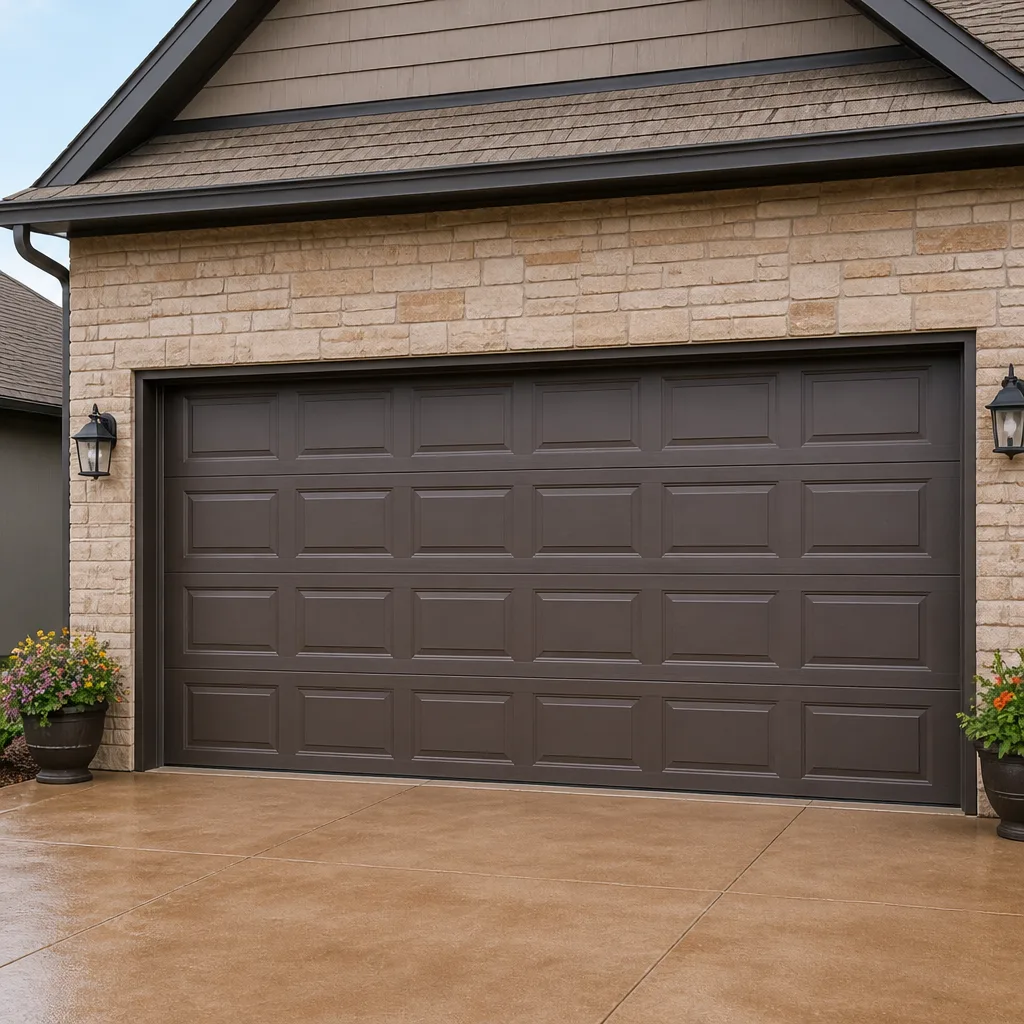 Raised-panel steel
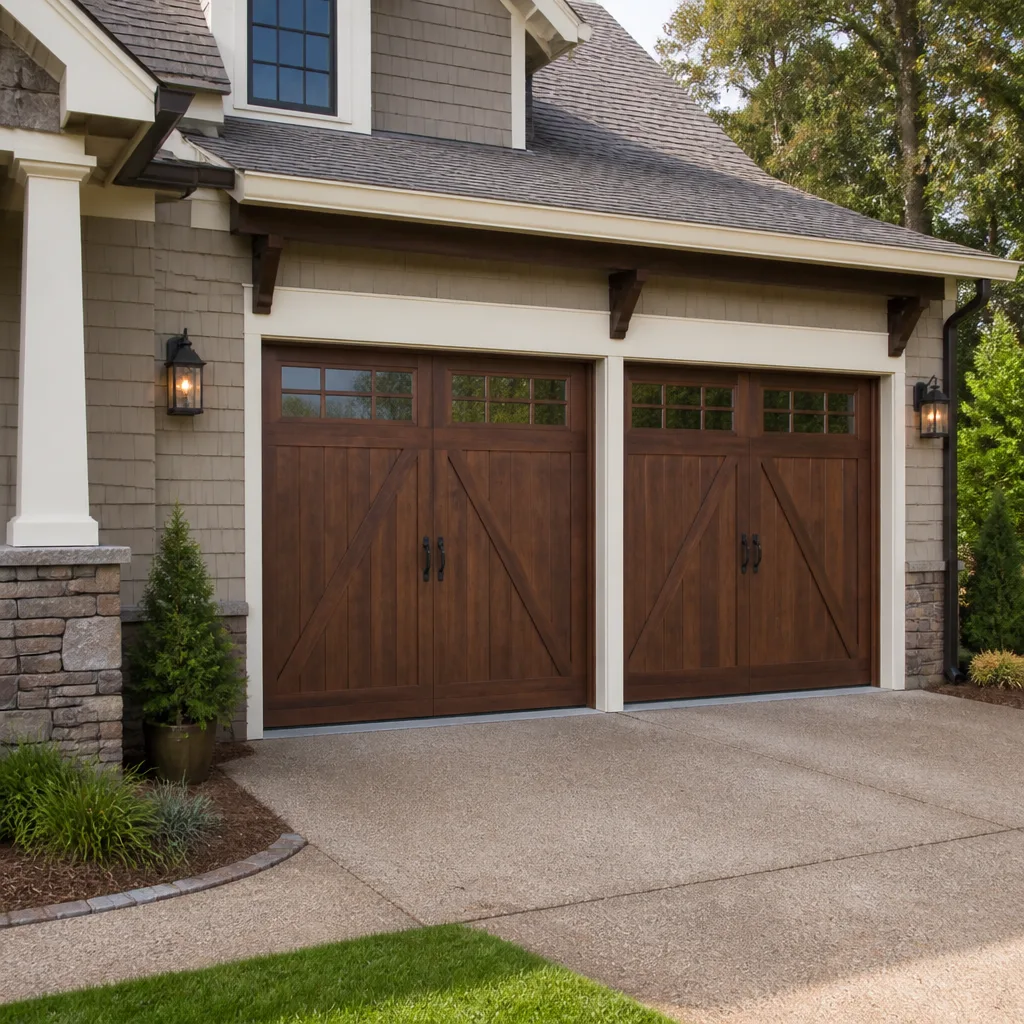 Carriage house
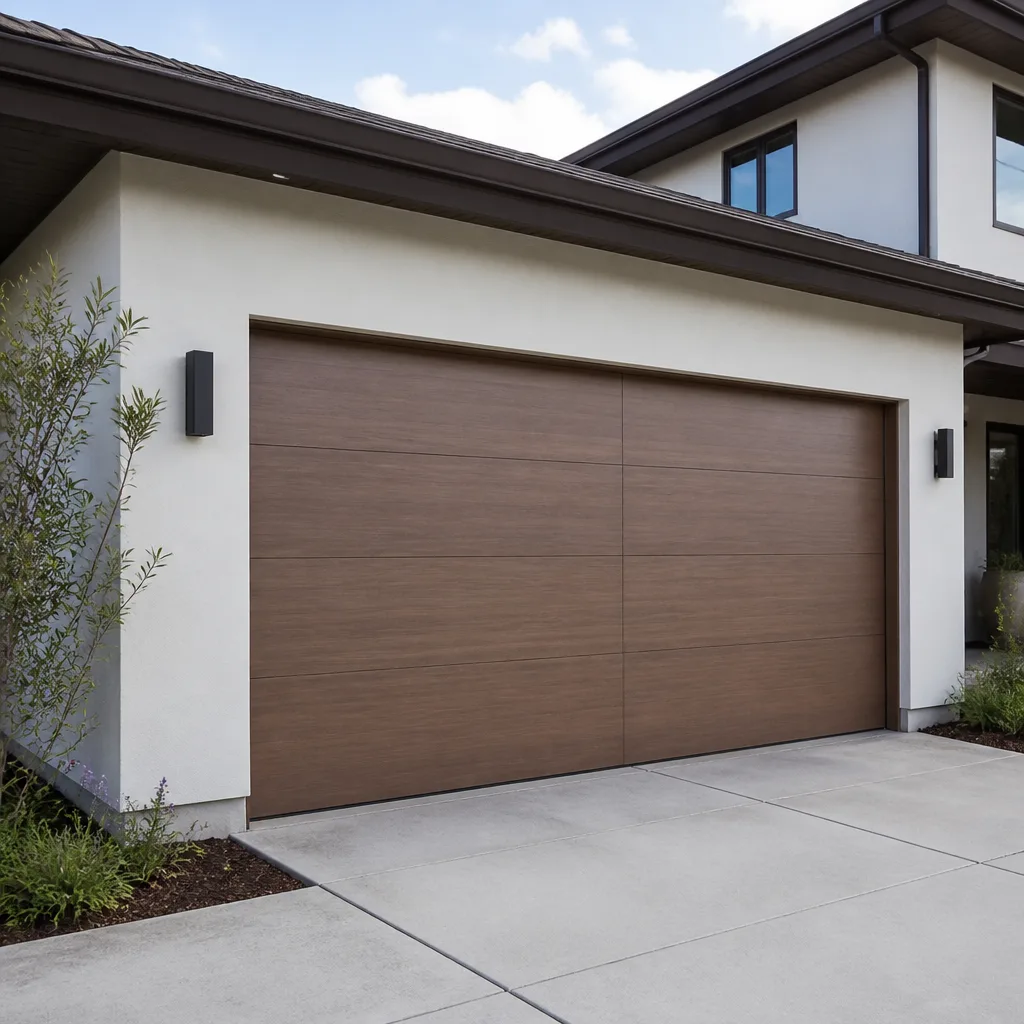 Modern flush
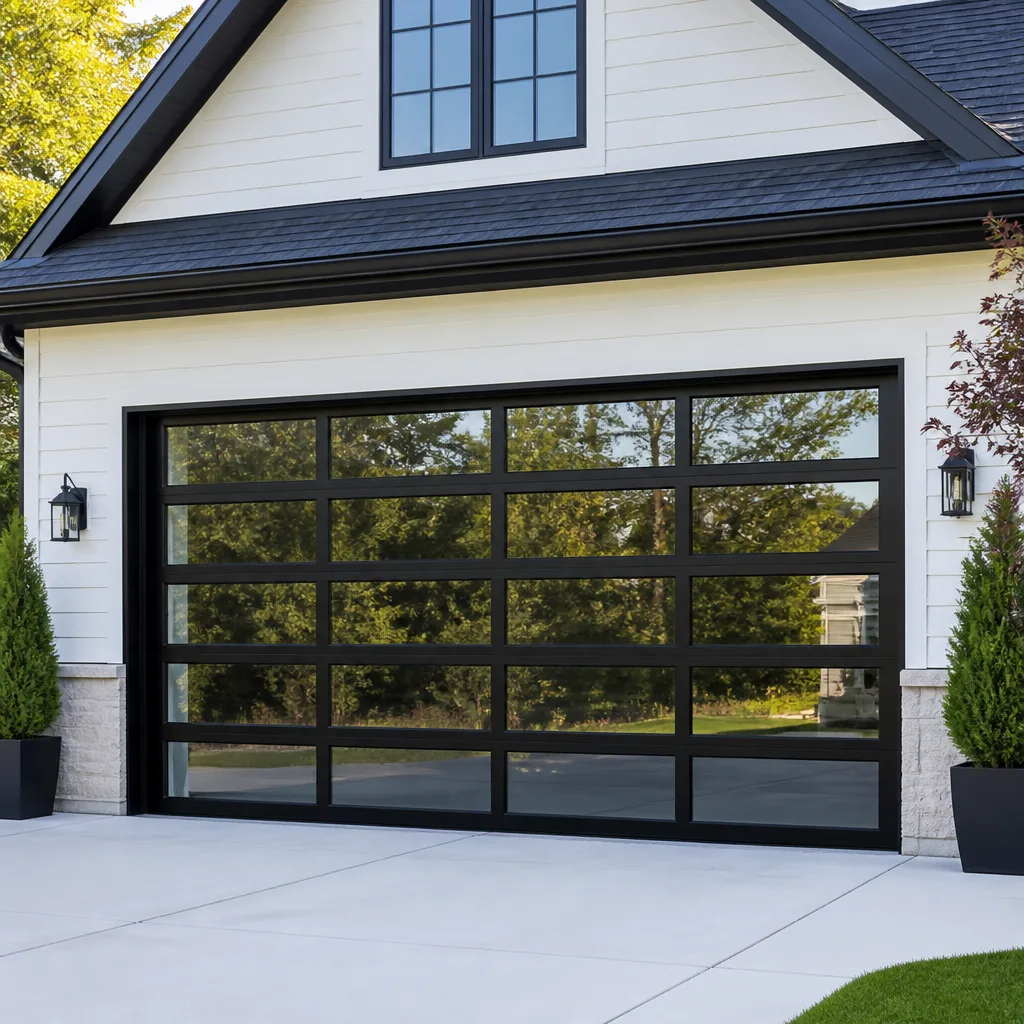 Full-view glass
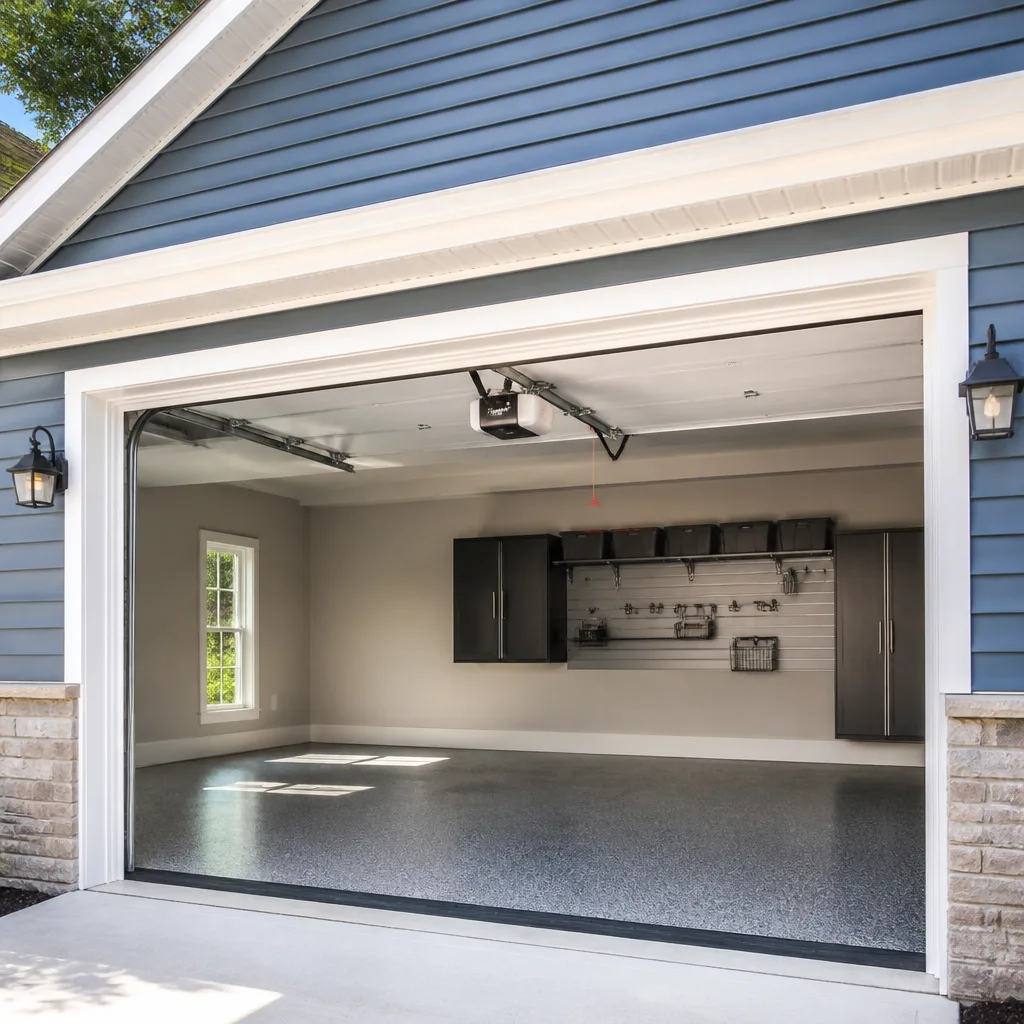 LiftMaster openers
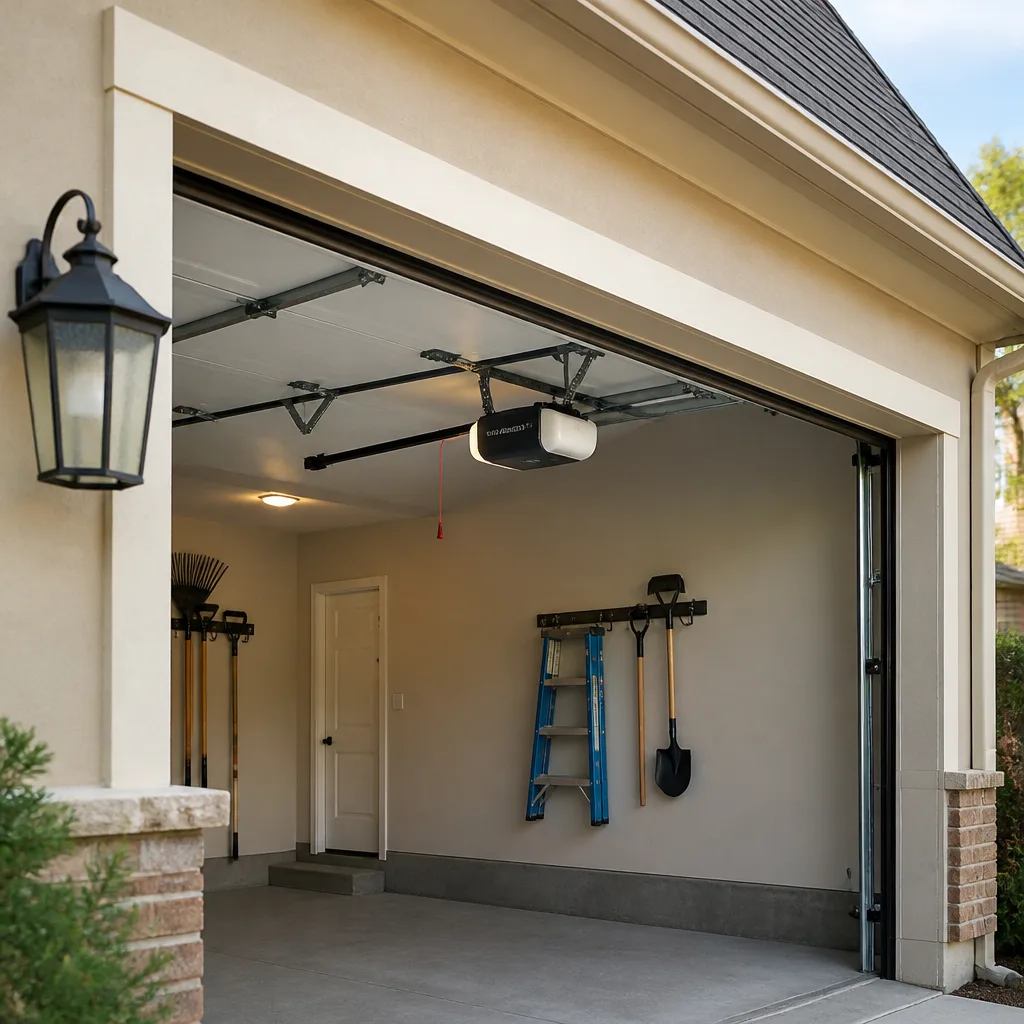 Chamberlain openers
Full 25-point door and opener safety check with every visit - springs, cables, rollers, tracks, and your LiftMaster or Chamberlain opener included
You get a price before we start. It does not change when the pro arrives.
Get your free estimateDIY vs Professional Emergency Garage Door: What’s Safe to Do Yourself
Under normal conditions, a misaligned cable is a $90 repair. When a homeowner attempts to re-tension it themselves during an emergency, it becomes a $400 repair – if they’re lucky and uninjured. That gap between a routine fix and a dangerous one is the whole story of emergency garage door work. The instinct to act fast is exactly what removes the margin for error. In this guide, we’ll walk through the only three things a homeowner should ever touch during a garage door emergency, why the videos online mislead even careful people, and how to describe a problem in a way that gets a technician to your Winchester driveway faster. You’ll finish knowing what’s safe, what’s off-limits, and when to put the tools down and pick up the phone.
Quick Answer
During a garage door emergency, the only three actions a homeowner should take without a technician are: pull the manual release to disengage the opener, block and secure the door so it cannot fall, and disconnect power to the opener. Anything involving springs, cables, or re-tensioning under pressure is a job for a trained professional – the risk of serious injury is real and the margin for error is gone.
Styles & brands we work with
- Raised-panel steel
- Carriage house
- Modern flush
- Full-view glass
- LiftMaster openers
- Chamberlain openers
Table of Contents
- What “Emergency” Actually Changes About DIY Risk
- The Only Three Emergency Actions a Homeowner Should Take
- Why Online Emergency Videos Don’t Match the Door You’re Standing In Front Of
- What Homeowner Intervention Does to Your Warranty
- How to Describe the Problem to Get a Technician On-Site Faster
- What’s Off-Limits and Why: Springs, Cables, and Torsion
- Winchester Conditions That Turn Small Problems Into Emergencies
What “Emergency” Actually Changes About DIY Risk
The repair itself is often the same. What changes is everything around it. When a door won’t close at 9 p.m. and your car is trapped inside, or a spring snaps on a Sunday morning with family due to arrive, the conditions under which a homeowner attempts a fix degrade in three specific ways. All three compound danger.
First, time pressure. Someone trying to raise a door in a hurry skips the step where they’d normally check that the door is fully supported and the opener is off. That skipped step is often the one that matters most. Second, missing tools. A homeowner reacting in the moment reaches for a screwdriver when a proper winding bar is required, and a screwdriver in a torsion system is exactly how hands get broken. Third, skipped safety steps. A routine repair done on a Saturday with the car moved, the family out, and the ladder properly placed is one thing. The same repair done in the dark, alone, in a hurry, with the door half-off its track, is another.
In our experience across Winchester neighborhoods, the injury and the bigger bill both come from the same moment of rushing. A door that’s badly stuck after a failed DIY attempt is nearly always more expensive to repair than the original problem. The quickest path to a working door is knowing which three actions to take and leaving the rest alone. If you suspect a spring or cable has failed, call us at (888) 326-0817 and we’ll talk you through the safe steps over the phone while a technician heads your way.
The Only Three Emergency Actions a Homeowner Should Take
These are the three. They are simple, they require no tools beyond what most homes already have, and they get you and your property into a safe position while a professional takes over. Do them in this order if your door is stuck or you’re unsure what’s wrong.
- Disconnect power to the opener. Unplug the opener or switch off the circuit breaker that serves the garage. On a LiftMaster or Chamberlain unit, the plug is typically hanging from the ceiling near the motor. This prevents the opener from suddenly running while you or anyone else is near the door. Do it first, before anything else.
- Pull the manual release. The red (or occasionally yellow) release cord on the opener trolley disengages the door from the motor. Pull it straight down once, firmly. This lets you raise or lower the door by hand if the door and spring system are intact. Do not pull it if the door is visibly off track or hanging crookedly – release only helps when the door’s mechanicals are intact.
- Block and secure the door. If the door is stuck open, prop it or place a heavy object or clamp beneath the bottom section to prevent it sliding down. If it’s stuck closed and won’t budge, do not force it. A garage door weighs hundreds of pounds; a falling door can crush a foot or worse. Mark the area off with a chair or bucket so no one, especially children or a visitor, walks underneath.
That’s the list. Anything beyond these three – adjusting the track, lubricating a stuck roller, trying to re-hook a cable, resetting a spring – should wait for a trained technician. In our experience, the Winchester homeowners who take just these three steps end up with the shortest call-outs and the smallest repairs. The ones who go further tend to end up with a door that’s worse and a bill that’s larger.
Why Online Emergency Videos Don’t Match the Door You’re Standing In Front Of
Those videos aren’t wrong, exactly. They’re filmed under conditions that aren’t yours. The camera is on a door that’s been freshly serviced, filmed in good light with the right tools laid out ahead of time, often by someone who’s done the procedure hundreds of times. The door in front of you may be twenty years old, with a manufacturer’s telltale – a Clopay or Amarr label from an older generation – that hides components with different tensioning behavior. Your spring may be wound differently, your cable may have already frayed, and your floor may slope a degree or two in ways the video door didn’t.
What’s missing from the video is exactly what makes an emergency dangerous: the unknown state of your particular door. A spring rated for one door is not the same as one rated for another. A torsion spring carries enough stored energy to cause serious injury, and the person filming has already confirmed – off camera – that the system isn’t about to fail. You haven’t. What looks like a five-minute fix on screen routinely becomes a much larger repair once a professional opens up the assembly and discovers the previous attempt left things out of sequence.
If you’ve watched the video and you’re not sure your door matches, stop. Call us at (888) 326-0817. A technician can look at your door and tell you within a couple minutes whether the video even applies. There’s no charge for the phone call, and there’s no charge for a second opinion on a written estimate if you have one from another shop.
What Homeowner Intervention Does to Your Warranty
Many doors and openers are still under an active warranty when a problem hits – often a five-year, ten-year, or lifetime component warranty on springs, or a manufacturer warranty on an opener. When a homeowner intervenes on a covered component, that warranty almost always ends where the intervention begins. Manufacturers treat homeowner disassembly or adjustment of spring and cable systems as outside the terms, and there’s usually no appeal that works.
There’s a second layer, too. If the door is under any active warranty – a manufacturer’s, a home warranty, or a warranty tied to the original installer – and a homeowner’s attempt leads to further damage, the cost of the secondary repair is typically not covered, and the door’s baseline coverage can be affected. The intervention doesn’t just risk injury; it risks turning a covered repair into an out-of-pocket one.
We’ve seen Winchester homeowners lose coverage on a spring that was still under a factory warranty because the door had been partially disassembled after the failure. The right call is to have the door looked at first, establish whether the manufacturer warranty still applies, and let a trained technician do the work in the sequence the manufacturer specifies. Our technicians have up to 10 years of experience and are factory-familiar with the major brands, so the inspection starts from a place of real product knowledge rather than guesswork. For details on our warranty-inclusive Garage Door Repair in Winchester, our team can walk you through the coverage questions before any work begins.
How to Describe the Problem to Get a Technician On-Site Faster
The single fastest way to shorten a call-out is to describe the problem accurately. Most of the delay in emergency dispatch comes from a vague initial description – “the door’s broken” – followed by phone tag once the technician is already en route. If you can answer the questions below, you’ve cut a chunk of that time. And you can answer them without touching anything that isn’t on the safe list.
- Which action fails? Does the door not open, not close, open halfway, or reverse mid-travel? “Won’t close, opens fine” is a completely different call than “doesn’t move at all.”
- What sounds do you hear? A clicking from the opener, a loud bang from overhead, a grinding from one side, or nothing at all – each points to a different component. A loud bang almost always means a spring, and it tells the dispatcher to load that truck with the right spring stock.
- Where is the door right now? Fully open, fully closed, halfway, or off the track. If it’s visibly off the track, say so immediately – that changes what the technician brings and how the arrival is handled.
- What brand is on the opener or door? Look for the LiftMaster, Chamberlain, or Genie label on the opener housing, or the Clopay, Amarr, or Wayne Dalton plate on the door itself. Brand tells the technician which parts to load, which is why most jobs are completed in a single visit rather than a look-and-come-back.
- Is anyone at risk? A car stuck inside, a family member who needs the garage as their accessible entry, or a pet or child near the door – say so, because it prioritizes the call.
Give those five answers when you call and a technician arrives with the most likely parts already on board. On many Winchester calls, that gets the repair finished the same day rather than after a second trip for parts. For opener-specific problems, our team can route the call as an opener repair if you tell us the unit’s making the sound rather than the door.
What’s Off-Limits and Why: Springs, Cables, and Torsion
Springs, cables, and torsion systems are the parts of a garage door that can seriously injure a person. Both torsion springs (the horizontal coil above the door) and extension springs (the long springs running along the tracks) hold enough energy to break bones and worse. Cables hold springs in tension and are under load almost always. These are not DIY components, and there is no version of “do this one safely at home” that’s true when a system is in a failed state.
Here’s what to know rather than what to do. A torsion spring is wound to a specific number of turns based on the door’s weight and height; get the turns wrong and you’ve stored the wrong amount of energy. Extension springs snap back along their tracks and, without proper containment cables, can leave the track entirely. Cables travel along both sides of the door and are under constant tension; a released cable is a serious hazard. The right work requires winding bars, a proper ladder setup, and a technician who’s done this kind of work across doors from every major brand, including Genie and Chamberlain opener systems where the mechanical link to the door matters.
If a spring has already snapped, a cable has come off its drum, or the door is sagging on one side, that’s the moment to stop and call us at (888) 326-0817. We’ll tell you over the phone whether it’s safe to remain in the garage and can have a technician at your door. If you’re unsure whether a spring has actually failed, our Mainspring Garage Door Co. Winchester home page has the phone number and a short guide to the sounds that indicate spring vs. cable failure. If it’s your opener (not the door itself) that’s involved, our Garage Door Opener in Winchester page covers common opener symptoms.
Winchester Conditions That Turn Small Problems Into Emergencies
Garage doors fail on a schedule across climate zones, and Winchester’s particular mix – hot dry summers, cold winter mornings, and the wind that comes with living on the east side of the valley – matters. The dry heat bakes lubricant off rollers and hinges over the summer, so the first cold snap in December works everything harder. Springs don’t care about temperature in theory, but the metal they’re made of does; a cold spring is more likely to fail cleanly than a warm one, and Winchester winters tend to produce the bang-from-overhead calls that mark most spring failures.
The valley wind also matters. Loose hinges, worn rollers, and lightly secured trim rattle more here than in a stiller climate, and over a season that vibration accelerates the wear on opener components – the trolley, the belt or chain, and the safety sensors that are prone to dust. If your door’s been sticking through every hot week, it’s likely the rollers need replacing – an inexpensive, quick repair when caught early and a much larger one once a cable has started to fray.
Winchester neighborhoods from older established blocks to newer subdivisions on the valley rim have their own rhythms. Older homes tend to have extension-spring doors that need the containment cables checked on a schedule; newer homes tend to have torsion systems that fail with a sharp report rather than a slow sag. In either case, an annual tune-up is the difference between a small repair and a roadside emergency. Our $89 Seasonal Tune-Up exists for exactly this reason. When a replacement becomes the right call, our team can talk through options on Garage Door Installation in Winchester and confirm the right size and spring rating for your door’s weight.
Common Mistakes to Avoid
- Pulling the manual release on a door that’s visibly off its track. It’s a documented mistake, and it’s a costly one; the door can drop faster than anyone can react. Release only when the door’s mechanical system is intact.
- Re-tensioning a torsion spring with a screwdriver or a pair of pliers. The right tools are winding bars, and winding bars aren’t in the average homeowner’s toolbox. This is the single most common injury route in garage door emergencies.
- Standing directly under the door while operating the opener by remote. A door that’s going to fail rarely announces itself first. Stand to the side of the door, not under it, and keep children and pets clear.
- Lubricating anything to “fix” a stuck door in the middle of an emergency. Lubrication is a maintenance step, not an emergency repair, and the wrong lubricant on a spring or cable can make a future problem worse. Save it for the tune-up.
- Watching one video and assuming your door matches. Doors from the 1990s and earlier often have different tensioning systems than the doors in modern demo videos, and Winchester’s older neighborhoods are full of them.
- Forcing a door down or up manually while the opener is still engaged. That’s how gear damage and stripped trolley threads happen, and it turns a $90 repair into a $400 one.
- Calling with a vague problem and no details. “It’s broken” means a second trip for parts, and a longer waits with the door stuck. A precise description gets the right parts on the truck.
See the difference
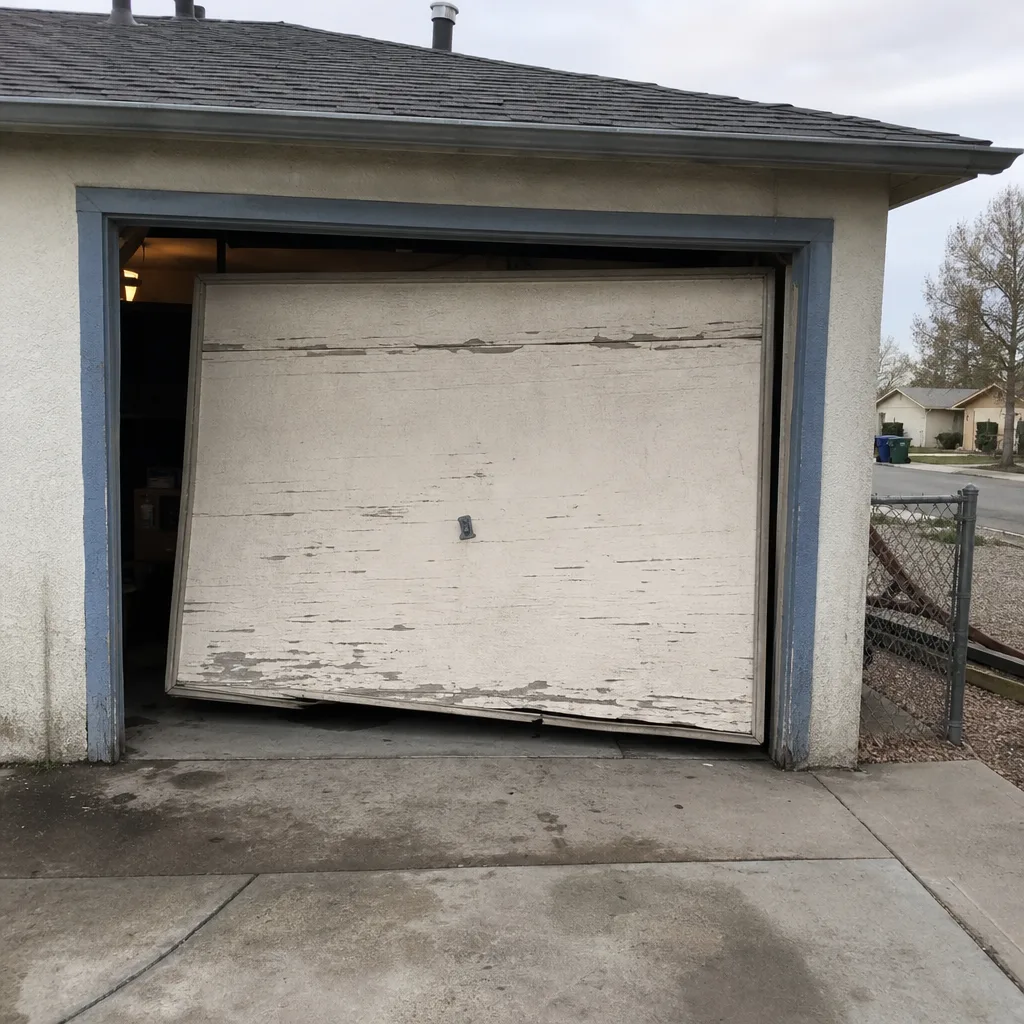 Before
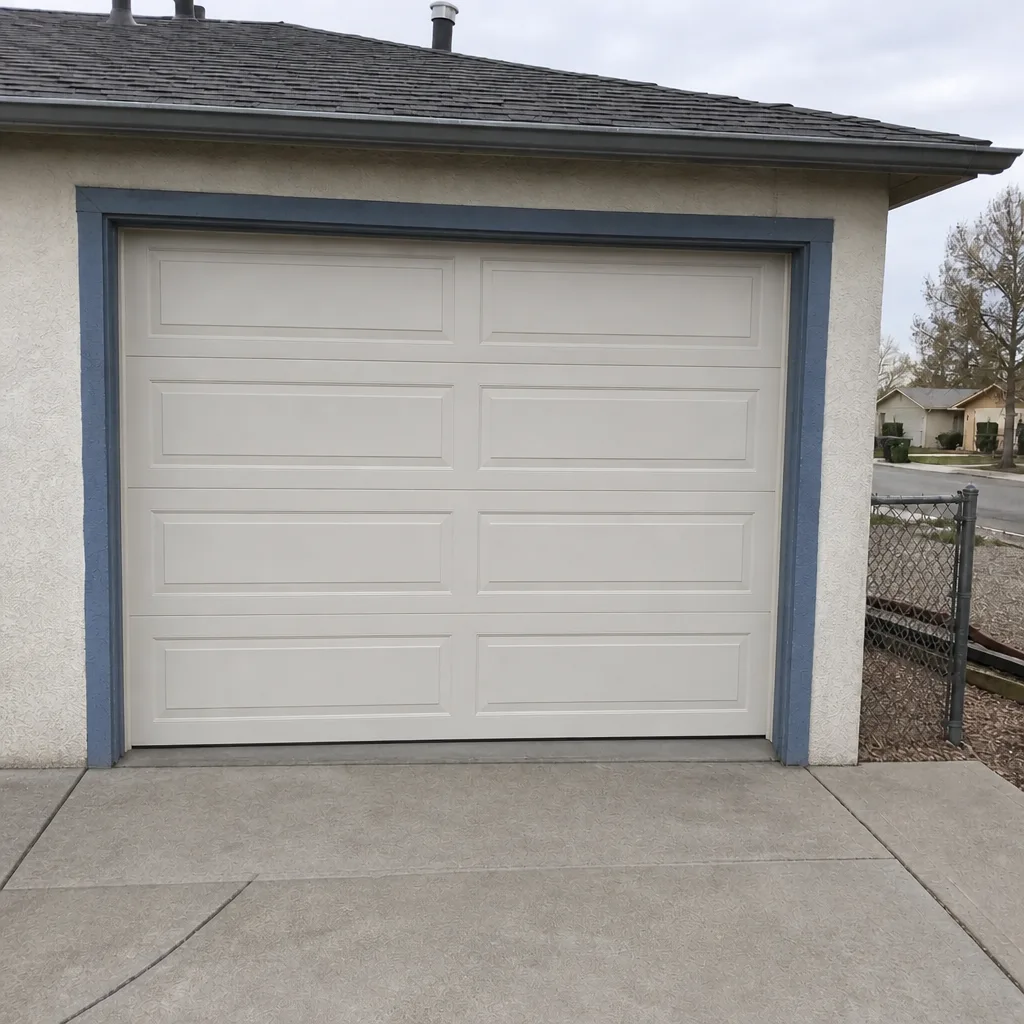 After
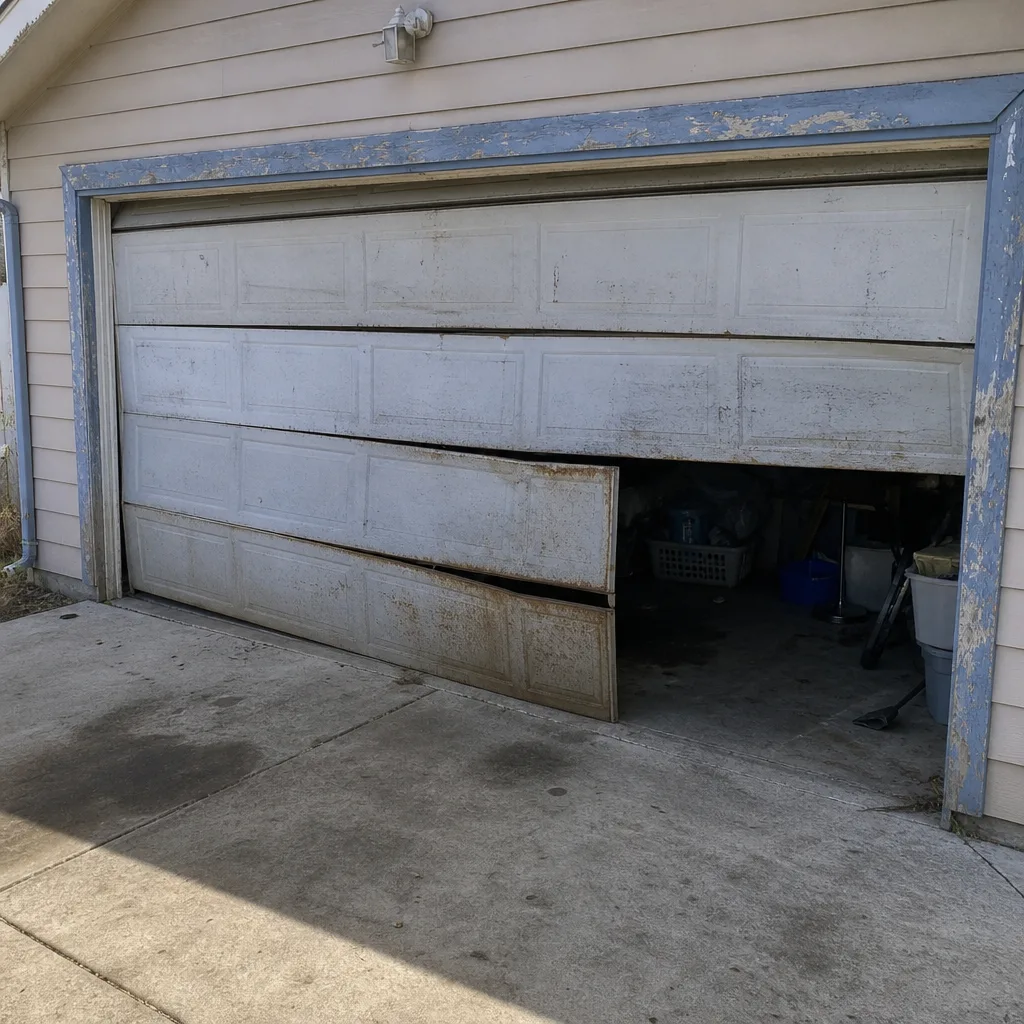 Before
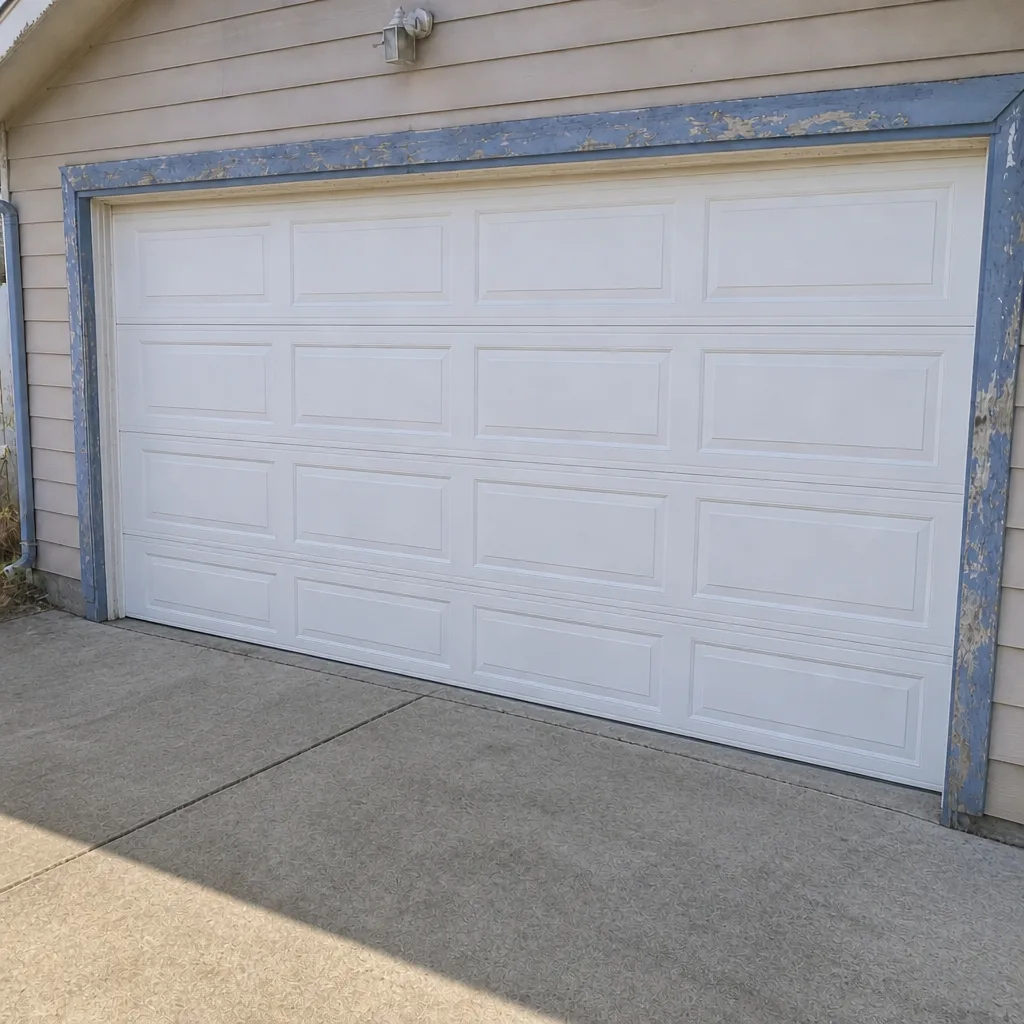 After
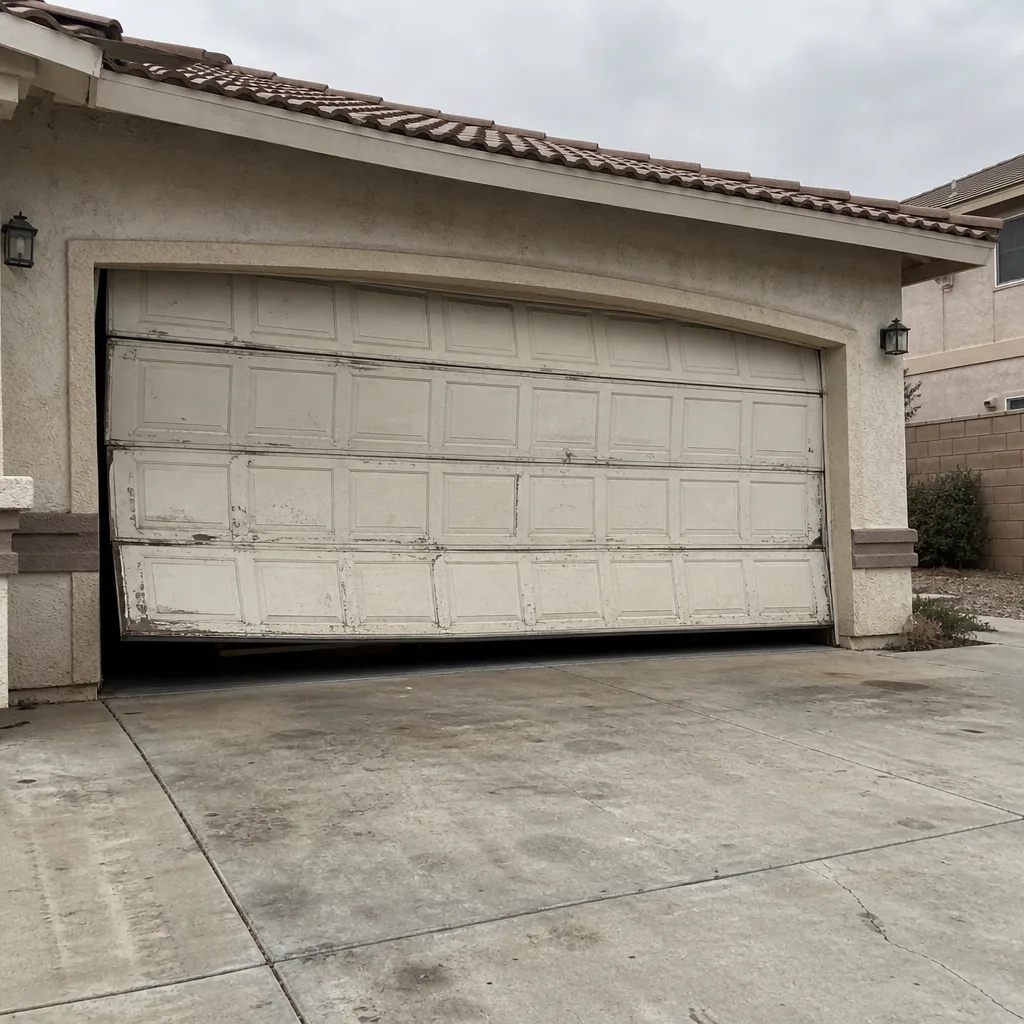 Before
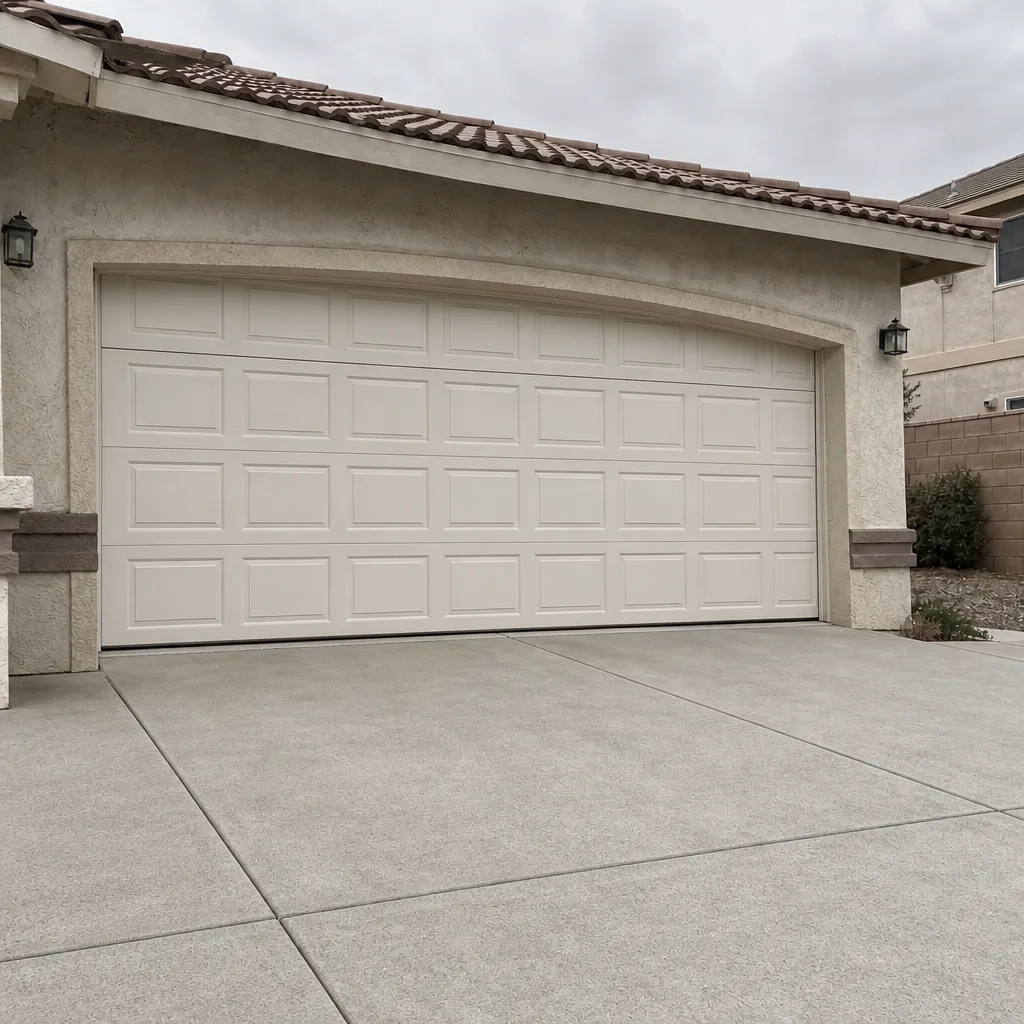 After
When to Call a Professional
Call a professional any time a spring has snapped, a cable has come off its drum, the door is visibly out of square, the door refuses to close with a car inside, or you’re simply unsure what’s wrong. Those are stops, not steps – and the phone call is free. In Winchester, our team will take your call at any hour, gather the details over the phone, and get a technician headed your way with the right parts. Our team stands behind every job with the 90-Day Done Right Promise, in writing. If you have a quote from another shop, our free second opinion applies. Mainspring Garage Door Co. Winchester offers free estimates in Winchester – call (888) 326-0817.
Frequently Asked Questions
No, with three narrow exceptions: you can pull the manual release, disconnect power to the opener, and block and secure the door so it can’t fall. Anything involving the springs, cables, or re-tensioning should wait for a trained technician. The risk of injury is real, and the intervention also typically voids any active manufacturer warranty on the parts involved. Call (888) 326-0817 if you’re unsure what’s safe.
No. Torsion and extension springs hold enough stored energy to cause serious injury, and getting the number of turns wrong is easy to do without proper winding bars. This isn’t a job for a homeowner, even under normal conditions, and it’s especially not one to attempt during an emergency when the margin for error is gone. Call us and we’ll help you decide whether to leave the door alone and wait or step away from the garage entirely.
Most emergency garage door repairs in Winchester fall in the $150 – $400 range depending on the component – a spring replacement usually sits at the higher end of that, an opener reset or roller replacement at the lower end. We quote the flat price before any work begins so there are no surprises on the bill. If you’re a senior or a veteran, our permanent 5% discount applies, and the $50 Off Any Repair Over $250 offer is always current. Call (888) 326-0817 for an exact figure – estimates are free.
Our technicians are background-checked, uniformed, and trained as journeymen under the K.E.Y.S. values code, with up to 10 years of experience on the tools. We carry the licensing and insurance required to work in Winchester, and we’ll show the relevant documents on request. If you have any doubt, ask before the work begins – no one on our team will mind.
No. The flat price is stated before any work starts and agreed on up front, and that’s the price. If a technician finds additional damage, the extra cost is quoted and agreed before any additional work proceeds, so there are no surprises on the bill. If you have a written estimate from another shop, our free second opinion applies; call (888) 326-0817 and we’ll review it.
Yes, in most cases. We answer the phone at any hour with a live person, and a technician arrives with the most likely parts already on the truck. Give us the details – which action fails, what sound you hear, and where the door is right now – and it speeds the dispatch. Our $89 Seasonal Tune-Up is a separate, planned visit, but an emergency repair truly can’t wait. Call (888) 326-0817.
The Bottom Line
The instinct to fix a garage door emergency yourself is the instinct most likely to make the emergency worse. In the moment, the conditions under which you’d fix it aren’t the conditions under which it can be fixed safely. You only have three actions: disconnect power, pull the manual release, block and secure the door. Everything past those three is a call for a trained technician. The three-of-those-plus-a-phone-call strategy is the cheapest, safest, fastest route back to a working door. We’ll take the call at (888) 326-0817, quote the flat price up front, and finish the job in one visit when the parts are whats on the truck.
Written by the team at Mainspring Garage Door Co. Winchester.