
Last updated November 18, 2026
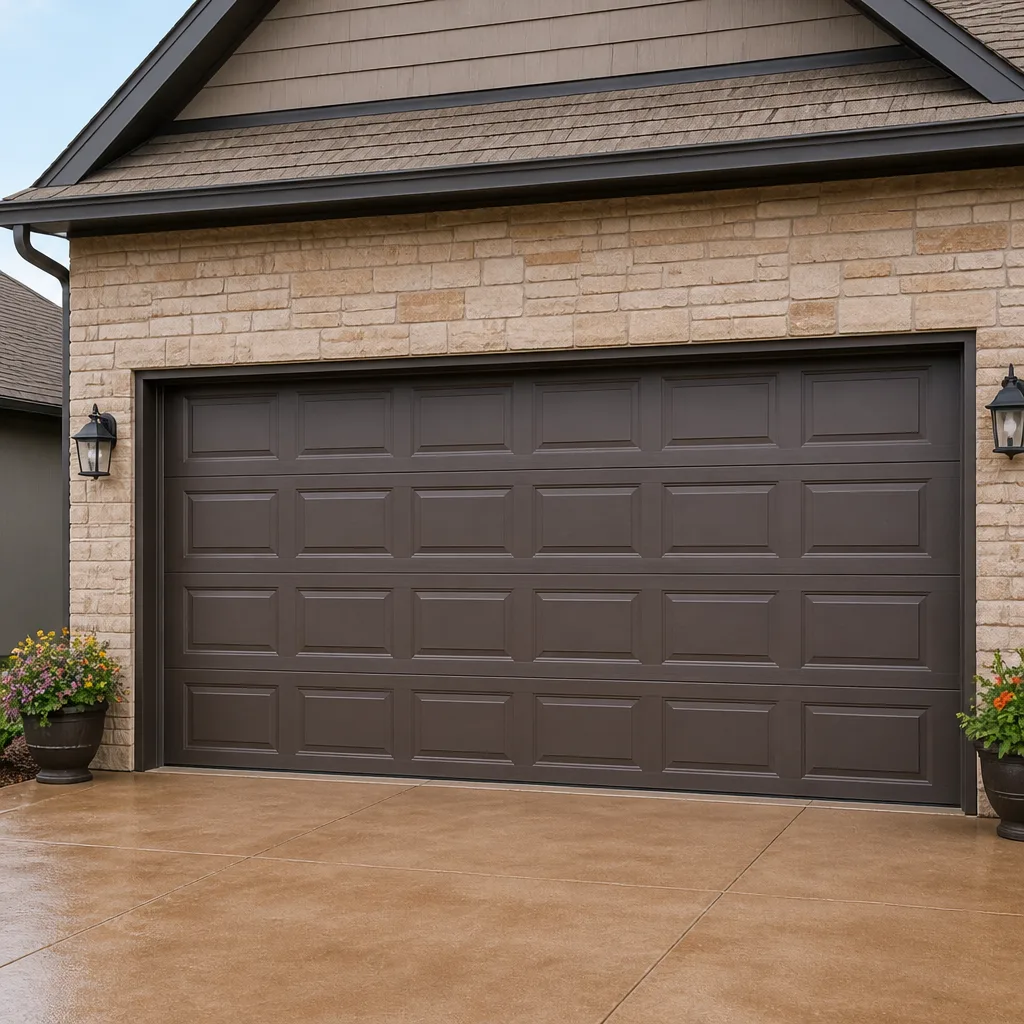 Raised-panel steel
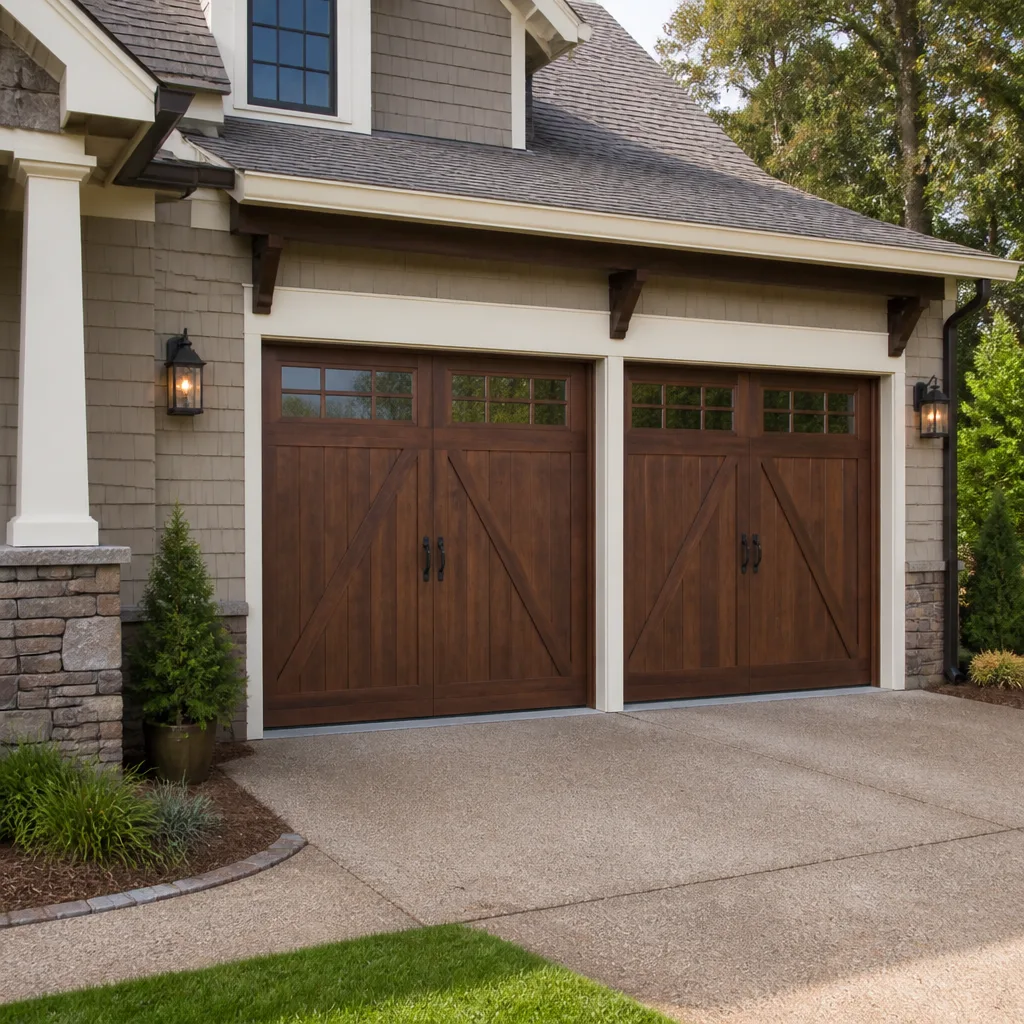 Carriage house
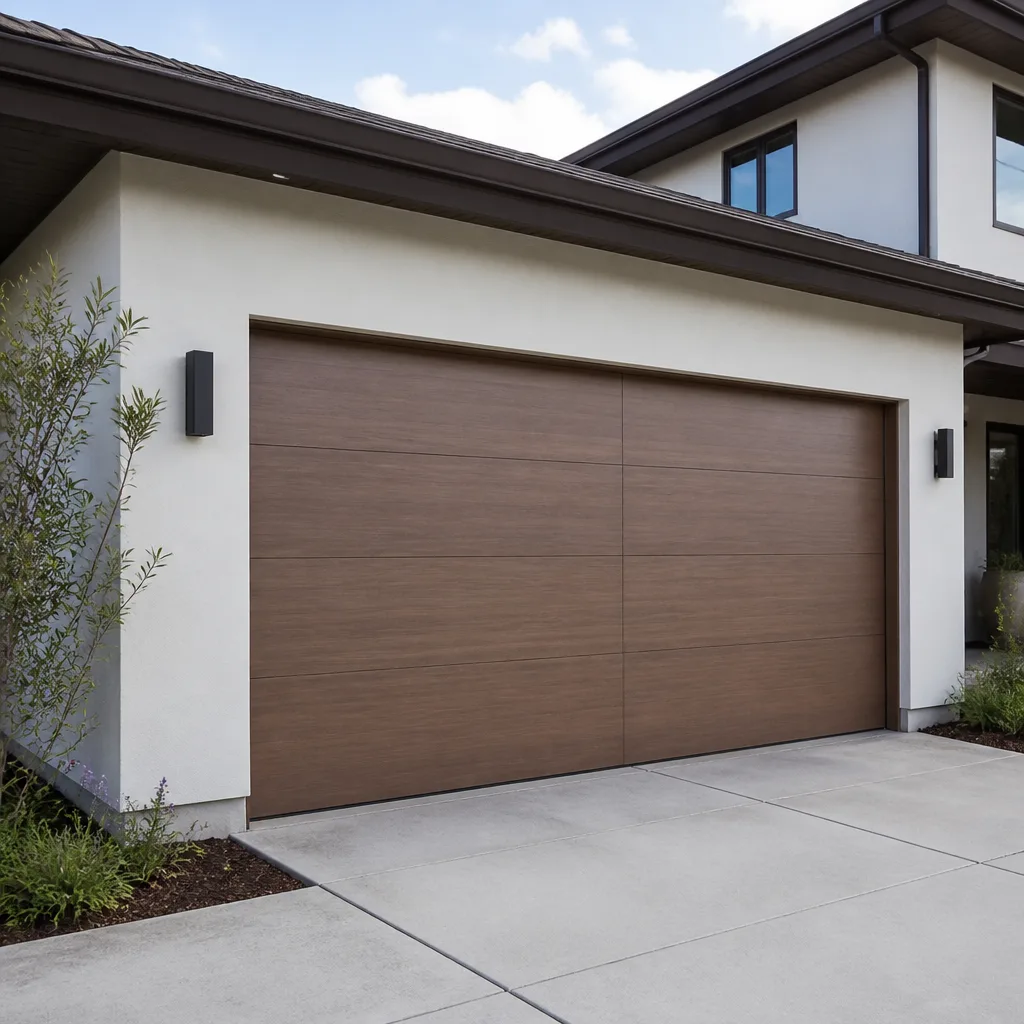 Modern flush
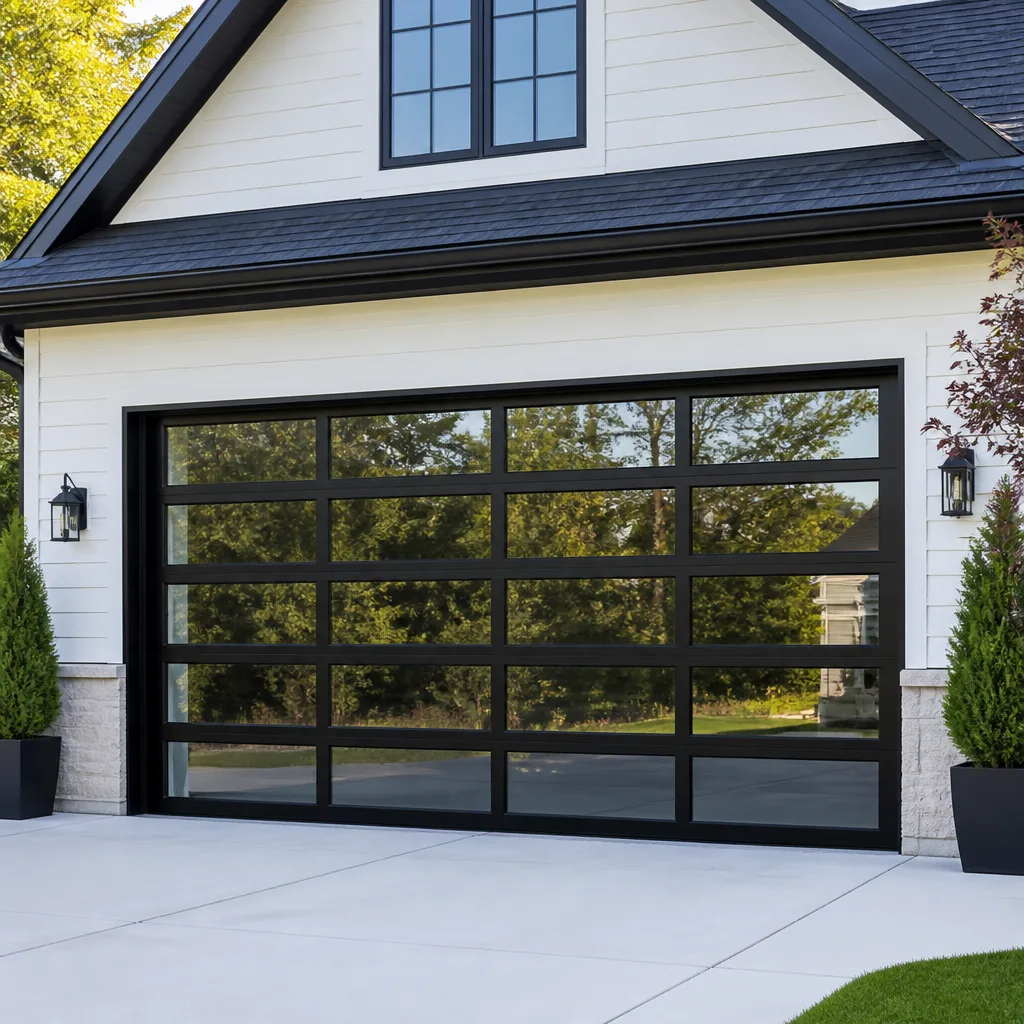 Full-view glass
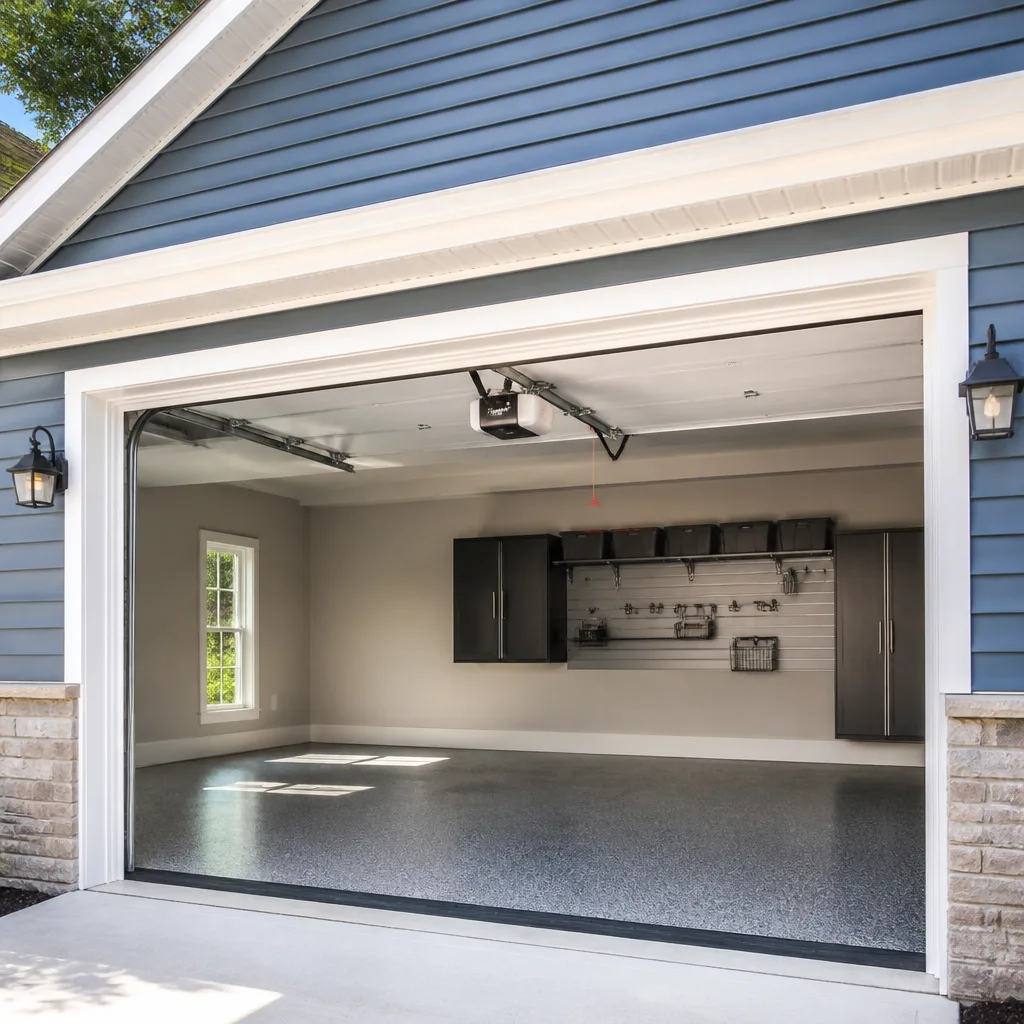 LiftMaster openers
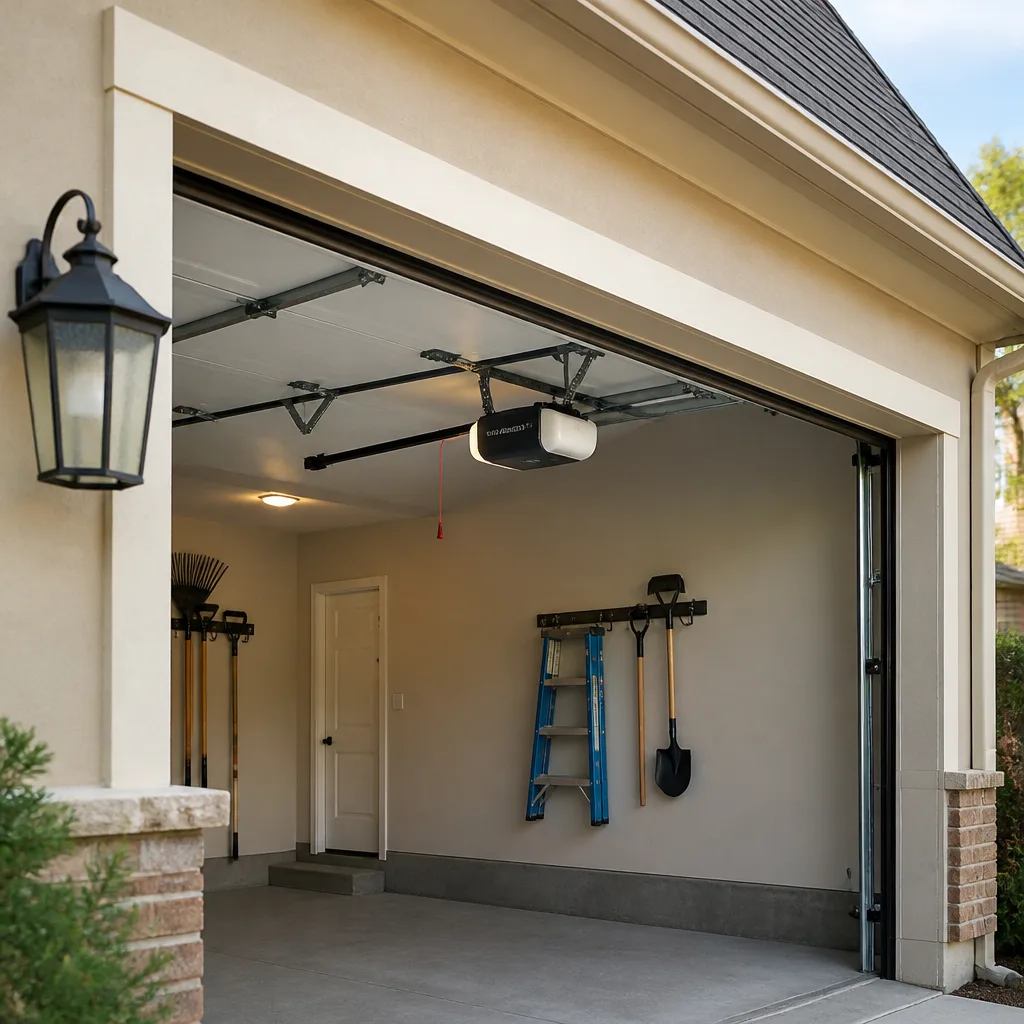 Chamberlain openers
Full 25-point door and opener safety check with every visit - springs, cables, rollers, tracks, and your LiftMaster or Chamberlain opener included
You get a price before we start. It does not change when the pro arrives.
Get your free estimateDIY vs Professional Garage Door Repair: What’s Safe to Do Yourself
A fully wound torsion spring stores roughly 100 foot-pounds of torque. That energy doesn’t care how many videos you’ve watched, how steady your hands are, or how many home repairs you’ve finished without a scratch. It sits there, wound tight, waiting for one wrong move. That’s the real line in garage door work, and it’s not about skill. It’s about stored energy. In this guide we’ll draw that line clearly: which jobs a careful homeowner can handle in an afternoon, which ones can hurt you no matter how capable you are, and how to tell whether a repair quote is fair before you decide to go it alone. If you live in Winchester, the dry desert air and hard water here add a few local wrinkles worth knowing about.
Quick Answer
Safe DIY garage door tasks are the low-energy ones: sensor alignment, weather seal replacement, lubrication, and remote or keypad reprogramming. Everything involving torsion springs, cables, and cable drums is dangerous and should go to a trained technician, because those parts hold stored tension that can cause serious injury even to a careful homeowner. Track work on a heavy door (over 100 lbs) also belongs with a professional. If a repair touches the spring, the cables, or the drums, stop and call a pro.
Styles & brands we work with
- Raised-panel steel
- Carriage house
- Modern flush
- Full-view glass
- LiftMaster openers
- Chamberlain openers
Table of Contents
- Why Stored Energy Is the Real Line, Not Skill
- Safe DIY Tasks You Can Do This Weekend
- The Hard Stops: Springs, Cables, and Drums
- What “Winding the Spring Myself” Actually Requires
- Track Work and Heavy Doors
- Winchester Conditions That Change the Equation
- How to Judge Whether a Repair Quote Is Fair
- Getting a Square Deal in Winchester
Why Stored Energy Is the Real Line, Not Skill
The garage door is the heaviest moving object in most homes. A single-car door can weigh 130 to 180 pounds; a two-car door can run 250 pounds or more. The springs and cables are what carry that weight so you can lift the door with one hand. A torsion spring on a standard double door holds the equivalent of a couple hundred pounds of force wound into a coil the size of a broomstick. When a spring lets go, that energy releases all at once.
Here’s the part that matters for the DIY decision: the danger doesn’t scale with how careful you are. A spring doesn’t check your experience level. The stored-energy principle applies whether you’re a first-timer or a retired mechanic. That’s why the sensible split isn’t “easy jobs vs hard jobs.” It’s “jobs with stored energy vs jobs without.”
In our experience, the homeowners who get hurt aren’t reckless. They’re capable, confident people who’ve fixed plenty around the house and assume this is one more. It’s a different animal. The line we draw below runs on exposure to stored tension, not on how complicated a job looks.
Safe DIY Tasks You Can Do This Weekend
These jobs involve no stored spring tension and no risk of a sudden release. A careful homeowner with basic tools can handle them in Winchester without calling anyone. Work with the door closed and the opener unplugged unless the step says otherwise.
1. Realign the Safety Sensors
If the door won’t close, or closes and reverses on its own, the photo-eye sensors near the floor are the usual culprit. One or both may have been bumped. Here’s the sequence:
- Unplug the opener or switch off its breaker.
- Look at the small LED on each sensor. A steady light on both means they’re aligned; a flickering or dark light points to the misaligned one.
- Loosen the wing nut on the bracket and nudge the sensor until its light goes steady.
- Snug the nut and test by closing the door with the opener.
- Wipe the sensor lenses with a dry cloth. In Winchester’s dusty spring months, a film of desert grit on the lens can cause the same symptom as misalignment.
2. Replace the Weather Seal
A cracked bottom seal lets in dust, heat, and the occasional scorpion. Pull the old seal out of its channel, measure the door width, and slide in a new one of the same profile. Most hardware stores carry the common profiles. This is a half-hour job and one of the best things you can do for a door facing Winchester’s summer heat.
3. Lubricate the Moving Parts
Use a garage-door-specific spray lubricant, not WD-40, on the hinges, rollers, and the spring (a light coat only on the spring to control rust). Run the door up and down a few times afterward. A dry, squeaky door in our climate is usually a lubrication problem, not a failing part.
4. Reprogram a Remote or Keypad
For a Chamberlain or Genie opener, the procedure is almost always a “learn” button on the motor head and a couple of presses on the remote. The manual for your model has the exact sequence, and it usually takes under five minutes. If you’ve misplaced the manual, most manufacturers post them online by model number.
That’s the safe zone. If you’d rather have any of it checked while we’re out on something else, our Garage Door Repair in Winchester team handles tune-ups and adjustments as part of a visit.
The Hard Stops: Springs, Cables, and Drums
These three jobs are where the stored-energy principle becomes non-negotiable. We recommend a trained technician for all of them, and here’s why, task by task.
- Torsion spring replacement. The spring is wound under tension to counterbalance the door. Replacing it means winding the new one to a specific number of turns based on door weight and height. Get it wrong and the door is either too heavy to lift or slams down. Get it catastrophically wrong and the spring or winding bar can release with enough force to break bones.
- Cable work. The cables run from the bottom corners up to the drums and are under constant tension. A cable under load that slips off a drum can whip with serious force. Cables also fail suddenly, which is exactly why you don’t want your hands near them.
- Cable drum work. The drums spool the cables and set the door’s balance. They only come off safely once the spring tension is fully released in a controlled way. Attempting drum work on a wound door is where the worst injuries happen.
Track realignment on a door over 100 lbs is a fourth hard stop. A heavy door that comes off its track can fall, and getting it back on safely often requires controlled lifting with the right tools and two people. If your door is a two-car Clopay or Amarr and it’s jumped the track, that’s a call, not a project.
What “Winding the Spring Myself” Actually Requires
Homeowners sometimes ask whether they can just wind the spring back up instead of replacing it. It’s the question that tells us someone has watched a video and not yet seen the tool list. Winding a torsion spring takes specialized equipment most garages don’t have:
- Winding bars, in the correct diameter for your spring. Too small a bar can slip out of the winding cone under load, and that’s the moment things go wrong.
- A winding cone and set-screw setup that has to be locked and torqued in the right sequence.
- A way to measure and confirm the number of turns for your door’s weight and height, which varies by door. Guessing the turns leaves the door unbalanced.
- A ladder tall enough and stable enough to work overhead for the full job, not just to reach the first turn.
Most of these aren’t items you’ll find in a typical homeowner’s toolkit, and buying them for a one-time job costs more than the repair. This is the part people underestimate: it isn’t the difficulty of the motion, it’s the tooling and the knowledge of exactly how many turns your specific door needs. Our Garage Door Opener in Winchester technicians carry the bars, the springs, and the sizing charts on the truck, which is why most spring jobs finish in a single visit.
Track Work and Heavy Doors
Tracks look simple: two vertical rails, two curved sections, two horizontal rails. The complexity is in the weight. On a light single door, a homeowner might gently nudge a bent track back into line with the door closed and the opener disconnected. On anything over 100 lbs, the door carries enough mass that a track failure can bring it down. A door that’s come off the track is also a sign that something else, usually a bent roller or a worn hinge, caused it. Straightening the track without fixing the cause just sets up the next failure.
In Winchester, we see track problems cluster after the summer heat. Metal expands, the door can bind slightly, and a roller that’s been riding hard for a decade finally gives. If your door shudders or drags when it moves, that’s worth a look before it turns into a track repair.
Winchester Conditions That Change the Equation
Garage door wear here isn’t the same as it is in a wet climate, and it changes which repairs come up most. A few things we see over and over in Winchester:
- Dry heat and dust. Seals crack faster, hinges dry out, and rollers wear quicker than in humid regions. Lubrication matters more here, and it’s a safe DIY job worth doing twice a year.
- Afternoon heat load. West-facing garages in Winchester get extremely hot in summer. The opener’s motor and the door’s balance can both be stressed by the temperature swing, and a marginal spring can fail faster in that cycle.
- Hard water and mineral dust. These pit the bottom seal and dry out rubber faster. If your seal is two or three summers old, it’s probably due.
- Spring failure season. In our experience, spring and cable failures spike in Winchester when temperatures climb into triple digits, because the metal works hardest then. If you hear a bang from the garage on a hot afternoon and the door won’t lift, that’s usually a broken spring.
None of this changes the safe/unsafe split. It changes how often the safe tasks need doing and how soon a failing part shows up.
How to Judge Whether a Repair Quote Is Fair
Part of deciding DIY vs professional is deciding whether the quote in front of you is reasonable. Before you decline a quote and grab a ladder, look at it on these terms:
- Is the price stated upfront and flat? A fair quote gives you a number before any work starts. If you’re hearing “we’ll see once we’re in there,” that’s a yellow flag.
- Does it itemize the parts? Spring replacement should reference the spring, labor, and any related hardware. A single mystery number with no breakdown deserves a question.
- Is the warranty in writing? A fair repair comes with a stated guarantee period. Ours is the 90-Day Done Right Promise: if the work isn’t right, we come back at no charge, in writing, no arguing.
- Does the price hold once they see the door? Ask directly. The number you agree to before the work starts should be the number on the bill.
- Does the quote match the part? A torsion spring on a standard double door is one job; a full track realignment on a heavy Amarr door is another. If the quote is for a different job than the one you have, ask why.
If the quote lines up with all five, it’s a square deal and there’s no DIY reason to attempt the job yourself. If it doesn’t, get a second opinion rather than reaching for a wrench on a spring.
Getting a Square Deal in Winchester
When a repair crosses into the hard-stop zone, the right move is a technician with the parts and the tools already on hand. Mainspring Garage Door Co. Winchester has been answering the phone since 1984, and our technicians have up to 10 years of experience with the major brands, including Chamberlain, Genie, Clopay, and Amarr. We offer a free second opinion on any written estimate, so if you’re weighing a quote, we’ll look at it with you. Our trucks carry springs, cables, and openers, so most jobs finish in one visit. Right now we’re running $50 off any repair over $250, a Free Second Opinion on any written estimate, an $89 Seasonal Tune-Up, and a permanent 5% discount for seniors and veterans.
Common Mistakes to Avoid
- Winding a torsion spring without the right bars. Using a screwdriver or the wrong-sized bar in a winding cone is the single most dangerous DIY shortcut on a garage door. The bar can slip under load and the door can drop.
- Assuming careful equals safe. Stored energy doesn’t respond to caution. A homeowner who’s careful with a wound spring is still one wrong turn from an injury.
- Fixing the track without finding the cause. A door that’s jumped the track usually has a bent roller or worn hinge behind it. Straightening the track alone invites a repeat.
- Ignoring a hot-weather bang. In Winchester, a loud bang followed by a door that won’t lift is a broken spring, not a fluke. Don’t keep running the opener on it; it can burn out the motor.
- Skipping lubrication in the dry months. A dry hinge or roller is a safe fix you can do yourself, but skipping it wears parts out faster here than in a wetter climate.
- Letting a dust film fool you into replacing sensors. A dirty sensor lens looks like a failed sensor. Wipe it before you buy a new one.
- Accepting a mystery price. A quote with no itemization and no warranty in writing is the one worth a second look. A flat, upfront number is what a square deal looks like.
See the difference
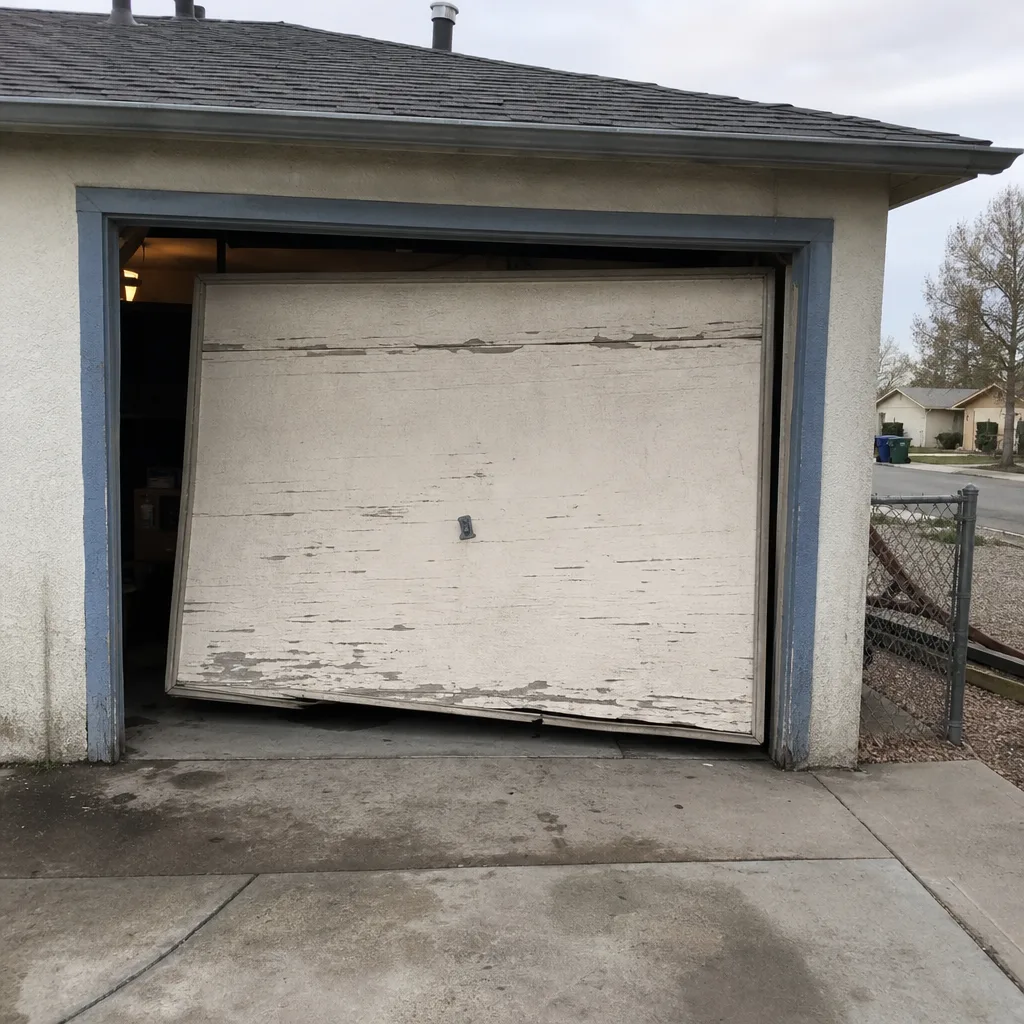 Before
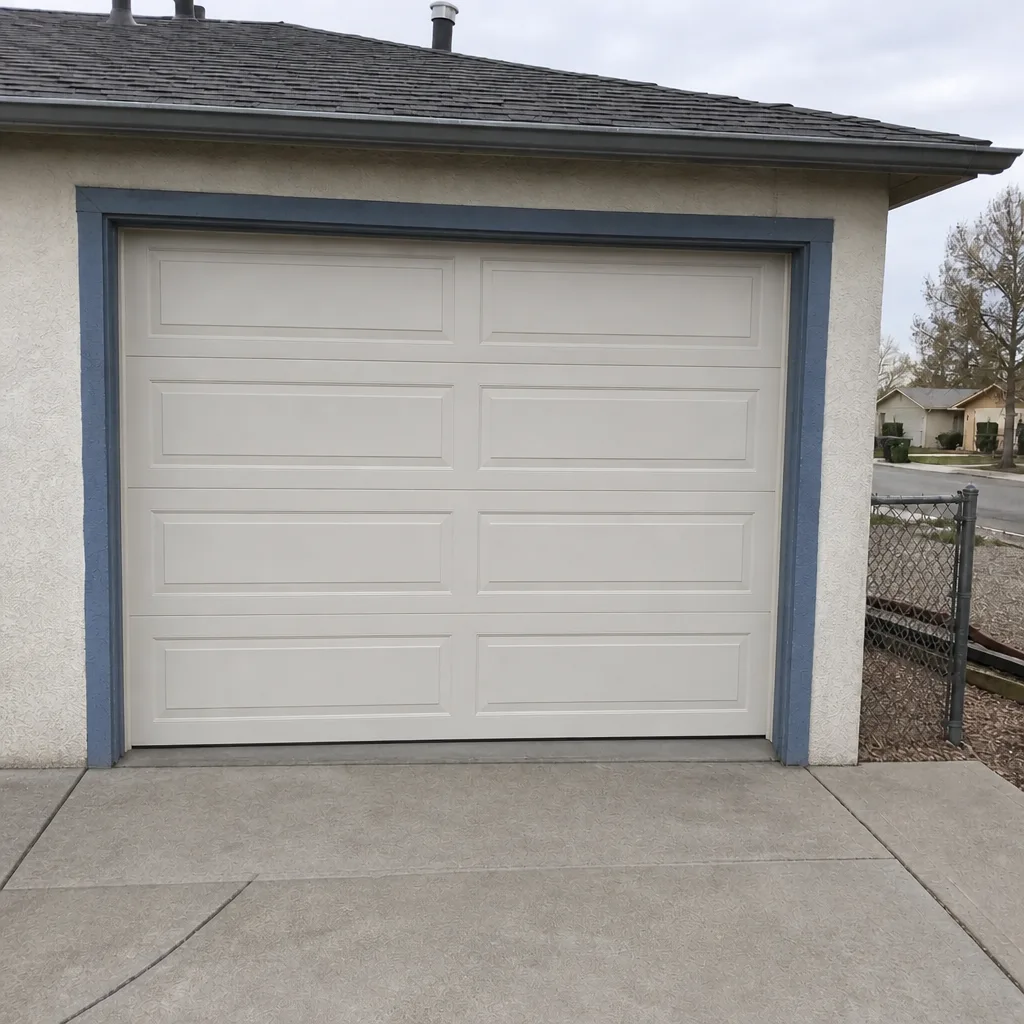 After
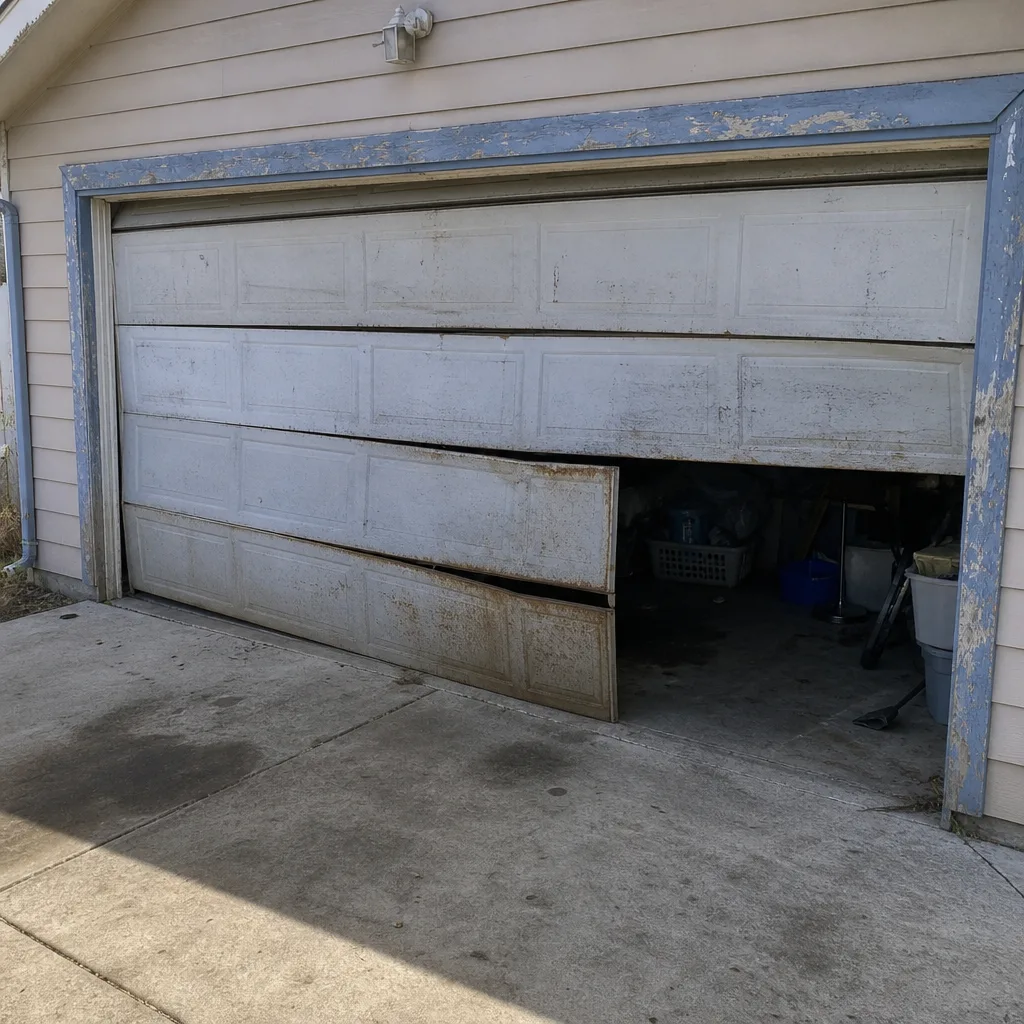 Before
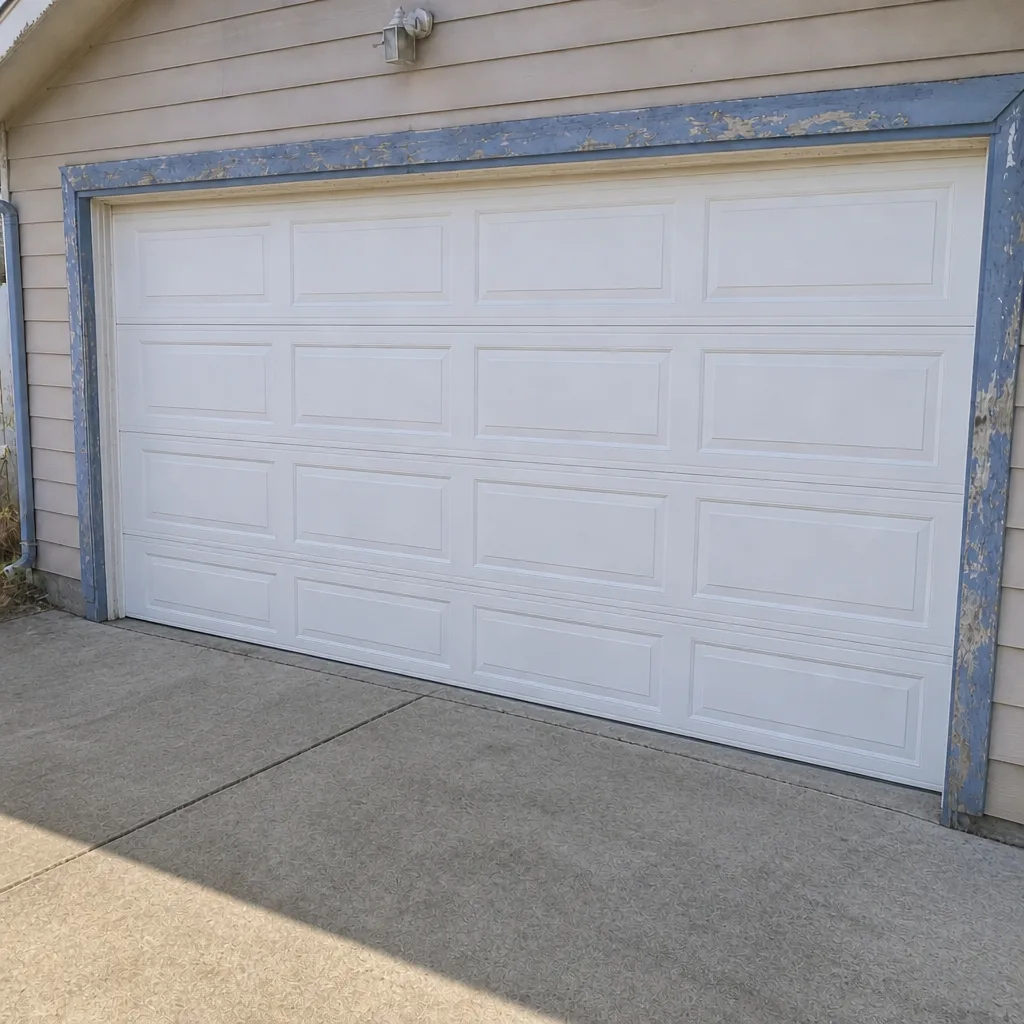 After
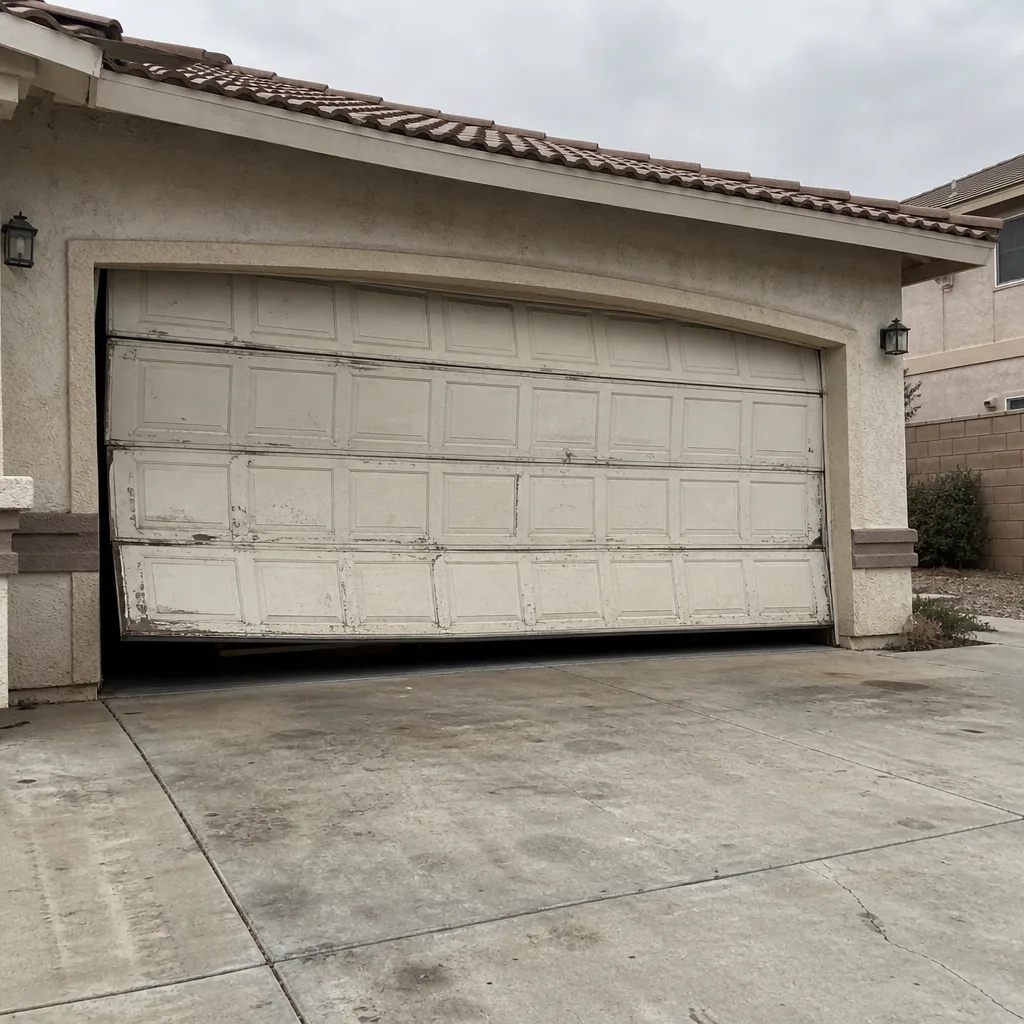 Before
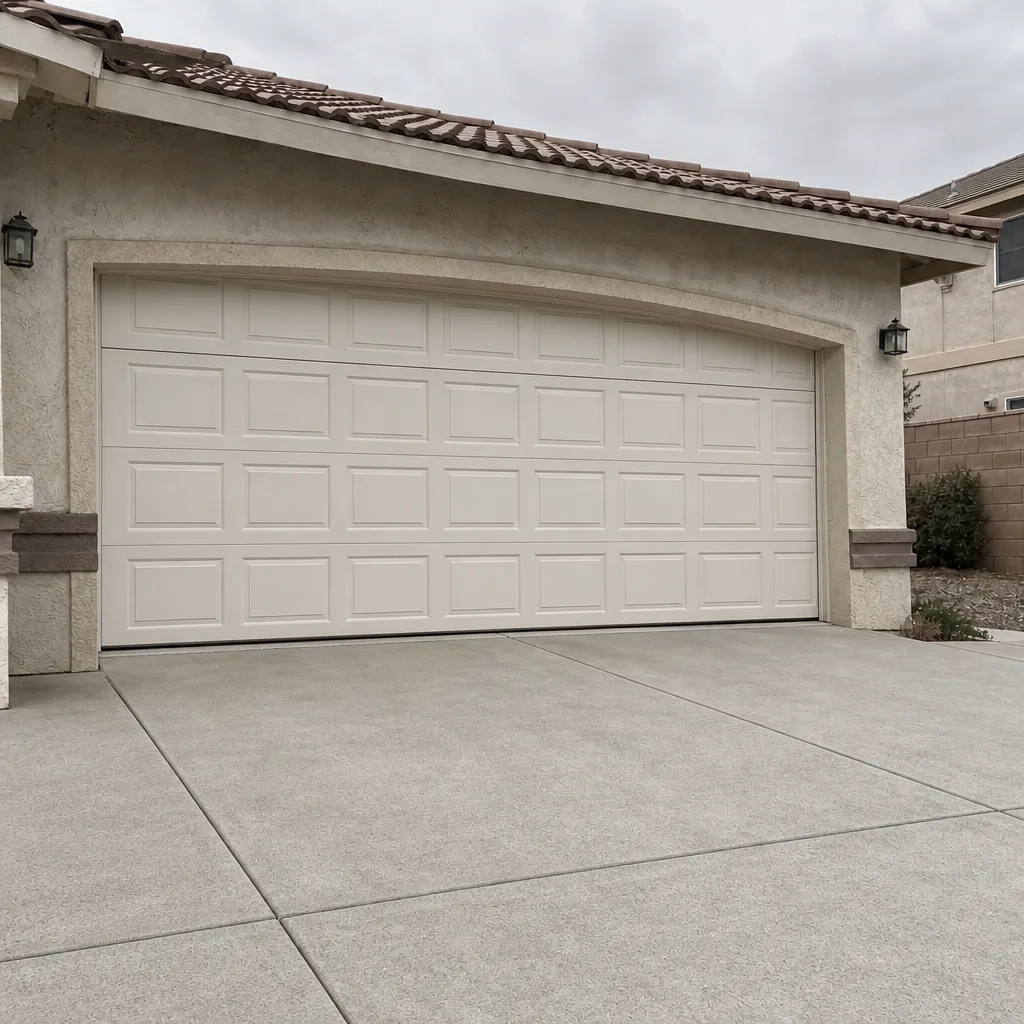 After
When to Call a Professional
Call a professional the moment a repair touches a spring, a cable, or a cable drum. Call when the door has jumped its track, when the door weighs over 100 lbs and won’t balance, or when you hear a bang and the door stops lifting. Call if you’re in Winchester and the door shudders, drags, or reverses on its own after you’ve checked the sensors. Replacing a door rather than repairing it is the other moment: a door that’s structurally failing, badly bent, or at the end of its service life is a replacement job. Mainspring Garage Door Co. Winchester offers free estimates in Winchester, and we’re happy to give a second opinion on any written quote you already have. If you’re weighing a full replacement, see our Garage Door Installation in Winchester page for what that involves. Call (888) 326-0817 and a live person will pick up.
Frequently Asked Questions
No. Torsion springs hold stored tension equal to hundreds of pounds of force, and winding or releasing one safely requires specialized winding bars, the correct turns for your door’s weight, and knowledge most homeowners don’t have. A mistake can drop the door or release the spring suddenly. This is the clearest hard stop in garage door work. Call (888) 326-0817 for a free estimate, and we’ll have the right spring on the truck.
Sensor alignment, weather seal replacement, lubrication, and remote or keypad reprogramming are all safe DIY jobs because none of them expose you to stored spring tension. They’re also the repairs that come up most often. Anything touching springs, cables, drums, or heavy-track work belongs with a trained technician. Call (888) 326-0817 if you’re not sure which category your door falls into.
No. We state the flat price upfront, before any work starts, and that’s the number on the bill. No surprises. If you want confirmation on a quote you already have, we offer a free second opinion on any written estimate. Call (888) 326-0817 and we’ll go through it with you.
A fair quote is flat, itemized, backed by a written warranty, and holds once the technician sees the door. If any of those are missing, ask before you decline it. A free second opinion is a better next step than a DIY attempt on a spring. For a fair estimate in Winchester, call (888) 326-0817.
Yes. Our technicians are background-checked and come to every job in uniform, and every completed job is covered by the 90-Day Done Right Promise in writing: if it isn’t right, we come back at no charge, no arguing. Our technicians have up to 10 years of experience with the major brands, including Chamberlain, Genie, Clopay, and Amarr. Call (888) 326-0817 to schedule.
Usually, yes. A sensor light that’s steady on both sides means the sensors are aligned, so the problem is elsewhere: a dirty lens, a wiring fault, or a limit setting on the opener. Cleaning the lenses is a safe, no-tools job worth trying first. If it doesn’t resolve, call (888) 326-0817 and we’ll take a look.
The Bottom Line
The DIY vs professional question comes down to stored energy, not skill. Sensor alignment, weather seals, lubrication, and remote programming are safe, useful jobs a careful homeowner can do today. Springs, cables, drums, and track work on heavy doors are hard stops, because the tension in those parts can hurt you no matter how careful you are. In Winchester, the heat and dust make both the safe jobs more frequent and the spring failures more common. When a repair crosses into the hard-stop zone, call a technician who has the parts on the truck and the price stated before the work begins. A square deal is better than a dangerous project.
If you’re in Winchester and weighing a repair, call Mainspring Garage Door Co. Winchester at (888) 326-0817 for a free estimate. You’ll get a live person, a flat upfront price, and a 90-Day Done Right Promise in writing. Visit our Mainspring Garage Door Co. Winchester home page to learn more about everything we handle.
Written by the team at Mainspring Garage Door Co. Winchester.