
Last updated November 18, 2026
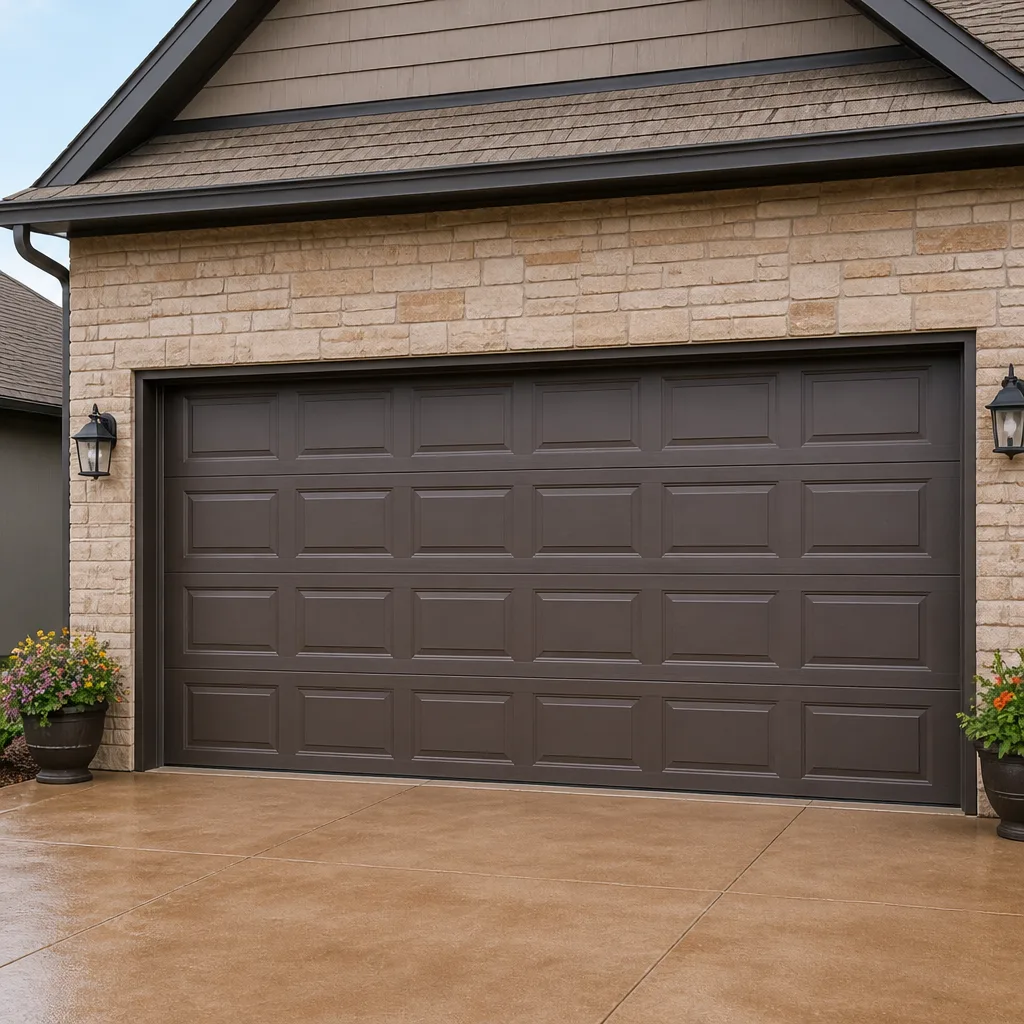 Raised-panel steel
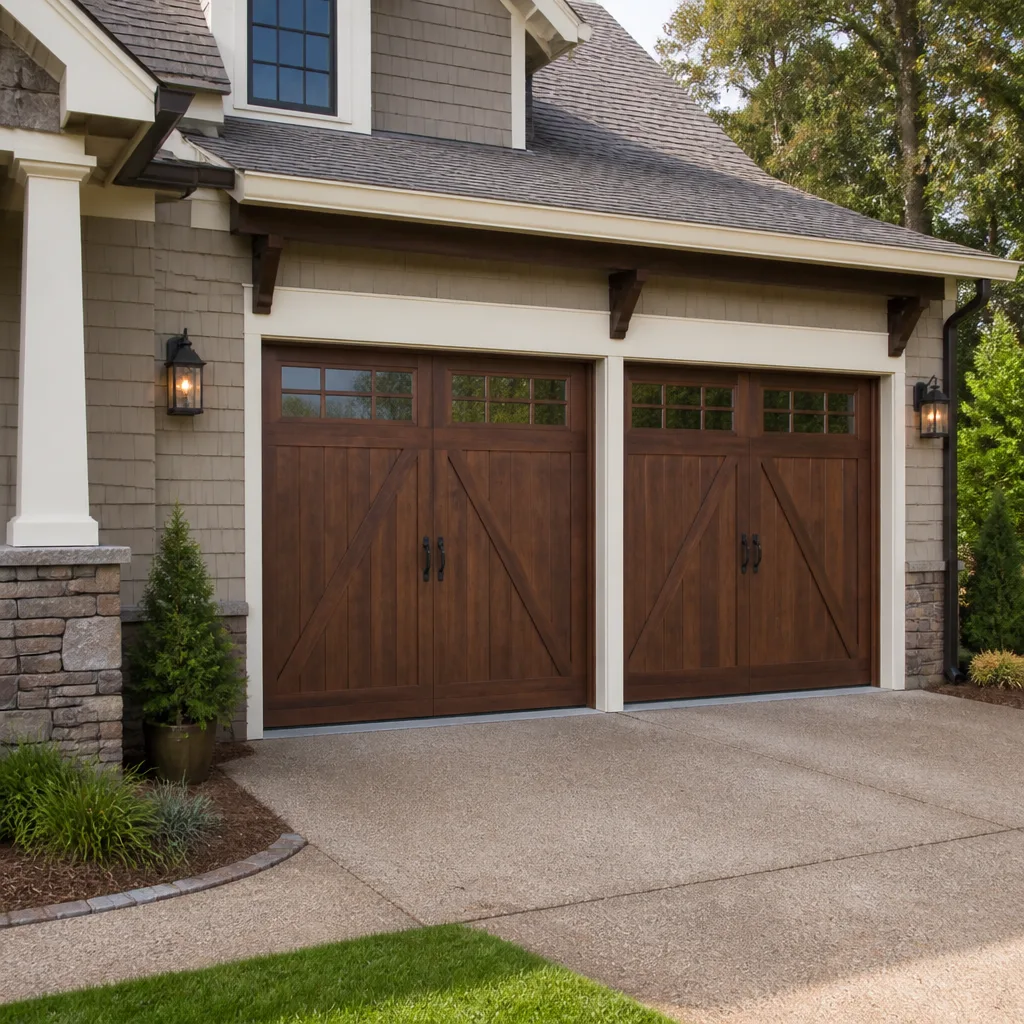 Carriage house
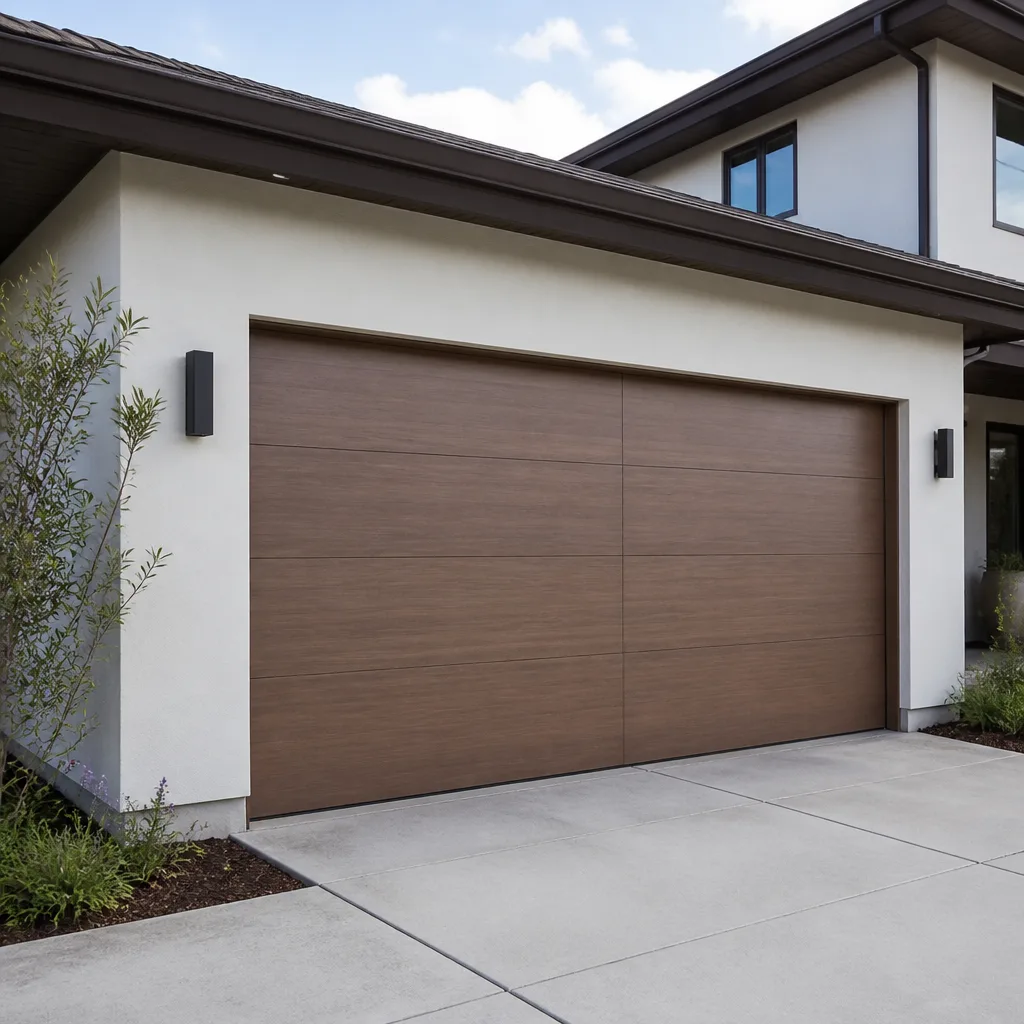 Modern flush
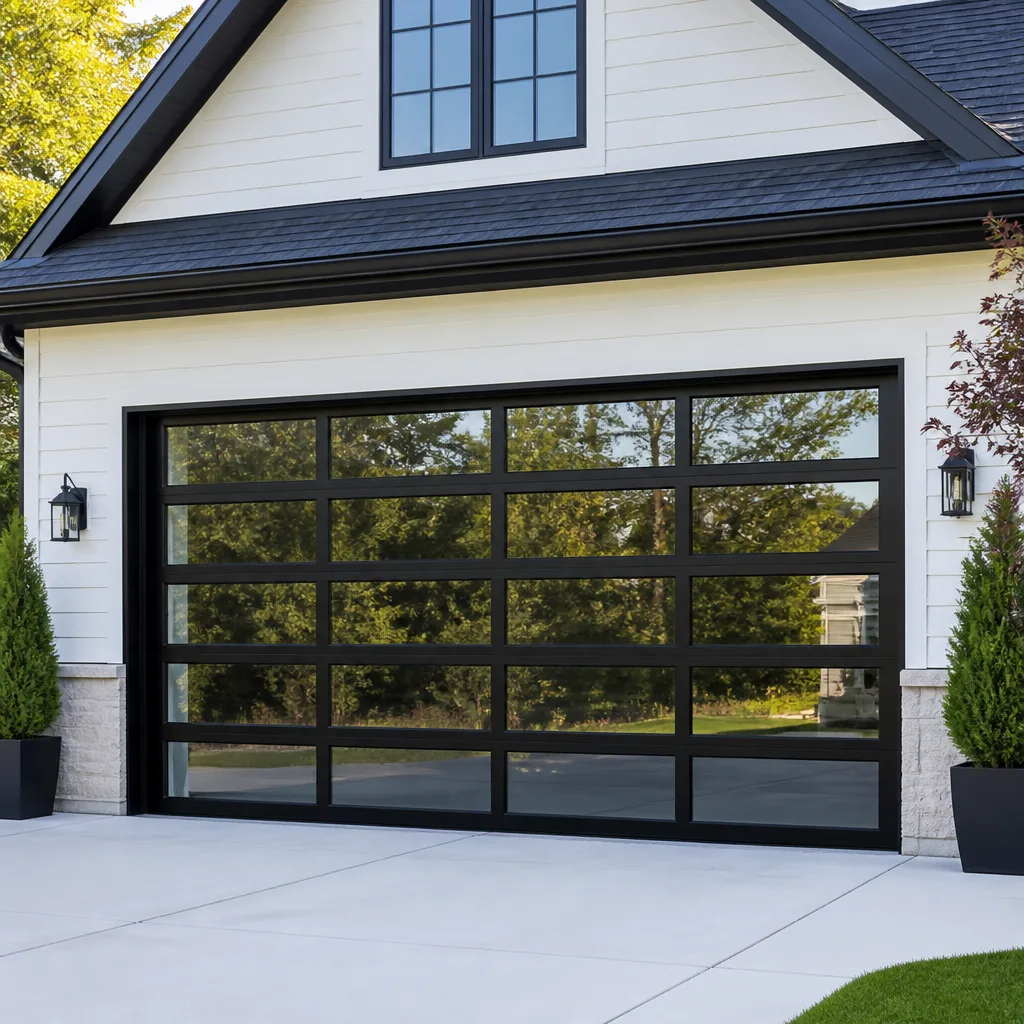 Full-view glass
 LiftMaster openers
 Chamberlain openers
Full 25-point door and opener safety check with every visit - springs, cables, rollers, tracks, and your LiftMaster or Chamberlain opener included
You get a price before we start. It does not change when the pro arrives.
Get your free estimateDIY vs Professional Garage Door Parts: What’s Safe to Do Yourself
A torsion spring on a standard double-car door stores roughly 100 foot-pounds of torque. When one breaks without winding tools holding the bar, that stored energy has nowhere to go but out, and the winding bar becomes a projectile. This isn’t a skill gap. A careful homeowner with good hands and a YouTube tab open is in exactly as much danger as anyone else, because the risk lives in the physics, not the person. What we want to do here is draw the line clearly: which parts you can safely handle on a Saturday afternoon in Winchester, which parts need a technician, and why crossing that line on a $12 part can turn into a $400 repair.
Quick Answer
Parts under tension or under the door’s full weight – springs, cables, drums, bottom brackets, and the torsion bar itself – should only be serviced by a trained technician. Weatherstripping, bottom seals, keypad batteries, exterior handles, and photo-eye alignment are safe for a careful homeowner. Everything else depends on whether the part is holding stored energy or simply sitting on the door.
Styles & brands we work with
- Raised-panel steel
- Carriage house
- Modern flush
- Full-view glass
- LiftMaster openers
- Chamberlain openers
Table of Contents
- The Real Line: Stored Energy, Not Skill Level
- Parts a Careful Homeowner Can Handle
- Parts That Require a Technician
- Why Watching a Video Changes the Risk by Zero Percent
- The Hidden DIY Risk on Panel Swaps
- What to Document Before You Call a Tech
- The Cost Math: When a $12 Part Becomes a $400 Repair
- Common Mistakes to Avoid
The Real Line: Stored Energy, Not Skill Level
Most guides draw the DIY line at difficulty. Ours is drawn at stored energy. Here is the distinction: a weather seal is held in place by friction and a few screws. A torsion spring is held in place by roughly 8 to 10 full turns of pre-load, and that load is what carries the entire weight of the door. Nothing about your personal capability changes that. The spring doesn’t know whether the person winding it has done a hundred of them or none.
Garage door systems have three stored-energy zones:
- Torsion assembly – the spring, torsion bar, winding cones, and center bearing plate. This is the highest-risk zone. A broken torsion spring is a force release, not a mechanical failure.
- Bottom brackets and cables – the cable is under continuous tension between the drum and the bottom corner bracket. Loosening the wrong bolt on a loaded bottom bracket can put a technician in the hospital even with training; a homeowner without training is in worse shape.
- Extension springs – the older style with a pull cable that runs along the horizontal track. Less stored energy than torsion, but still spring-loaded and still capable of failure under the wrong tension.
Las Vegas Valley climate makes this more pressing than in most of the country. Winchester and the nearby east-side neighborhoods see summer temperatures that push past 110 degrees, and heat is hard on spring steel and on the plastic and rubber components. We see more spring failures between May and September than the rest of the year combined. In our experience, a door in Winchester that has gone seven or eight summers without a spring inspection is overdue, and the failure tends to happen at the worst time – a Monday morning when you’re trying to leave.
If you’re not sure which style of spring system you have or whether it needs service at all, our guide on garage door repair in Winchester walks through the common failure signs before you decide to call.
Parts a Careful Homeowner Can Handle
These parts are not under tension. They are weatherproofing, hardware, or electronics, and a careful homeowner with basic tools can handle them without risk to themselves or the door’s structural alignment.
- Bottom seal / weatherstripping at the bottom of the door. This is the rubber or vinyl strip that runs the width of the door’s bottom edge. It sits in a retainer track and pulls out by hand. Replace it every two to three years in Winchester – the desert sun dries it stiff, and a stiff seal lets in dust and heat. A new seal runs roughly $20 to $45 in materials and takes about 20 minutes.
- Perimeter weatherstripping around the door jamb. The vinyl or brush strips around the frame. Same story – slides out and presses in. Watch for gaps at the corners where quality installation matters.
- Keypad batteries. A wireless keypad that stops working is almost always a dead battery. Most use a CR2032 or 9V. Swap it, reprogram the code using the manufacturer’s instructions, and you’re done.
- Exterior handles and lift handles on a manual door. These are decorative and functional hardware attached with screws. A rattling handle can be tightened or replaced without touching the spring.
- Photo-eye alignment on the opener. If your door reverses immediately on close, the two small lenses near the floor may be out of alignment or dusty. Wipe them and check the alignment – this is a 5-minute job, and it’s the most common cause of a door that won’t close.
- Lubrication. A few drops of white lithium grease or silicone spray on the hinges, rollers, and track. Do not spray the spring, cables, or drums with anything.
The garage door opener in Winchester section of our site walks through keypad programming for Chamberlain and Genie units if you need the code-entry steps.
Parts That Require a Technician
These parts carry the door’s weight, hold stored tension, or are structurally load-bearing. A trained technician works on them because training and proper tools are what separate a 20-minute job from an emergency room visit. We don’t recommend servicing any of the following yourself.
- Torsion springs. The two winding bars, the proper winding direction, and the tension count are not optional. One wrong move on a loaded spring and the bar becomes a projectile.
- Extension springs. Even with a safety containment cable, the release force is significant. Do not cut or loosen a loaded extension spring.
- Cables. The lift cables are under continuous tension; even a slightly slack cable that snaps can whip. Replace both at once – a matched pair – not one at a time.
- Drum and end bearing plates. The cable wraps around the drum, and the drum seats against the end plate. Loosening one without the other releases the cable tension instantly.
- Bottom brackets. The most dangerous single part on the door. The cable attaches to the bottom bracket, which is under full spring tension. Removing it without releasing the spring first is how serious injuries happen.
- Torsion bar and center bearing plate. The center bearing plate holds both springs and the bar together. Servicing it is a two-person job with proper bracing.
- Opener motor and drive assembly. Replacing an opener is generally a job for a technician, especially if the unit is ceiling-mounted and requires structural attachment to the framing. If your opener is older than 10 years, our garage door installation in Winchester guide covers replacement timing and cost expectations.
We’ve had homeowners in Winchester call us after a spring let go at 6 a.m. on their way to work. Those calls always come with a story that starts “well, I watched a video and figured…” and ends with a tow truck and a broken garage door.
Why Watching a Video Changes the Risk by Zero Percent
A common assumption is that a well-made video teaches you the technique, and once you know the technique the risk goes away. It doesn’t work that way, and it’s worth being plain about why.
Videos teach procedure. They don’t teach feel, and they can’t teach you what a loaded spring sounds like before it fails, or what a properly seated winding cone feels like under the wrench. That tactile knowledge comes from hours of repetition on real doors, not from watching. But even if a video could transmit perfect procedure, the risk on a torsion spring comes from the physics, not the technique. A 20-turn torsion spring on a 10-foot door – common on newer construction in Winchester – carries a force that can break a finger, a wrist, or worse. Many injuries happen to people who followed the video correctly. The spring snapped anyway because of age, heat fatigue, or a microscopic defect that nobody could have seen coming.
Professional technicians use winding bars that are rated for the torque, wear gear rated for the risk, and work in pairs on the two-spring assemblies that are standard on most modern doors. That’s not because they’re smarter. It’s because the equipment and the pairing are what make the work survivable if something fails. No video can give a homeowner that.
Older LiftMaster and Genie openers with chain drives have additional considerations – the chain tension needs adjustment after any spring work, and getting that right matters. Any qualified technician will handle the chain inspection as part of a spring replacement. Our team at Mainspring Garage Door Co. Winchester home carries the correct winding bars and works in pairs on every two-spring assembly for that reason.
The Hidden DIY Risk on Panel Swaps
Panel swaps look like the simplest job on the door: unbolt the damaged panel, slide the new one in, and rebolt. That simplicity is the trap. Panels are not interchangeable mechanical parts. They are load-bearing components that sit in a specific stacked alignment, and getting that alignment wrong has downstream effects most homeowners don’t see until weeks later.
Here’s what happens when a panel is swapped improperly:
- The door racks. If the new panel sits a few millimeters out of vertical alignment with the panels above and below it, the door’s weight distributes unevenly across the tracks. You may not notice it on the first open. By the twentieth open, the door is rubbing on one side, the hinges are wearing unevenly, and the opener is straining.
- The manufacturer’s warranty is voided. Clopay, Amarr, and most major manufacturers require installation by a qualified technician to honor the warranty. A homeowner-installed panel that cracks or fails within the warranty period – a real risk with heat-affected panels in Winchester – is not covered.
- The door’s balance is thrown off. Panels have specific weights. A mismatched replacement panel (even the same size, but a different model year) can change the balance enough that the spring tension is no longer correct. The door may close too fast or hesitate on the way up.
What looks like a $200 panel swap can turn into a $600 realignment job plus a $300 spring re-tensioning, all because of a few millimeters of misalignment. We’ve seen this in Winchester more than once. If a panel is damaged, let a technician handle the swap. It’s not a hard job for someone with the right equipment; it’s just not a job where “close enough” is close enough.
What to Document Before You Call a Tech
The homeowner who takes five minutes to document the problem before calling gets more answers on the first visit – and often gets the job done in one trip. Here’s what to capture.
- Photograph the spring assembly. A clear photo of the full torsion bar or extension springs, showing the springs, drums, and end brackets. Note any visible gaps, sagging, or broken coils.
- Note the door’s symptoms. Does it hesitate on the way up? Does it close too fast? Does it reverse on its own? Does it hang at one side? Write down exactly what you observe and when – the “when” matters.
- Record any noise. A phone recording of the door in motion. A technician can often diagnose a problem from the sound alone. Squealing, banging, or a rhythmic thump from the tracks are all different failures.
- Write down the door’s age and brand, if you know it. Clopay, Amarr, Wayne Dalton, Raynor, and Chamberlain have specific failure patterns by generation. “I think it’s a Clopay, maybe 12 years old” tells a technician more than “it’s a garage door.”
- Check the opener’s LED. Most LiftMaster and Chamberlain openers have a diagnostic LED that blinks a specific pattern when something is wrong. Note the blink pattern – it’s a direct fault code.
- List what you already inspected yourself. If you’ve replaced the bottom seal, checked the photo-eye alignment, or swapped the keypad battery in the last six months, say so. It saves a technician from re-diagnosing things you’ve already ruled out.
Bring that documentation to the call and the first visit is much more likely to be the only visit. Our technicians work from trucks stocked with springs, cables, and the most common openers for that reason – the more accurate the diagnosis, the more likely we finish on the first trip.
The Cost Math: When a $12 Part Becomes a $400 Repair
Here’s the arithmetic that doesn’t appear on the parts shelf. A roller set is about $12 at the hardware store. A hinge is roughly $8. A bottom seal is $20. None of these parts is expensive in isolation. The cost math gets expensive when a homeowner disturbs an adjacent tensioned component while replacing a cheap one.
Some real scenarios from Winchester:
- The $12 roller swap that loosened the cable. A homeowner replaces a worn roller, doesn’t notice the cable has slipped out of the drum guide, and the cable curls. Repair: new cable, new drum inspection, re-tension the spring. Total: $280 to $420.
- The $8 hinge that pulled a bottom bracket. Bolting a new hinge with the door in the wrong position puts stress on the bottom bracket. If the bracket loosens, the cable goes slack and releases. Repair: bottom bracket, cable set, spring re-tension, and occasionally a panel replacement. Total: $340 to $600.
- The $20 bottom seal that jammed the door. A seal installed too thick or not seated in the retainer binds against the threshold. The opener compensates by straining, and within a few weeks the opener’s gear or logic board fails. Repair: opener service call plus seal re-installation. Total: $180 to $340.
The pattern is consistent: cheap parts touched near tensioned components cause expensive repairs. The good news is the reverse is also true. Most of the “expensive” jobs – spring replacement, cable replacement, drum work – are $180 to $340 in Winchester for a single-spring replacement, $280 to $420 for a two-spring pair, and $140 to $280 for a cable set. Those are the numbers we quote, flat, before any work begins. No surprises on the bill.
When a job like this needs to be done, the flat price is stated before the wrench comes out, and it doesn’t change once the door is open and the technician sees the full picture. That’s the square deal. If you’ve been quoted a number and aren’t sure it’s fair, we’ll give a free second opinion on any written estimate.
Common Mistakes to Avoid
- Cutting a loaded extension spring to “release” it. The spring is under tension even if it looks relaxed. Cutting it releases the stored energy in an uncontrolled way. The only safe method involves proper containment cables and controlled release, and it’s a technician’s job.
- Loosening a bottom bracket to adjust the cable. The bottom bracket carries full cable tension, and the cable carries the door’s weight on that side. A loosened bracket without the spring released first is the most common serious-injury mistake we see. In Winchester, where doors get a lot of use in extreme heat, the hardware fatigues faster and mistakes compound quickly.
- Replacing one spring instead of both. Springs are matched pairs. Replacing one leaves the other carrying more load than it was designed for, and the second spring usually fails within a few months. If you replace one, replace both.
- Adjusting the opener’s force settings to compensate for a stiff door. The force setting on the opener is a safety feature, not a performance dial. Cranking it up to make a struggling door close faster is how doors come down on people. Fix the underlying problem – a worn roller, a binding track, a failing spring – not the safety cutoff.
- Installing a mismatched bottom seal. Winchester’s heat bakes seals stiff faster than in cooler climates. A thin or wrong-profile seal may “fit” but won’t seal against the heat and dust. Measure the retainer track before buying.
- Ignoring a slow-close door as normal. A door that closes slowly or hesitates on the way up is a symptom. Springs lose tension with age, and the slow close is often the first sign a spring is on its way out. Ignoring it on a Winchester door that gets used twice a day is how a routine $180 service becomes a $400 emergency repair.
- Leaving a damaged panel unexamined for months. A small dent or crack in a panel seems cosmetic, but panels in the Winchester sun can delaminate and worsen. A panel swap done early is cheaper than a panel swap plus realignment plus spring re-tensioning.
See the difference
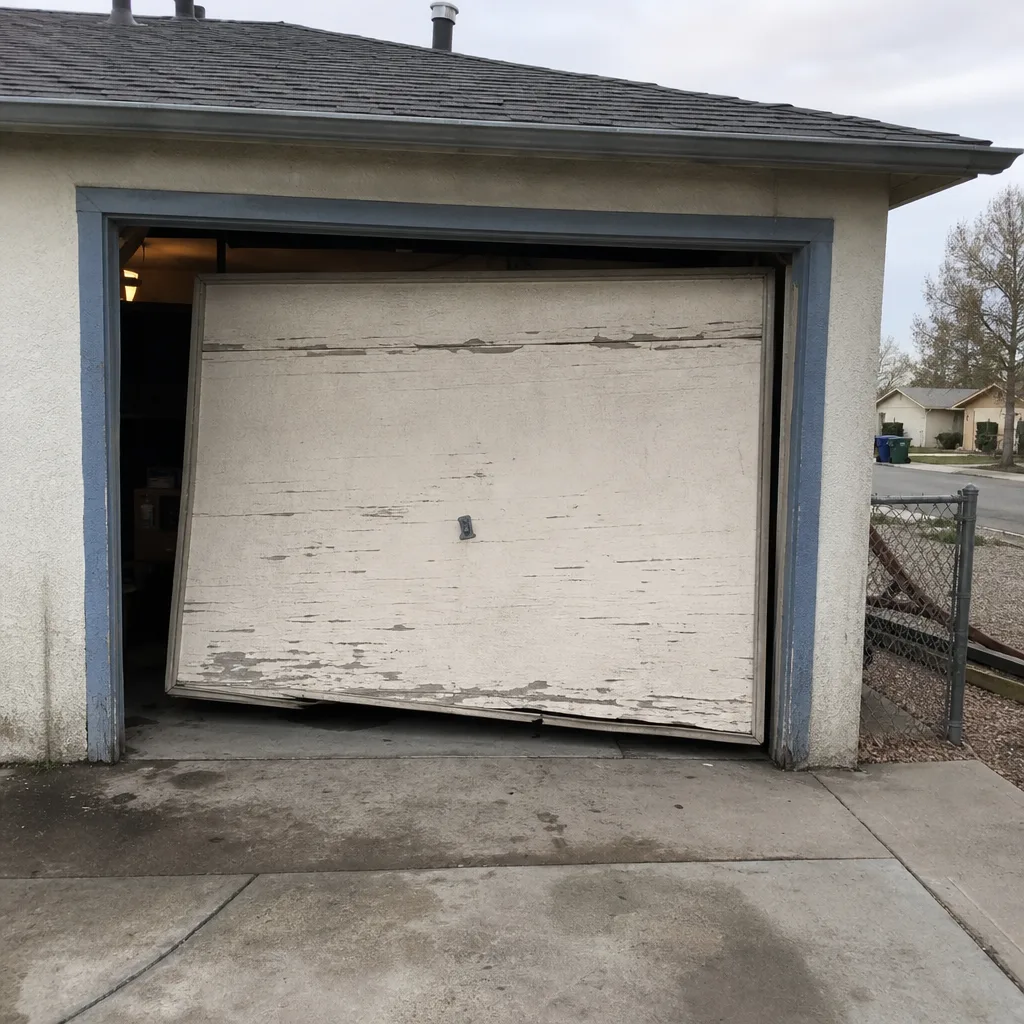 Before
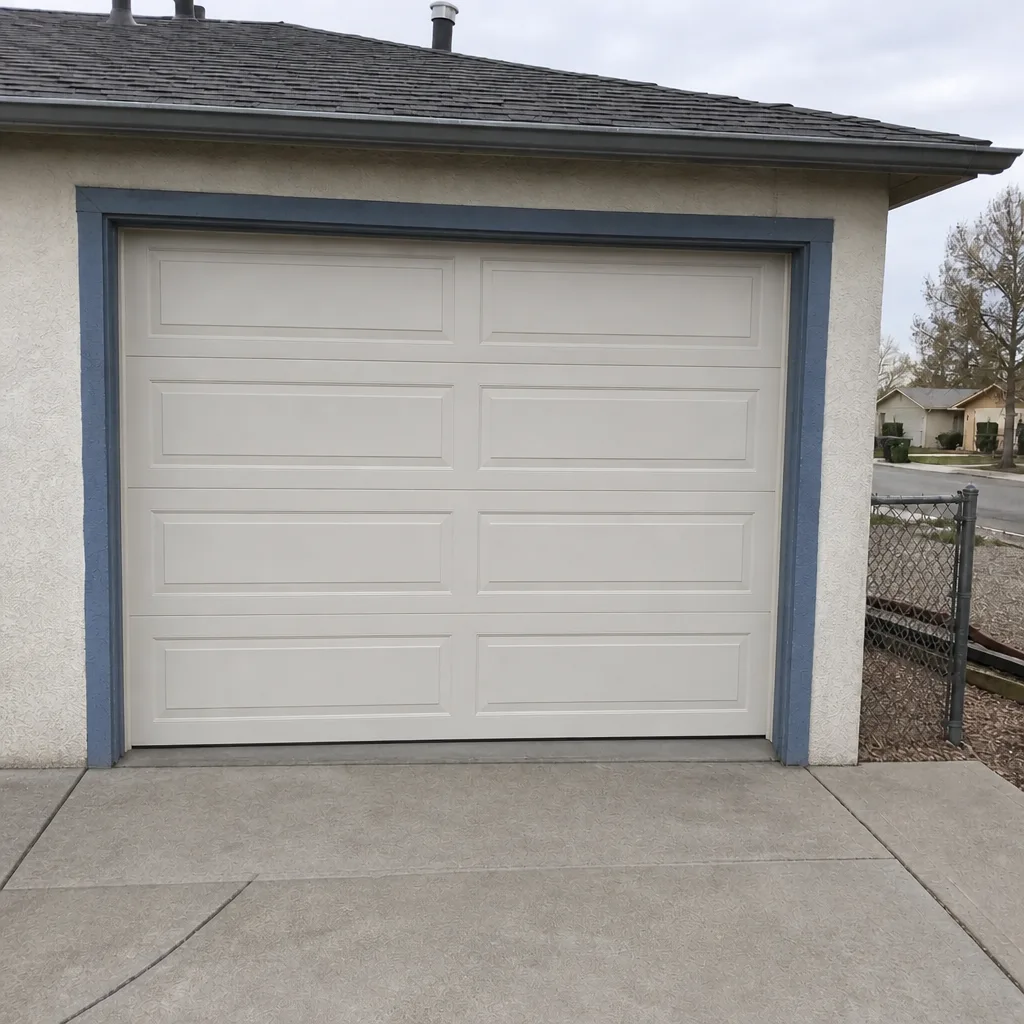 After
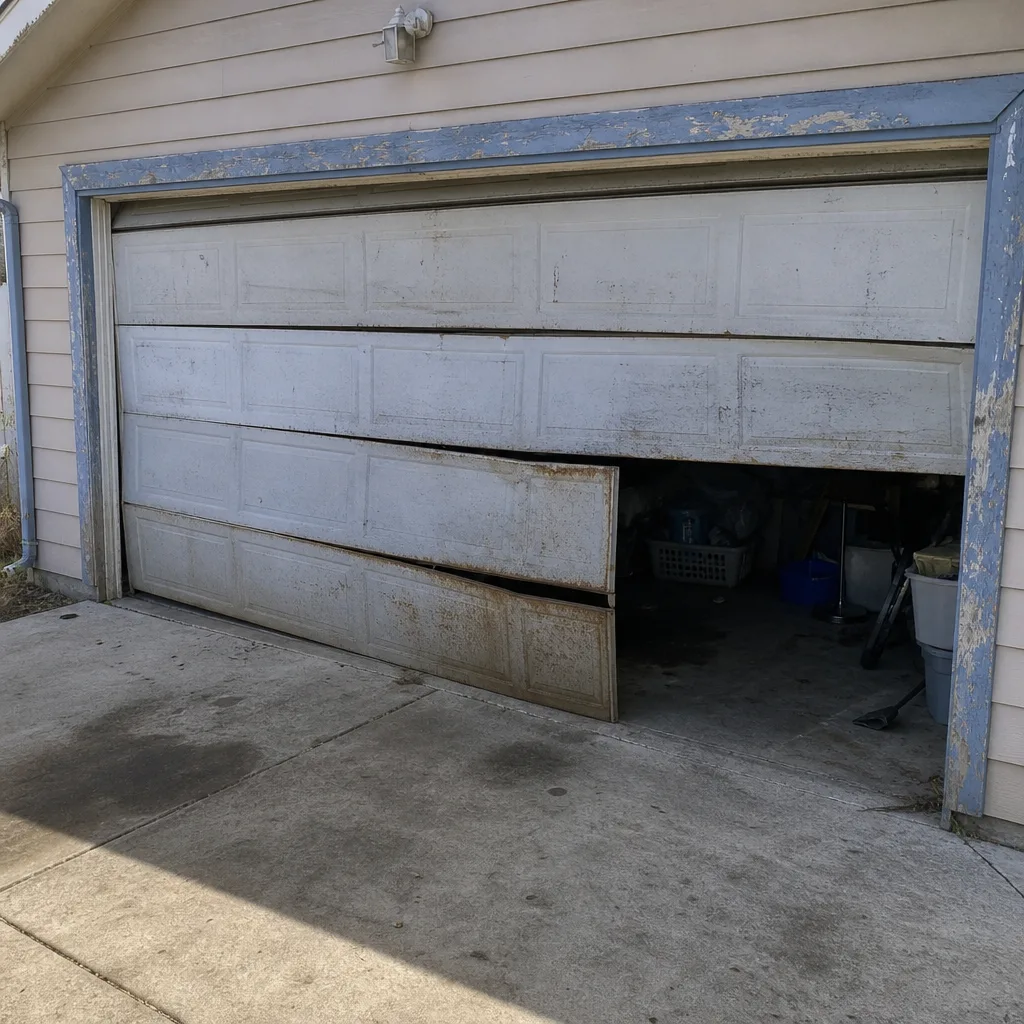 Before
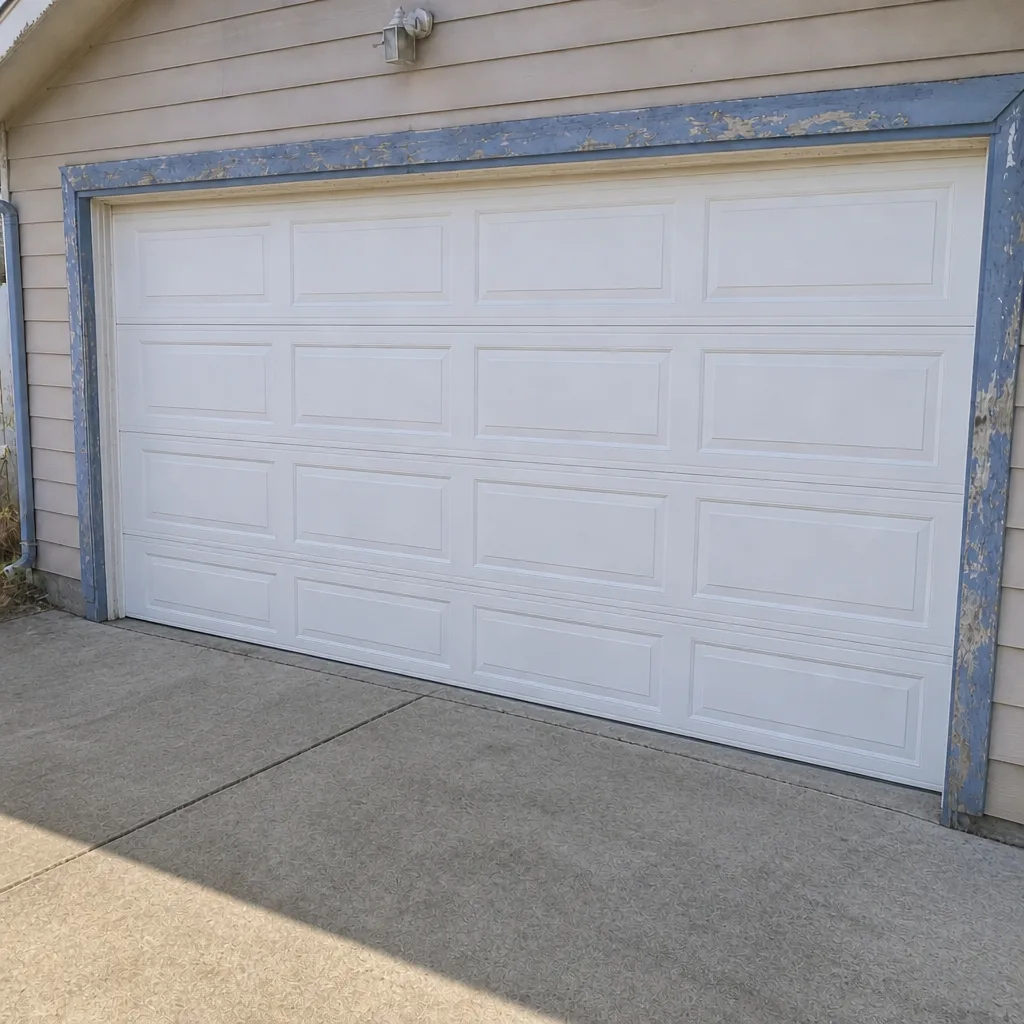 After
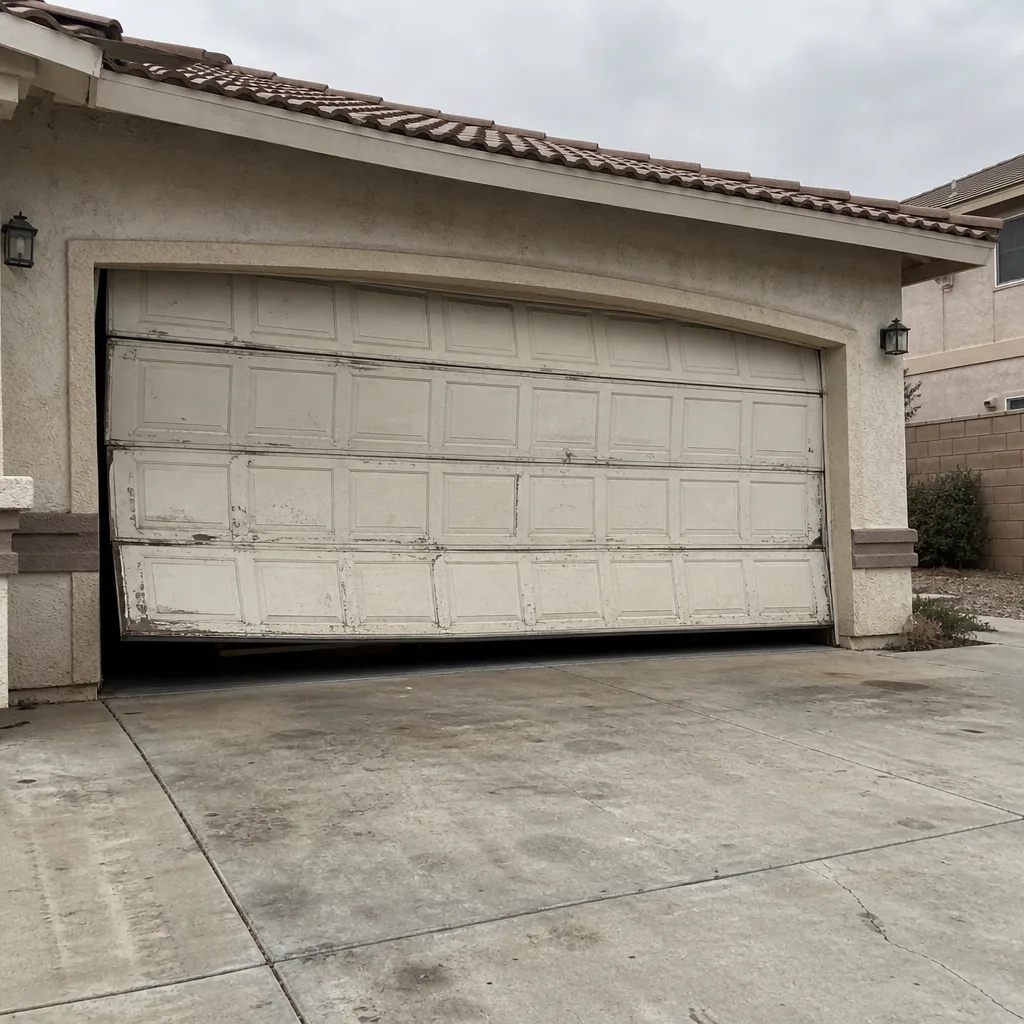 Before
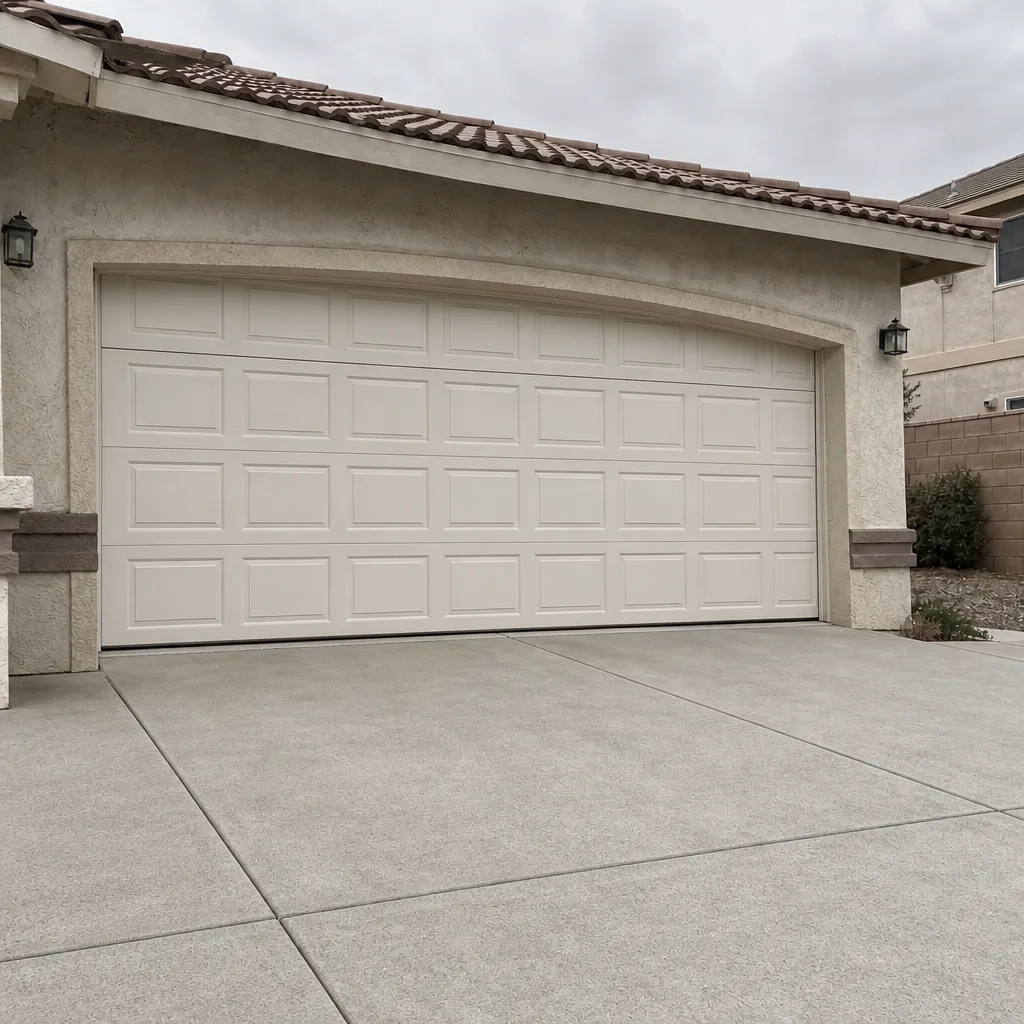 After
When to Call a Professional
Call a professional the moment you’re dealing with a part under tension, a part under the door’s weight, or a symptom you don’t fully understand. Specifically: any spring, cable, drum, or bottom bracket work; any panel replacement that requires a warranty to stay intact; any opener replacement or serious diagnostic; any door that reverses unexpectedly, comes down too fast, or hangs on one side. These are all jobs for someone with proper tools and proper training, and the trained-technician cost is nearly always less than the repair cost after a DIY mistake.
Mainspring Garage Door Co. Winchester offers free estimates in Winchester – call (888) 326-0817. We answer the phone live, day or night. Our technicians have up to 10 years of experience, arrive background-checked and uniformed, and come with the parts on the truck so most jobs finish in a single visit. Every completed job carries the 90-Day Done Right Promise in writing. If it’s not right, we come back at no charge.
Frequently Asked Questions
Yes. A bottom seal is not under tension and can be replaced by a careful homeowner with basic tools in about 20 minutes. Measure the retainer track width first so you buy the right profile. In Winchester, replace the seal every two to three years because the heat dries it stiff faster than in milder climates.
No. Torsion and extension springs are under stored energy – a standard torsion spring on a double-car door holds roughly 100 foot-pounds of torque – and the release force during failure can cause serious injury or death. The risk doesn’t depend on experience or on watching a good video. Call (888) 326-0817 for a free estimate.
A single-spring replacement in Winchester typically runs $180 to $340, and a two-spring pair $280 to $420. Cable replacement is $140 to $280. Prices are flat and stated before any work begins. Call (888) 326-0817 for an exact quote – estimates are free.
Yes, if you install it yourself. Clopay, Amarr, and most other manufacturers require installation by a qualified technician to honor the warranty. Beyond the warranty, an improperly aligned panel can rack the whole door and throw off the spring balance, turning a $200 panel swap into a $600 repair.
Yes. We answer the phone 24/7 and routinely handle emergency spring and cable failures the same day. Call (888) 326-0817 and describe the problem – a photo of the spring assembly helps. If it’s a spring or cable, have someone stay away from the door until we arrive.
No, not after we’ve quoted it. The flat price is stated before any work begins, and it stays the same once the door is open. If the diagnosis changes what needs to be done, we tell you the new number before touching anything. The bill matches the quote.
The Bottom Line
The DIY line on a garage door is drawn at stored energy, not skill. Weatherstripping, bottom seals, keypad batteries, exterior hardware, photo-eye alignment, and lubrication are all safe for a careful homeowner. Springs, cables, drums, bottom brackets, the torsion bar, and panel swaps are not, because the physics don’t care how careful you are. If you’re not sure which category a job falls into, that’s the signal to call. Our technicians at Mainspring Garage Door Co. Winchester service all major brands, carry the correct parts on the truck, and finish most jobs in a single visit. The work is done right, backed in writing by the 90-Day Done Right Promise, and quoted flat before we start.
Call (888) 326-0817 for a free estimate. We answer live, day or night. Seniors and veterans receive a permanent 5% discount, a second opinion on any written estimate is always free, and our $89 seasonal tune-up is available year-round.
Written by the team at Mainspring Garage Door Co. Winchester.